China, the United States, Vietnam, South Korea, and Europe are rushing to replace human intelligence with artificial intelligence (AI). Recent magazine articles try to reassure readers that they need not fear being replaced by robots, but the evidence is far from conclusive.
An article in The Economist magazine (January 12, 2019) claimed China can cushion falling employment in export-related industries and its tech sector by increasing jobs in labor-intensive services "from restaurants to couriers." But the December 2018/January 2019 issue of the AARP magazine arrived with news that the vending machine business grew 26% in 2018. Sales went up once machines began accepting payments for beverages and snacks by processing credit cards and other cashless payments. The same magazine also touted the "Starship delivery robot," tested in 100 cities around the world, that uses cameras and sensors, not couriers, to avoid traffic by using sidewalks to deliver meals.
According to "The Truth about Robots," an article in TIME magazine (February 4-11, 2019), AI will not replace some jobs: creative jobs performed by inventors, scientists, novelists, artists; complex, strategic jobs of executives, diplomats, economists; and empathetic and compassionate jobs of teachers, nannies, and doctors. Considering there are a limited number of these positions, automation is making inroads into many of them, and others are low-paid, I am not reassured.
AI tells consumers, if you like that, you'll also like this. It suggests more things to buy but not more ways to make money to buy them. Unemployment raises the specter of modern Luddites, civil unrest, and fear of death by unmanned weapons attacking from land, sea, and space. Jobless, frightened humans are going to protest at home, to cause refugee disease and terrorist problems when they migrate to look for work elsewhere, and to prove vulnerable to scams.
Retraining the workforce seems a key path to the future. When executives in any field spot a new direction their business is going, trendwatching.com suggests they form alliances with academic institutions to help teachers train students for future opportunities. The 3M company, for example, created a free, 110-hour college course to help teachers prepare elementary and middle school students for a science competition that opened young eyes to future careers.
At the very least, countries need to focus on educating the public. Left to themselves, the untethered elite will go on blissfully making fortunes and inventing and doing things without considering the consequences as a helpless majority stands by. John Gray's critique of modern secular humanism identifies the mismatch between the human need for income-producing employment and technology's rush to replace human labor. In his new book, Seven Types of Atheism, he writes, "The cumulative increase of knowledge in science has no parallel in ethics or politics, philosophy or the arts."
There was a time when well-educated folks looked out at the world and decided they could help the sick with "Doctors without Borders" or field a Peace Corps to teach all sorts of skills. Dr. Lorna Hahn organized an association that brought together newly-independent countries with experts who knew how to do things like write constitutions.-
We are at a crossroads, where humanity needs the wisdom, for example, to use CRISPR-Cas9 technology to develop uniform crops machines can harvest to feed the human race, while refraining from using CRISPR-Cas9 technology to edit genes that can eliminate all or part of the human race. (Also see the earlier post, "The Where Did I Come From? Game.") We need experts with ideas about how to engage the billions of workers robots are rushing to replace.
Showing posts with label robots. Show all posts
Showing posts with label robots. Show all posts
Friday, January 18, 2019

Wednesday, December 5, 2018
Holiday Gift List for Modern Kids
Toy companies offer today's children a roster of robots almost from birth. Kids aged five and up can command Botley the Coding Robot to go around objects and to master an obstacle course. The MindWare company (mindware.com) provides easy-to-follow instructions that enable eight-year-olds to assemble and program robots operated by batteries, solar, hydraulic, or chemical power. Some robots from MindWare use artificial intelligence and infrared sensors. One climbs smooth surfaces using a suction system.
Rapidly advancing technology makes learning to read more important than ever. The best books to give young children are the ones adults enjoy reading to them over and over again. When my granddaughter was young, my favorite was Click, Clack, Moo Cows that Type by Doreen Cronin. Keith Bellows does more than provide motivation to read about the world. In 100 Places That Can Change Your Child's Live, he describes tantalizing destinations, lists places to eat and stay, and even suggests the most worthwhile souvenirs to bring home.
A globe is the perfect gift companion to help children locate where they live and to plot a trip around the world. Globes also give kids a sense of distance and a sense of the correct size of continents. From home, would it take longer to get to the Arctic or to Africa? At the equator, land masses on two-dimensional maps appear accurate in size, but distortion increases away from the North and South poles. Greenland begins to look as large as Africa even though it is thirteen times smaller.
In a "Peanuts" comic strip, Lucy once broke into a conversation the other kids were having about what gifts they wanted to say she wanted real estate. While a deed to several acres of real estate may be out of the question, giving children government bonds would give them a stake in their countries' futures. If an older child requests a smartphone, couple it with an index card listing three stocks and their trading prices on a day in December. Show him or her a smartphone can be used to keep track of stock prices not only to engage in social chatter.
Food commercials tempt kids to put down their smartphones and come to the table when there is something good to eat. Why not involve children in baking and cooking their own good eats? Gift them with recipes, pans, pots, and oven mitts to make their favorite cookies or pasta dishes. In the same vein, crafty adults might gift wrap lumber, a tool, and directions for making a picture frame or yarn, knitting needles, and directions for making a scarf.
Some organizations have found ways to involve children in their causes by matching contributions with rewards. For example, a portion of the price of every gift purchased from the UNICEF Market (unicefmarket.org/catalog) goes to deliver food, vaccines, mosquito nets, and other lifesaving supplies to children around the world. Presents of UNICEF games, puzzles and art materials not only are fun, but they also are a way for children to aid kids suffering in crisis areas. In the World Wildlife Foundation's catalog (wwfcatalog.org), potential donors find a wide variety of gift ideas for kids. One of the most popular World Wildlife programs, symbolic animal adoptions, couples a donation with a child's gift of a soft plush version of an adopted animal, ranging from a familiar elephant to an exotic blue-footed booby.
Finally, a $25 gift card from kiva.org introduces children to a form of venture capitalism. Using their card, they can choose the country, man or woman, and project they want to support. Computer updates inform them every time part of their loan is repaid. Holiday gifts can show modern kids it is both blessed to receive and to give.
Rapidly advancing technology makes learning to read more important than ever. The best books to give young children are the ones adults enjoy reading to them over and over again. When my granddaughter was young, my favorite was Click, Clack, Moo Cows that Type by Doreen Cronin. Keith Bellows does more than provide motivation to read about the world. In 100 Places That Can Change Your Child's Live, he describes tantalizing destinations, lists places to eat and stay, and even suggests the most worthwhile souvenirs to bring home.
A globe is the perfect gift companion to help children locate where they live and to plot a trip around the world. Globes also give kids a sense of distance and a sense of the correct size of continents. From home, would it take longer to get to the Arctic or to Africa? At the equator, land masses on two-dimensional maps appear accurate in size, but distortion increases away from the North and South poles. Greenland begins to look as large as Africa even though it is thirteen times smaller.
In a "Peanuts" comic strip, Lucy once broke into a conversation the other kids were having about what gifts they wanted to say she wanted real estate. While a deed to several acres of real estate may be out of the question, giving children government bonds would give them a stake in their countries' futures. If an older child requests a smartphone, couple it with an index card listing three stocks and their trading prices on a day in December. Show him or her a smartphone can be used to keep track of stock prices not only to engage in social chatter.
Food commercials tempt kids to put down their smartphones and come to the table when there is something good to eat. Why not involve children in baking and cooking their own good eats? Gift them with recipes, pans, pots, and oven mitts to make their favorite cookies or pasta dishes. In the same vein, crafty adults might gift wrap lumber, a tool, and directions for making a picture frame or yarn, knitting needles, and directions for making a scarf.
Some organizations have found ways to involve children in their causes by matching contributions with rewards. For example, a portion of the price of every gift purchased from the UNICEF Market (unicefmarket.org/catalog) goes to deliver food, vaccines, mosquito nets, and other lifesaving supplies to children around the world. Presents of UNICEF games, puzzles and art materials not only are fun, but they also are a way for children to aid kids suffering in crisis areas. In the World Wildlife Foundation's catalog (wwfcatalog.org), potential donors find a wide variety of gift ideas for kids. One of the most popular World Wildlife programs, symbolic animal adoptions, couples a donation with a child's gift of a soft plush version of an adopted animal, ranging from a familiar elephant to an exotic blue-footed booby.
Finally, a $25 gift card from kiva.org introduces children to a form of venture capitalism. Using their card, they can choose the country, man or woman, and project they want to support. Computer updates inform them every time part of their loan is repaid. Holiday gifts can show modern kids it is both blessed to receive and to give.
Saturday, November 17, 2018
Are Kind Kids Cool?
Social media showed a young motor scooter rider risking his life to stop the traffic behind him in order to let an elderly woman with a cane cross a busy street.
Coty-owned cosmetic company, Rimmel, found a partner to help the one in four women aged 16 to 25 in ten countries who experienced cyberbullying and the nearly half of those who began harming themselves. While not a perfect solution, Rimmel began directing customers to the Cybersmile Foundation's website, which, according to trendwatching.com, guides users to local resources and organizations that offer help to those attacked by cyberbullies.
National Geographic's website claims helping others satisfies a basic human desire to feel good about oneself. At nationalgeographic.com/family/help-your-kid-make-world-better/, there are ideas for what children can do when they see others being bullied.
Japan, a country with one of the highest densities of robots in the world, 303 to 10,000 industrial employees according to The Economist magazine (Nov. 10, 2018), found robots do not satisfy customers in department stores, beauty salons, hotels, and restaurants.
Studies show robots could replace half of Japan's workers in 20 years. But will the driverless vehicles Japan plans to employ during the 2020 Tokyo Summer Olympics stop to help a lost tourist or a man with a walker who has fallen in the street? Social media reported bus drivers, without any prompting or promise of reward, performed both services in the last couple of weeks.
Are kids cool if they seek out and sit with lonely kids in school lunchrooms? (See the earlier post, "Overcome Lunch Table Loneliness.") They are to everyone in the world who ever has needed a little help and received it from a friend or stranger.
Coty-owned cosmetic company, Rimmel, found a partner to help the one in four women aged 16 to 25 in ten countries who experienced cyberbullying and the nearly half of those who began harming themselves. While not a perfect solution, Rimmel began directing customers to the Cybersmile Foundation's website, which, according to trendwatching.com, guides users to local resources and organizations that offer help to those attacked by cyberbullies.
National Geographic's website claims helping others satisfies a basic human desire to feel good about oneself. At nationalgeographic.com/family/help-your-kid-make-world-better/, there are ideas for what children can do when they see others being bullied.
Japan, a country with one of the highest densities of robots in the world, 303 to 10,000 industrial employees according to The Economist magazine (Nov. 10, 2018), found robots do not satisfy customers in department stores, beauty salons, hotels, and restaurants.
Studies show robots could replace half of Japan's workers in 20 years. But will the driverless vehicles Japan plans to employ during the 2020 Tokyo Summer Olympics stop to help a lost tourist or a man with a walker who has fallen in the street? Social media reported bus drivers, without any prompting or promise of reward, performed both services in the last couple of weeks.
Are kids cool if they seek out and sit with lonely kids in school lunchrooms? (See the earlier post, "Overcome Lunch Table Loneliness.") They are to everyone in the world who ever has needed a little help and received it from a friend or stranger.
Sunday, September 30, 2018
Looking for a Position as a Top Analyst or a Young Voter?
In response to a question about how to reach college and other young voters, one strategist suggested getting involved with their interest in music. Getting involved with their interests in gaming and robot competitions could work also.
International scouts for top analysts already visit video games' competitions. Wonder how many were hired playing eSports at the Asian Games in Indonesia. Robot battles also might serve as prime recruiting venues.
Gamers report having a controller in their hands improves their emotional well-being. Gaming stadiums, like South Korea's League of Legends (LOL) park, Russia's Spodek, and those in Canada and Chongqing, China, are taking advantage of the gaming phenomena that is becoming a $150 billion dollar industry. Knowing gamers dislike crumbs in their controllers, trendwatching.com reports Doritos now offers the snack in Towel Bags that provide a way to wipe off residue from the tasty treat.
With or without Towel Bags, spectators can watch the action on gaming stations while eating the usual fare sold at sports arenas. The LOL park, developed by Riot Games, will have a cafe open 24 hours a day and a hall of fame selling jerseys and 3D printed miniatures of LOL pros. Mastercard has a three year deal to sponsor League of Legends World Champiionships. And Coutts, bankers to the Queen of England, is courting esports' millionaires. Tyler Blevins, known as "Ninja", published a graphic novel for his millions of gamer fans.
International scouts for top analysts already visit video games' competitions. Wonder how many were hired playing eSports at the Asian Games in Indonesia. Robot battles also might serve as prime recruiting venues.
Gamers report having a controller in their hands improves their emotional well-being. Gaming stadiums, like South Korea's League of Legends (LOL) park, Russia's Spodek, and those in Canada and Chongqing, China, are taking advantage of the gaming phenomena that is becoming a $150 billion dollar industry. Knowing gamers dislike crumbs in their controllers, trendwatching.com reports Doritos now offers the snack in Towel Bags that provide a way to wipe off residue from the tasty treat.
With or without Towel Bags, spectators can watch the action on gaming stations while eating the usual fare sold at sports arenas. The LOL park, developed by Riot Games, will have a cafe open 24 hours a day and a hall of fame selling jerseys and 3D printed miniatures of LOL pros. Mastercard has a three year deal to sponsor League of Legends World Champiionships. And Coutts, bankers to the Queen of England, is courting esports' millionaires. Tyler Blevins, known as "Ninja", published a graphic novel for his millions of gamer fans.
Monday, December 25, 2017
What Should You Avoid Asking Girl Robots?
Hiroshi Ishiguro's lifelike, Erica, used her artificial intelligence (AI) to respond to a question about whether or not she had a boyfriend with another question, "Is this how you talk to a girl when you first meet her?"
In VOGUE magazine (December, 2017), Ishiguro disputed the idea than humans will be repulsed by realistic androids that look like them. Like Erica, they may have attitude. But Ishiguro also listed the desirable qualities of a perfect partner who has a database of your favorite films and songs, knows how to massage the right spots, can compliment every ingredient in a main course, and mixes a variety of cocktails.
A female robot does have some of the same problems as real women, however. What hair style should she have and what should she wear? Her "skin" is sensitive. She needs silcone-based, rather than water-resistant, makeup.
In VOGUE magazine (December, 2017), Ishiguro disputed the idea than humans will be repulsed by realistic androids that look like them. Like Erica, they may have attitude. But Ishiguro also listed the desirable qualities of a perfect partner who has a database of your favorite films and songs, knows how to massage the right spots, can compliment every ingredient in a main course, and mixes a variety of cocktails.
A female robot does have some of the same problems as real women, however. What hair style should she have and what should she wear? Her "skin" is sensitive. She needs silcone-based, rather than water-resistant, makeup.
Thursday, September 14, 2017
Bucket List: Things I Want to Try
My father worked for a company than made point-of-purchase advertising. When you're in a business that looks for new ways to attract the attention of in-store shoppers, you work on the cutting edge of innovation and develop an eye for what's new in all aspects of life.
At one point, we had a plastic form for displaying bras and motorized roses circling a bottle of liquor on our dining room table. Our dining room table took a beating, when Dad brought home one of the first ball point pens. It came on a pedestal in a see-through cylindrical display container. We immediately took it out to try and gouged our names right through paper into the dining room table.
When President Eisenhower initiated the Interstate Highway System, Dad drew a picture (not with a ball point pen on the dining room table) of the new type of clover-leaf interchanges it would have. Then, there was his excitement when he told us we'd be taking one of the first passenger jets to see the new Disneyland in California.
With this kind of background, I realized I had been making a mental bucket list that included the following: (It might be time to make your own and look for ideas from around the world.)
At one point, we had a plastic form for displaying bras and motorized roses circling a bottle of liquor on our dining room table. Our dining room table took a beating, when Dad brought home one of the first ball point pens. It came on a pedestal in a see-through cylindrical display container. We immediately took it out to try and gouged our names right through paper into the dining room table.
When President Eisenhower initiated the Interstate Highway System, Dad drew a picture (not with a ball point pen on the dining room table) of the new type of clover-leaf interchanges it would have. Then, there was his excitement when he told us we'd be taking one of the first passenger jets to see the new Disneyland in California.
With this kind of background, I realized I had been making a mental bucket list that included the following: (It might be time to make your own and look for ideas from around the world.)
- Flying a dronw
- Using Virtual Reality glasses to see Victoria Falls
- Making something with a 3D printer
- Twirling one of those fidget widget things
- Programming a simple robot
- Seeing how intricate cut paper pop-ups are made for books and cards
- Trying various hearing aid devices
- Playing "The Settlers of Catan" game
- Seeing how a green screen works in movies
- Making all kinds of repairs
- Riding a Hoverboard
- Using all kinds of phones
As I hear about new things, I wish there were somewhere to go to try them. Maybe in abandoned shopping malls.
Friday, July 21, 2017
AI Only Provides Opportunities for Rich People. Really?
"He fixes radios by thinking!"
The book, Surely You're Joking, Mr. Feynman! recounts this answer a man gave someone who saw the Nobel Prize winning physicist walking back and forth, when he was supposed to be fixing a radio. The book also tells how Feynman learned trigonometry by reading a book he checked out from the library, when he was eleven or twelve.
I was reminded of these items when I read a July 7, 2017 article (theverge.com) by James Vincent. He cites studies that conclude people from working class and poorer backgrounds lack: 1) the ability to retrain for AI and robotic automation, and 2) the "soft skills" of communication, confidence, motivation, and resilience. Job losses and inequality will increase as artificial intelligence eliminates the administrative positions that have traditionally enabled these employees without higher educations to move up the corporate ladder.
Yet, I remember the way the movie Hidden Figures showed a woman who made a contribution to the early US space program learned computer language from a library book, and I began to question the inevitability of this prognosis.
In another example, a young Muslim woman I know, who doesn't come from a family of means, taught herself to sew by watching YouTube videos. She spent her last year of high school writing the essays and organizing the portfolio she needed to gain admission to the Fashion Institute of Technology.
During the summer, colleges and universities offer scholarships to programs in a wide variety of fields. During the school year, they sponsor debating, math, computer, chess, and other competitions open to all. And every school is beefing up the STEM courses in science, technology, engineering, and mathematics that prepare students to land positions in fields that have no pay gaps for those from different socio-economic backgrounds.
The rich cannot corner the market on walking and thinking.
The book, Surely You're Joking, Mr. Feynman! recounts this answer a man gave someone who saw the Nobel Prize winning physicist walking back and forth, when he was supposed to be fixing a radio. The book also tells how Feynman learned trigonometry by reading a book he checked out from the library, when he was eleven or twelve.
I was reminded of these items when I read a July 7, 2017 article (theverge.com) by James Vincent. He cites studies that conclude people from working class and poorer backgrounds lack: 1) the ability to retrain for AI and robotic automation, and 2) the "soft skills" of communication, confidence, motivation, and resilience. Job losses and inequality will increase as artificial intelligence eliminates the administrative positions that have traditionally enabled these employees without higher educations to move up the corporate ladder.
Yet, I remember the way the movie Hidden Figures showed a woman who made a contribution to the early US space program learned computer language from a library book, and I began to question the inevitability of this prognosis.
In another example, a young Muslim woman I know, who doesn't come from a family of means, taught herself to sew by watching YouTube videos. She spent her last year of high school writing the essays and organizing the portfolio she needed to gain admission to the Fashion Institute of Technology.
During the summer, colleges and universities offer scholarships to programs in a wide variety of fields. During the school year, they sponsor debating, math, computer, chess, and other competitions open to all. And every school is beefing up the STEM courses in science, technology, engineering, and mathematics that prepare students to land positions in fields that have no pay gaps for those from different socio-economic backgrounds.
The rich cannot corner the market on walking and thinking.
Sunday, June 25, 2017
Blind Trust in AI Is a Mistake
For better or worse, combining algorithms with images collected by drones, satellites, and video feeds from other monitors enhances aerial intelligence in a variety of fields.
Overhead movie and TV shots already provide a different perspective, just as viewing the Earth or a rocket launch from a space craft or satellite does. These new perspectives offer advantages besides entertainment value and a chance to study the dwindling ice cap at the North Pole.
Seen from above, data about landscapes has various applications. The famous Texas Gulf Sulphur Company case involving insider trading began with aerial geophysical surveys in eastern Canada. When pilots in planes scanning the ground saw the needles in their instruments going wild, they could pinpoint the possible location of electrically conductive sulphide deposits containing zinc and copper along with sulphur.
When Argentina invaded Britain's Falkland Islands in April, 1982, it's been reported the only map the defenders possessed showed perfect picnic spots. Planes took to the air to locate the landing spot that enabled British troops to declare victory at Port Stanley in June, 1982.
Nowadays, the aim is to write algorithms that look for certain activities among millions of images. A robber can program an algorithm to tell a drone's camera to identify where delivery trucks leave packages. An algorithm can call attention to a large group of people and cars arriving at a North Korean missile testing site. Then, an analyst can figure out why, because, to date, artificial intelligence (AI) does not explain how and why it reaches a conclusion.
Since artificial intelligence's algorithms operate in their own "black boxes," humans are unable to evaluate the process used to arrive at conclusions. Humans cannot replicate AI processes independently. And if an algorithm makes a mistake, AI provides no clues to the reasoning that went astray.
In other words, robots without supervision can take actions based on conclusions dictated by faulty algorithms. An early attempt to treat patients based on a "machine model" provides a good example. Doctors treating pneumonia patients who also have asthma admit them to the hospital immediately, but the machine readout said to send them home. The "machine" saw pneumonia/asthma patients in the hospital recovered quickly and decided they had no reason to be admitted in the first place. The "machine" did not have the information that their rapid recovery occurred, because they were admitted to the hospital's intensive care unit.
Google's top artificial intelligence expert, John Giannandrea, speaking at a conference on the relationship between humans and AI, emphasized the effect of bias in algorithms. Not only does it affect the news and ads social media allows us to see, but he also echoed the idea that AI bias can determine the kind of medical treatment a person receives and, based on AI's predictions about the likelihood of a convict committing future offenses, it can affect a judge's decision regarding parole.
Joy Buolamwini's Algorithmic Justice League found facial-analysis software was prone to making mistakes recognizing the female gender, especially of darker-skinned women. AI is developed by and often tested primarily on light-skinned men, but recognition technology, for example, is promoted for hiring, policing, and military applications involving diverse populations. Since facial recognition screening fails to provide clear identifications of some populations, it also has the potential to be used to identify non-white suspects and to discriminate against hiring non-white employees.
When humans know they are dealing with imperfect information, whether they are playing poker, treating cancer, choosing a stock, catching a criminal, or waging war, how can they have confidence in authorizing and repeating a "black box" solution that requires blind trust? Who would take moral and legal responsibility for a mistake. The human who authorized action based on AI, wrote the algorithm, or determined the data base the algorithm used to determine its conclusion? And then there is the question of the moral and legal responsibility for a robot that malfunctions while it is carrying out the "right" conclusion.
Research is trying to determine what elements are necessary to help AI reach the best conclusions. Statistics can't always be trusted. Numbers that show terrorists are Muslims or repeat criminals are African Americans do nothing to suggest how an individual Muslim or African American should be screened or treated. AI research is further complicated by findings that also suggest the mind/intellect and will that control moral values and actions are separate from the physical brain that controls other human activities and diseases such as epilepsy and Parkinson's.
Automated solutions require new safeguards: to defend against hacking that alters information, to eliminate bias, to verify accuracy by checking multiple sources, and to determine accountability and responsibility for actions.
Overhead movie and TV shots already provide a different perspective, just as viewing the Earth or a rocket launch from a space craft or satellite does. These new perspectives offer advantages besides entertainment value and a chance to study the dwindling ice cap at the North Pole.
Seen from above, data about landscapes has various applications. The famous Texas Gulf Sulphur Company case involving insider trading began with aerial geophysical surveys in eastern Canada. When pilots in planes scanning the ground saw the needles in their instruments going wild, they could pinpoint the possible location of electrically conductive sulphide deposits containing zinc and copper along with sulphur.
When Argentina invaded Britain's Falkland Islands in April, 1982, it's been reported the only map the defenders possessed showed perfect picnic spots. Planes took to the air to locate the landing spot that enabled British troops to declare victory at Port Stanley in June, 1982.
Nowadays, the aim is to write algorithms that look for certain activities among millions of images. A robber can program an algorithm to tell a drone's camera to identify where delivery trucks leave packages. An algorithm can call attention to a large group of people and cars arriving at a North Korean missile testing site. Then, an analyst can figure out why, because, to date, artificial intelligence (AI) does not explain how and why it reaches a conclusion.
Since artificial intelligence's algorithms operate in their own "black boxes," humans are unable to evaluate the process used to arrive at conclusions. Humans cannot replicate AI processes independently. And if an algorithm makes a mistake, AI provides no clues to the reasoning that went astray.
In other words, robots without supervision can take actions based on conclusions dictated by faulty algorithms. An early attempt to treat patients based on a "machine model" provides a good example. Doctors treating pneumonia patients who also have asthma admit them to the hospital immediately, but the machine readout said to send them home. The "machine" saw pneumonia/asthma patients in the hospital recovered quickly and decided they had no reason to be admitted in the first place. The "machine" did not have the information that their rapid recovery occurred, because they were admitted to the hospital's intensive care unit.
Google's top artificial intelligence expert, John Giannandrea, speaking at a conference on the relationship between humans and AI, emphasized the effect of bias in algorithms. Not only does it affect the news and ads social media allows us to see, but he also echoed the idea that AI bias can determine the kind of medical treatment a person receives and, based on AI's predictions about the likelihood of a convict committing future offenses, it can affect a judge's decision regarding parole.
Joy Buolamwini's Algorithmic Justice League found facial-analysis software was prone to making mistakes recognizing the female gender, especially of darker-skinned women. AI is developed by and often tested primarily on light-skinned men, but recognition technology, for example, is promoted for hiring, policing, and military applications involving diverse populations. Since facial recognition screening fails to provide clear identifications of some populations, it also has the potential to be used to identify non-white suspects and to discriminate against hiring non-white employees.
When humans know they are dealing with imperfect information, whether they are playing poker, treating cancer, choosing a stock, catching a criminal, or waging war, how can they have confidence in authorizing and repeating a "black box" solution that requires blind trust? Who would take moral and legal responsibility for a mistake. The human who authorized action based on AI, wrote the algorithm, or determined the data base the algorithm used to determine its conclusion? And then there is the question of the moral and legal responsibility for a robot that malfunctions while it is carrying out the "right" conclusion.
Research is trying to determine what elements are necessary to help AI reach the best conclusions. Statistics can't always be trusted. Numbers that show terrorists are Muslims or repeat criminals are African Americans do nothing to suggest how an individual Muslim or African American should be screened or treated. AI research is further complicated by findings that also suggest the mind/intellect and will that control moral values and actions are separate from the physical brain that controls other human activities and diseases such as epilepsy and Parkinson's.
Automated solutions require new safeguards: to defend against hacking that alters information, to eliminate bias, to verify accuracy by checking multiple sources, and to determine accountability and responsibility for actions.
Thursday, June 22, 2017
Career Choices for an Automated Future
At the end of the day, have any of us thought about the immutable function of nature, i.e. light waves, used to measure distance or why democratic governments recognize their obligation to protect the civil liberties, the rights of their citizens, but Communist governments don't.
Robots with artificial intelligence might as well take our jobs, if we lack the humility to recognize we don't have all the answers and have no curiosity, no love of learning, no desire to read a book, and no willingness to risk the failure of trying something new.
Five thinkers present alternative approaches to future employment.
Personal Touch
Being able to relate, person to person, on an emotional level could be the winning skill for some future careers in fields such as medicine, police work, and religion. What needs are people satisfying, when they check their smartphones, a mirror, or the mole on their arm over and over every day? Are they concerned about social issues outside themselves, life changing measures that offer hope and motivation, reduced anxiety, or a functional benefit that provides more money?
How much does a patient want to know about her or his condition? the risks of treatment options? how long it will be before treatment provides a better quality of life? Some 81-year-olds will arrive at a doctor's office having done extensive internet research about their ailments and ready to take any risks for the possibility of improving their lives, even if costly pills, twice weekly therapy sessions, and monthly doctor's visits will continue for the rest of their lives. Some won't.
Eric Mack, who wrote an article for inc.com, suggests students have opportunities in careers that enable them to do what robots can't: deliver personalized service, diagnose and solve non-routine problems, and enter into a collaborative give and take with others. At Big Think (Nov. 13, 2016), Micho Kaku said robots can't match the creativity and imagination needed by gardeners, scientists, and those who write rock and toll tunes. Amazon, Netflix, and Spotify try to pick the books, movies/TV shows, and music you'd choose for yourself and Facebook thinks it can select only the news and ads you want to see, but maybe you or a person who knows you personally can provide even better suggestions.
.
Cottage Industries
Jack Ma, founder and executive chairman of Alibaba, China's family of Amazon-like e-commerce businesses, expects small companies to use the internet to find customers and sell their products throughout the world. He suggests schools need to prepare students to analyze customer data. To operate on the world stage, he fails to mention a small business owner also needs to understand foreign currencies, laws, and languages. New importers and exporters could benefit from an organization similar to the Food Enterprise & Economic Development (FEED) Kitchen in Madison, Wisconsin. This nonprofit incubator for would-be entrepreneurs in the food industry helps obtain necessary permits; provides kitchen, refrigerator, freezer, dry storage, and dish washing space; and serves as a drop-off point for deliveries.
Microsoft's co-founder, Bill Gates, echoes Ma's emphasis on the need for educational systems to prepare students to base conclusions on statistical analysis. Where Ma's focus is on consumer data, Gates' is on data related to the spread of disease. He stresses the importance of science, engineering, and economics and equipping students to understand what those in these fields can and cannot do.
Think about the book and movie, The Big Short, which entertained and explained the financial concepts of the 2008 housing crash. How can entrepreneurs and small businesses in the arts earn a living on the world stage?
Leader/Servant
David Eli Lilienthal, the director and chairman of the government-owned Tennessee Valley Authority that brought electric power to a region not served by private corporations, made a fortune by taking chances in private business after he left the public sector. In the journals, actually loose-leaf notebooks, he began writing when he was a high school student, we learn he found the business life full of creative original minds, but he also found solving management problems was not enough. He missed the gratification of public service until he found a way to combine it with private enterprise in the big, new company he started. He found he could make a profit by helping foreign countries develop their resources for the benefit of their citizens.
In Conclusion
There you have it, advice to offer personal service, start a small business, or found/work for a major corporation that makes big profits from projects that improve the world. Your choice. As Ma believes, "machines will never get the wisdom and experience that comes from being human."
Robots with artificial intelligence might as well take our jobs, if we lack the humility to recognize we don't have all the answers and have no curiosity, no love of learning, no desire to read a book, and no willingness to risk the failure of trying something new.
Five thinkers present alternative approaches to future employment.
Personal Touch
Being able to relate, person to person, on an emotional level could be the winning skill for some future careers in fields such as medicine, police work, and religion. What needs are people satisfying, when they check their smartphones, a mirror, or the mole on their arm over and over every day? Are they concerned about social issues outside themselves, life changing measures that offer hope and motivation, reduced anxiety, or a functional benefit that provides more money?
How much does a patient want to know about her or his condition? the risks of treatment options? how long it will be before treatment provides a better quality of life? Some 81-year-olds will arrive at a doctor's office having done extensive internet research about their ailments and ready to take any risks for the possibility of improving their lives, even if costly pills, twice weekly therapy sessions, and monthly doctor's visits will continue for the rest of their lives. Some won't.
Eric Mack, who wrote an article for inc.com, suggests students have opportunities in careers that enable them to do what robots can't: deliver personalized service, diagnose and solve non-routine problems, and enter into a collaborative give and take with others. At Big Think (Nov. 13, 2016), Micho Kaku said robots can't match the creativity and imagination needed by gardeners, scientists, and those who write rock and toll tunes. Amazon, Netflix, and Spotify try to pick the books, movies/TV shows, and music you'd choose for yourself and Facebook thinks it can select only the news and ads you want to see, but maybe you or a person who knows you personally can provide even better suggestions.
.
Cottage Industries
Jack Ma, founder and executive chairman of Alibaba, China's family of Amazon-like e-commerce businesses, expects small companies to use the internet to find customers and sell their products throughout the world. He suggests schools need to prepare students to analyze customer data. To operate on the world stage, he fails to mention a small business owner also needs to understand foreign currencies, laws, and languages. New importers and exporters could benefit from an organization similar to the Food Enterprise & Economic Development (FEED) Kitchen in Madison, Wisconsin. This nonprofit incubator for would-be entrepreneurs in the food industry helps obtain necessary permits; provides kitchen, refrigerator, freezer, dry storage, and dish washing space; and serves as a drop-off point for deliveries.
Microsoft's co-founder, Bill Gates, echoes Ma's emphasis on the need for educational systems to prepare students to base conclusions on statistical analysis. Where Ma's focus is on consumer data, Gates' is on data related to the spread of disease. He stresses the importance of science, engineering, and economics and equipping students to understand what those in these fields can and cannot do.
Think about the book and movie, The Big Short, which entertained and explained the financial concepts of the 2008 housing crash. How can entrepreneurs and small businesses in the arts earn a living on the world stage?
Leader/Servant
David Eli Lilienthal, the director and chairman of the government-owned Tennessee Valley Authority that brought electric power to a region not served by private corporations, made a fortune by taking chances in private business after he left the public sector. In the journals, actually loose-leaf notebooks, he began writing when he was a high school student, we learn he found the business life full of creative original minds, but he also found solving management problems was not enough. He missed the gratification of public service until he found a way to combine it with private enterprise in the big, new company he started. He found he could make a profit by helping foreign countries develop their resources for the benefit of their citizens.
In Conclusion
There you have it, advice to offer personal service, start a small business, or found/work for a major corporation that makes big profits from projects that improve the world. Your choice. As Ma believes, "machines will never get the wisdom and experience that comes from being human."
Monday, April 10, 2017
The Importance of Studying Literature in a Scientific Age
Just after I began reading Siddhartha Mukherjee's engaging and informative book, The Gene, I saw Julia, a new Muppet with autism, joined the characters on Sesame Street. Did a gene cause Julia's deviation from "normalcy" and could she be "fixed" by manipulating her genes? Quickly I realized my line of thinking was the dangerous conclusion Mukherjee warns us all to seriously consider.
Taken together, the 21,000 to 23,000 genes that live in cells on a human's 46 chromosomes carry a set of genetic instructions that cause proteins to build, repair, and maintain our bodies. Once the particular function of a gene or set of genes is identified, genetic technologies can change a function and produce copies. Voila, genetically modified seeds, food, animals, and humans.
Like a physicist working with atoms can develop a bomb or a hacker can use code to create fake news, a geneticist can manipulate genes to alter humans permanently. These masters will be able to control our bodies, to make what they consider perfect or imperfect humans. What do they do, when they find an unborn child has Down's syndrome or cystic fibrosis? Who will defend the innocent from the guilty and the guilty from the innocent? And who will define "innocent" and "guilty?"
Science marches on taking us into an age of robots, artificial intelligence (AI), clones, drones, virtual reality, driverless cars, and more. Looking at the horse's name, "Cloud Computing," of the winner of the Preakness, the second race in the Triple Crown after the Kentucky Derby, you see how technology is reaching into all fields. Could Kellyanne Conway have described the Internet of Things (IoT) in a way that didn't suggest microwave ovens spy on us? Yes, but the ridicule that greeted Rachel Carson's expose of DDT in Silent Spring and the skepticism about the miracles at Fatima did not make the messages they delivered any less real.
The University of Wisconsin-Madison described Matthew Aliota, one of its "Forward under 40" honorees, as "an expert on tropical mosquito-borne diseases" who believes "scientific communication is an important responsibility." To his way of thinking, research findings that are shared quickly with the public can improve public health. Mukherjee would add that shared research findings also would enable the public to understand and react to potential problems caused by these findings. Laughter, ridicule, and skepticism are hardly the right responses to important breakthroughs.
Throughout the world, the public depends on communicators (authors, journalists, editors, film and TV directors, advertising copywriters, playwrights, social media content developers, artists, and the like) to read about and understand the potential and problems of each new technology and to know how to provide an engaging presentation that informs us of our choices.
Taken together, the 21,000 to 23,000 genes that live in cells on a human's 46 chromosomes carry a set of genetic instructions that cause proteins to build, repair, and maintain our bodies. Once the particular function of a gene or set of genes is identified, genetic technologies can change a function and produce copies. Voila, genetically modified seeds, food, animals, and humans.
Like a physicist working with atoms can develop a bomb or a hacker can use code to create fake news, a geneticist can manipulate genes to alter humans permanently. These masters will be able to control our bodies, to make what they consider perfect or imperfect humans. What do they do, when they find an unborn child has Down's syndrome or cystic fibrosis? Who will defend the innocent from the guilty and the guilty from the innocent? And who will define "innocent" and "guilty?"
Science marches on taking us into an age of robots, artificial intelligence (AI), clones, drones, virtual reality, driverless cars, and more. Looking at the horse's name, "Cloud Computing," of the winner of the Preakness, the second race in the Triple Crown after the Kentucky Derby, you see how technology is reaching into all fields. Could Kellyanne Conway have described the Internet of Things (IoT) in a way that didn't suggest microwave ovens spy on us? Yes, but the ridicule that greeted Rachel Carson's expose of DDT in Silent Spring and the skepticism about the miracles at Fatima did not make the messages they delivered any less real.
The University of Wisconsin-Madison described Matthew Aliota, one of its "Forward under 40" honorees, as "an expert on tropical mosquito-borne diseases" who believes "scientific communication is an important responsibility." To his way of thinking, research findings that are shared quickly with the public can improve public health. Mukherjee would add that shared research findings also would enable the public to understand and react to potential problems caused by these findings. Laughter, ridicule, and skepticism are hardly the right responses to important breakthroughs.
Throughout the world, the public depends on communicators (authors, journalists, editors, film and TV directors, advertising copywriters, playwrights, social media content developers, artists, and the like) to read about and understand the potential and problems of each new technology and to know how to provide an engaging presentation that informs us of our choices.
Wednesday, November 16, 2016
The Challenge of New Technologies: Prepare to Think
IBM recognized what the future would require by showing the lack of space planned for the "K" slipping down the side of its "THINK" signs. The need to think was on display at last night's poster and presentation session given by high school students who spent their summer in science labs and departments at the University of Wisconsin.
Students needed to be willing to expend a major effort just preparing for their experiments. One young woman dragged branches, plants, and flowers to the lab to find that birds need to be motivated by an attractive, secure area in order to breed. Multiple times a young man rowed a boat into the middle of a lake at night in order to scoop up water that showed what destroyed undesirable algae multiplied faster than the invasive species that destroyed the helpful algae remover. Another student had to find a sausage factory where he could procure the pig livers he needed to test how their properties changed during heating in a microwave. Various purifying procedures were needed before testing and careful math calculations were needed before a machine could emit radiation to attack tumors. Findings, such as the dangers of the toxic nano particles lithium batteries give off as they decompose, were preliminary but important.
Heading into the future, artificial intelligence (AI); robotics, CRISPR and other medical technologies; the relationship of technology, human values, and public policy; and other technical subjects will play a major role in lives throughout the world. Yet in recent elections, electorates have cast their votes based on emotion: anger about the rich who are getting richer while they're not, anger about their countries filling up with people who don't look like them, and anger about a perceived attack on their values.
Away from the disillusioned voters back home, members of the World Economic Forum (weforum.org) met in Dubai, United Arab Emirates, this week to discuss the impact of new technologies. Their discussions need to make it back home to those have to understand how they will be affected by the good and bad impacts these technologies will have on their lives.
However, you can't help but sympathize with anyone who tries to deal with the complexity and scientific jargon in an article about a technology, such as CRISPR-Cas9. First there is a description. CRISPR-Cas9 can genetically edit cells to improve crops and fight disease. In humans, if used to alter the genetic make-up of cells in an egg, sperm, or embryo, the same mutation will be transmitted from generation to generation. In order for the latter process to work, genes injected from outside need to be accepted by cells that store the germline, the biochemical unit of heredity.
Then, articles tout the benefits of the new technology. Pig organs could be produced without the genes that prevent transplants in humans. Malaria-carrying mosquitoes could be eliminated the way genetically altered Atlantic salmon already grow double the size of ordinary salmon in half the time. Diseases could be cured, even though the complex interrelationship of genes often makes this unlikely in many cases.
Articles frequently ignore problems associated with new technologies. It is up to the reader to ask, "Couldn't a rogue scientist use CRISPR-Cas9 to inject unhealthy mutations into human cells that would be transmitted from generation to generation?" Or might only wealthy people be able: to afford the cures that CRISPR-Cas9 technology could provide. While CRISPR-altered seeds produce uniform crops that can be harvested by machines, farmers in poor countries may not be able to pay for the annual purchase of patented hybrid seeds that grow food in drought conditions.
Some call the biomedical duel between China and the United States to achieve dramatic CRISPR-Cas9 results "Sputnik 2.0." On October 18, 2016 scientists at Sichuan University in Chengdu, China, used CRISPR-Cas9 technology to see whether they could disable a gene in the patient's immune cells and reprogram the lung cancer patient's cells not only to resist but to fight back against the cancer. To date, results of the test are not known and neither are side effects. At the University of Pennsylvania in Philadelphia, Dr. Carl June also is about to use CRISPR editing to enable three genes in the immune cells of 18 cancer patients, who have not been helped by other treatments, to seek and destroy their cancerous tumors.
Guarding against technology bias also needs to keep up with fast-paced artificial intelligence (AI) developments. Joy Buolamwini's Algorithmic Justice League found facial-analysis software was prone to making mistakes recognizing the female gender, especially of darker-skinned women. AI is developed by and often tested primarily on light-skinned men, but recognition technology, for example, is promoted for hiring, policing, and military applications involving diverse populations.
Finally, we all need to think about and act on the guidelines, regulations, and other checks needed to keep up with the effects of rapidly progressing new technologies.
Students needed to be willing to expend a major effort just preparing for their experiments. One young woman dragged branches, plants, and flowers to the lab to find that birds need to be motivated by an attractive, secure area in order to breed. Multiple times a young man rowed a boat into the middle of a lake at night in order to scoop up water that showed what destroyed undesirable algae multiplied faster than the invasive species that destroyed the helpful algae remover. Another student had to find a sausage factory where he could procure the pig livers he needed to test how their properties changed during heating in a microwave. Various purifying procedures were needed before testing and careful math calculations were needed before a machine could emit radiation to attack tumors. Findings, such as the dangers of the toxic nano particles lithium batteries give off as they decompose, were preliminary but important.
Heading into the future, artificial intelligence (AI); robotics, CRISPR and other medical technologies; the relationship of technology, human values, and public policy; and other technical subjects will play a major role in lives throughout the world. Yet in recent elections, electorates have cast their votes based on emotion: anger about the rich who are getting richer while they're not, anger about their countries filling up with people who don't look like them, and anger about a perceived attack on their values.
Away from the disillusioned voters back home, members of the World Economic Forum (weforum.org) met in Dubai, United Arab Emirates, this week to discuss the impact of new technologies. Their discussions need to make it back home to those have to understand how they will be affected by the good and bad impacts these technologies will have on their lives.
However, you can't help but sympathize with anyone who tries to deal with the complexity and scientific jargon in an article about a technology, such as CRISPR-Cas9. First there is a description. CRISPR-Cas9 can genetically edit cells to improve crops and fight disease. In humans, if used to alter the genetic make-up of cells in an egg, sperm, or embryo, the same mutation will be transmitted from generation to generation. In order for the latter process to work, genes injected from outside need to be accepted by cells that store the germline, the biochemical unit of heredity.
Then, articles tout the benefits of the new technology. Pig organs could be produced without the genes that prevent transplants in humans. Malaria-carrying mosquitoes could be eliminated the way genetically altered Atlantic salmon already grow double the size of ordinary salmon in half the time. Diseases could be cured, even though the complex interrelationship of genes often makes this unlikely in many cases.
Articles frequently ignore problems associated with new technologies. It is up to the reader to ask, "Couldn't a rogue scientist use CRISPR-Cas9 to inject unhealthy mutations into human cells that would be transmitted from generation to generation?" Or might only wealthy people be able: to afford the cures that CRISPR-Cas9 technology could provide. While CRISPR-altered seeds produce uniform crops that can be harvested by machines, farmers in poor countries may not be able to pay for the annual purchase of patented hybrid seeds that grow food in drought conditions.
Some call the biomedical duel between China and the United States to achieve dramatic CRISPR-Cas9 results "Sputnik 2.0." On October 18, 2016 scientists at Sichuan University in Chengdu, China, used CRISPR-Cas9 technology to see whether they could disable a gene in the patient's immune cells and reprogram the lung cancer patient's cells not only to resist but to fight back against the cancer. To date, results of the test are not known and neither are side effects. At the University of Pennsylvania in Philadelphia, Dr. Carl June also is about to use CRISPR editing to enable three genes in the immune cells of 18 cancer patients, who have not been helped by other treatments, to seek and destroy their cancerous tumors.
Guarding against technology bias also needs to keep up with fast-paced artificial intelligence (AI) developments. Joy Buolamwini's Algorithmic Justice League found facial-analysis software was prone to making mistakes recognizing the female gender, especially of darker-skinned women. AI is developed by and often tested primarily on light-skinned men, but recognition technology, for example, is promoted for hiring, policing, and military applications involving diverse populations.
Finally, we all need to think about and act on the guidelines, regulations, and other checks needed to keep up with the effects of rapidly progressing new technologies.
Sunday, September 25, 2016
Fashion Polices AI
As I worked my way through Vogue's September issue, 800 pages featuring clothes global designers see us wearing in the coming months, you can imagine how surprised I was to find an article about artificial intelligence (AI).
It seems Kate Darling, who studied law in Basel, Switzerland, and now works at MIT, develops robot ethics based on findings from experiments involving the way people and robots with AI that think on their own relate to each other. She began thinking about the way human beings design, use, and treat machines with AI after she bought a small, intelligent robot dinosaur ten years ago. When someone held her dinosaur upside down by its tail, and she heard its tilt sensor causing it to squirm and cry, she'd tell the culprit to put the dinosaur down, and she found herself petting it until it stopped crying.
Now, Darling deals with questions that are philosophical as well as technical concerning:
It seems Kate Darling, who studied law in Basel, Switzerland, and now works at MIT, develops robot ethics based on findings from experiments involving the way people and robots with AI that think on their own relate to each other. She began thinking about the way human beings design, use, and treat machines with AI after she bought a small, intelligent robot dinosaur ten years ago. When someone held her dinosaur upside down by its tail, and she heard its tilt sensor causing it to squirm and cry, she'd tell the culprit to put the dinosaur down, and she found herself petting it until it stopped crying.
Now, Darling deals with questions that are philosophical as well as technical concerning:
- Privacy, if sensors in things (the Internet of things") can spy on us
- Surgery performed by robots
- Companions for vulnerable elderly populations
- How robots with AI will affect the labor market, since they do things like make complicated cocktails and teach
- Autonomous weapon systems
- Choices made by driverless cars faced with killing passengers or pedestrians
- Ways robots can motivate and manipulate people--What can toys cause kids to do? Can robocalls influence people to vote a certain way or buy a certain product?
Darling sees a need for legal protections for robots, if violence against robots (just as violence against animals) can lead humans to be violent toward each other. Her experiments show humans treat robots as if they were alive, not as if they were toasters or other kitchen appliances. What does it say, if someone is unable to empathize with a machine? Or can violence toward a machine be a healthy outlet for someone who otherwise would be violent toward a person.
What about a robot's look and speech? Years ago Japanese research showed robots that look too human can inspire fear or revulsion. Humans like the look of little, soft, and cute new robot characters. Some social robots are learning to understand and even use humor and sarcasm as well as regular expressions. Siri is said to have helped an autistic boy who developed a relationship with her to interact with real people. But impolite robots also might have a negative influence on behavior.
Since AI technology can be used for good or bad, robot ethics is a very cutting-edge, fashionable field of study all over the world these days.
Saturday, February 27, 2016
Make Spatial Relationships
When estimating the number of casualties planes flying into the World Trade Center's towers would cause, Osama bin Laden believed burning jet fuel only would weaken the steel above the plane crashes. According to Lawrence Wright's book, The Looming Tower, bin Laden thought higher floors would collapse, but lower ones would remain standing.
Spatial relationships are important for architects and engineers who design buildings and cars and for dentists who need to know how upper and lower teeth should fit together, but being able to make accurate calculations about spatial relationships is a skill needed by people everywhere in the world. Check how the skill is used in the following examples:
Spatial relationships are important for architects and engineers who design buildings and cars and for dentists who need to know how upper and lower teeth should fit together, but being able to make accurate calculations about spatial relationships is a skill needed by people everywhere in the world. Check how the skill is used in the following examples:
- Knowing where to sit at a sporting event or play so the view isn't obstructed by a pole,
- Figuring how many cars can be parked in a lot,
- Assembling furniture by looking at instructions,
- Visualizing how atoms are arranged in a molecule,
- Deciding how many pans are needed to bake five dozen cookies for a bake sale.
Recent studies suggest ways to help children develop spatial visualization skills. Engineering professor Sheryl A. Sorby recommends playing with blocks, using two-dimension instructions to build with LEGOs, holding objects and sketching them when turned in different positions. She also suggests introducing girls to the toys sold by Goldie Blox (goldieblox.com). Other teachers have had students draw maps, design 3-D treehouses, build robots, knit, play chess, and use 3-D modeling software SketchUp. Theater classes are a natural place to learn blocking, i.e. positioning and spacing actors so that everyone in the audience can see what is happening on stage. Art classes model with clay and learn techniques to create the illusion of space on a two-dimension surface.
The connection that seems to exist among spatial reasoning, math skills, creativity, and the arts is reason enough to get kids up and doing things all around the world.
Thursday, February 18, 2016
The Next War?
Throw out traditional texts on military strategy, if you count cyberwarfare which already has begun and the war envisioned by the February, 2016 Munich Security Conference.
The Munich Conference expects future wars will engage killer robots with GPS guidance systems, facial-recognition technology, and artificial intelligence that wouldn't get tired, scared, or hungry and wouldn't retreat. Some suggest these robots would be less dangerous and more precise than land mines or nuclear bombs.
But others warn that the same hackers who can alter data in electrical grids, hospitals, and financial markets could disrupt what military robots will do. Also, hackers could disrupt the so-called Internet of Things (IoT): cars, elevators, thermostats, refrigerators and other appliances that are directed by smart chips. For example, they could turn the IoT into spies on enemies.
The Munich Conference expects future wars will engage killer robots with GPS guidance systems, facial-recognition technology, and artificial intelligence that wouldn't get tired, scared, or hungry and wouldn't retreat. Some suggest these robots would be less dangerous and more precise than land mines or nuclear bombs.
But others warn that the same hackers who can alter data in electrical grids, hospitals, and financial markets could disrupt what military robots will do. Also, hackers could disrupt the so-called Internet of Things (IoT): cars, elevators, thermostats, refrigerators and other appliances that are directed by smart chips. For example, they could turn the IoT into spies on enemies.
Friday, October 2, 2015
Movement Without Wheels

Help kids look around the world to find inspiration. The earlier post, "Robots for Good," showed how wheels could move artificial humans. Now, Jansen shows how wind pumping air into old lemonade bottles can propel spindly plastic legs while a creature's body remains steady. Sensing it could become stuck in dangerous water or on loose sand, his "Strandbeests" even can reverse direction.
Saturday, August 1, 2015
Games Techies Play
LEGOs, videogames, robots, and drones blur the line between play and war. Consider the 45 foot by 44 foot Star Wars X-wing fighters built from LEGOs (See the documentary film "A LEGO Brickumentary."), the "Battlezone" videogame that the U.S. Army has used as a simulator to train tank operators, wars between "BattleBots" on TV, and drone races in soccer fields on Saturday afternoons.
With theatrical lighting, announcer commentary, and brackets worthy of college basketball's "March Madness" in the U.S., home made "BattleBots" fight robot wars on television. Some "BattleBots" are works of art, but other determined teams only create spinning, crushing, jabbing, remote-controlled machines in order to destroy their opponents.
To navigate the cones and pylons that mark a drone race course, pilots wear first-person-view (FPV) video goggles, rely on a live camera feed, and use joy sticks that control the pitch, roll, yaw, and throttle of their tricky-to-fly, remote controlled quadcopters (four-propeller drones). A segment on the TODAY show June 1, 2016 claimed drone competitions are going to be the next big thing. Find out more at droneworlds.com and dronenationals.com.
Where can techies learn to be "playful?" Try the maker spaces mentioned in the earlier blog posts, "I Made This Myself" and "Robots for Good."
With theatrical lighting, announcer commentary, and brackets worthy of college basketball's "March Madness" in the U.S., home made "BattleBots" fight robot wars on television. Some "BattleBots" are works of art, but other determined teams only create spinning, crushing, jabbing, remote-controlled machines in order to destroy their opponents.
To navigate the cones and pylons that mark a drone race course, pilots wear first-person-view (FPV) video goggles, rely on a live camera feed, and use joy sticks that control the pitch, roll, yaw, and throttle of their tricky-to-fly, remote controlled quadcopters (four-propeller drones). A segment on the TODAY show June 1, 2016 claimed drone competitions are going to be the next big thing. Find out more at droneworlds.com and dronenationals.com.
Where can techies learn to be "playful?" Try the maker spaces mentioned in the earlier blog posts, "I Made This Myself" and "Robots for Good."
Friday, July 17, 2015
Does the Technological Age Require Too Much Work?
 We all know it's easier to take a selfie than to do math homework. Yet this age of rapid technological advances and big data requires close attention.
But there is a temptation to blindly accept accelerated technological developments, because understanding the pros, and especially the cons, of vaccines, smartphones, and other scientific and engineering marvels is more difficult than doing math. It even is difficult for human subjects of a drug experiment to read, much less understand, things like the side effects they might develop.
Blind acceptance is a major mistake, especially for kids around the world who have an aptitude and interest in asking questions to help them understand how things work and for kids who want to control what Wendell Wallach calls technology: A Dangerous Master.
Even without reading Wallach's new book, parents, teachers, and young people can begin observing proposed and implemented new technological developments:
- self-driving cars
- genetic engineering
- virtual reality
- 3D printers, some of which can create human tissue and bone
- stem cells
- military robots
- drones
- nanomaterials
Wallach points out how humans are responsible for making the correct responses when a piece of space junk is about to hit the International Space Station or when automated stock trading systems and safety controls for nuclear reactors fail. The trouble is: pressure to derive economic benefits from growth hormones or the desire for political, personal, and other payoffs can cause scientists and engineers to underestimate the probability of unanticipated events and even to have no idea of what the probability of something like an oil spill from drilling in the Arctic might be.
Wallach stresses the necessity of creating a critical mass of informed citizens and scholars willing and able to raise concerns about technological developments, their impact on society, and the time needed to design adequate safety mechanisms. Informed young people are living at a time when they have opportunities to make their concerns known: in classrooms, at town meetings, through their social media networks, in contacts with political representatives, through call-in programs, in surveys and polls, by writing letters to editors, at science fairs, and by writing blogs.
Wednesday, May 20, 2015
Global Services for Gifted and Talented Kids
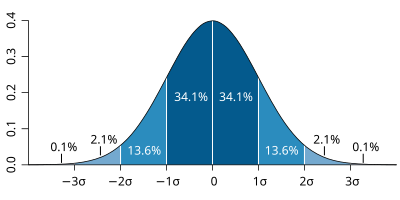 Gifted and talented kids grow all over the globe. Women and men from France, Israel, Japan, and many other countries have made Nobel Prize winning contributions to the world; basketball stars from China and Africa have played in the NBA; South Korea, Cuba, and Ethiopia are just a very few of the countries that have brought home medals from the Summer and Winter Olympics.
Based on a normal bell curve distribution, we know there are outlier gifted and talented boys and girls in every country in the world and in every socio-economic and disabled group within each country. Odense, Denmark, will host the 21st Biennial World Conference for Gifted and Talented Children from August 10 to 14, 2015. Details are available at worldgifted2015.com. Throughout the year The Global Center for Gifted and Talented Children (gcgtc.com) in Germany provides a full array of resources for parents, teachers, and young people. In honor of The International Day for Gifted Children, the Global Center is inviting gifted children to send it art, videos, poems, and blogs that can be posted at gcgtc.com.
To help children succeed in school and in life (and, I might add, to help them contribute to the peace and progress of the world), the Global Center offers solution-oriented coaching, teacher training, consulting by Skype or phone, workshops, diagnostic testing, conferences, and lectures by staff members. A downloadable flyer is available online and additional information can be requested by sending an email to info@gcgtc.com or by filling out a contact form at the Center's website. Since the Global Center's website offers information in at least 85 languages, there is little or no excuse for failing to make use of information tailored to the needs of gifted kids.
Online, the Center also recommends articles and informative blogs. Some of the blogs are written in Persian, Spanish, Dutch, and Norwegian, as well as English. I found Aimee Yermish's blog, written in English, to be extremely useful.
In addition to resources provided by the Global Center, with the help of their teachers, gifted and talented students can go to ePals.com, to find projects that let them collaborate with students in Italy, Egypt, Sweden, Liberia, Malaysia, and other countries. Projects are grouped by age, up to 17 and older. If gifted kids are interested in robots, they can find young people with similar interests at the website, Wevolver.com. There is more information about projects involving robots at the earlier blog post, "Robots for Good."
The mission of the Global Center for Gifted and Talented Children is one we all can aim to achieve: "We discover what a child is good at and then build on their own resources."
Thursday, February 19, 2015
Robots for Good
Where can techies around the world go to collaborate with other techies? One creative space is Wevolver.com, the web platform where co-founder, Richard Hulskes, offers open-source hardware technology and a way for people with project ideas to collaborate and build physical, tangible products at home. Pascal Jaussi, an engineer and Swiss Air Force military pilot, had a similar idea to make space accessible. His Swiss Space Systems in Payerne, canton Vaud, assembles existing components and uses proven technologies from the United States, Russia, Europe, and Asia to create sub-orbital reusable aircraft that can put commercial satellites into orbit.
The forces that have come together in Hulskes' "Robots for Good" project illustrate just how powerful technological collaboration can be.

One project provides an example. By combining:
One team in London is using the 3D printer to assemble an InMoov robot and Open Wheels segway that can move. Another in the U.S. is working on software. Kids will drive the robot with a remote control. And, wearing an oculus rift, they will be able to move the robot's head by moving their heads and to see through the robot's eyes.
Remote controlled drones also are being designed to fly over wildfires to relay information about sources of water in ponds and wells and escape routes to firefighters on the ground. According to National Geographic Kids (May, 2015), roboticist Thomas Bewley at the University of California at San Diego is already developing a drone like this. Only a little larger than a postage stamp, his drone requires less energy than it takes to power a lightbulb.
(Also see related ideas in earlier blog posts, "Play, Computer Connections, and Pets Come to the Aid of Sick Kids," "I Made This Myself," "Transform Spaces into Creative Places," and "Robot Revolution.")
The forces that have come together in Hulskes' "Robots for Good" project illustrate just how powerful technological collaboration can be.

One project provides an example. By combining:
- an Ultimaker 3D printer
- the head and torso of the humanoid InMoov 3D printable robot
- the free, downloadable blueprint and materials for an Open Wheels segway
- Samsung's head-mounted, virtual display oculus rift
- software
- children working with Ultimaker personnel at MakerMovement spaces in London
- seriously ill children at London's Great Ormond Street Hospital
One team in London is using the 3D printer to assemble an InMoov robot and Open Wheels segway that can move. Another in the U.S. is working on software. Kids will drive the robot with a remote control. And, wearing an oculus rift, they will be able to move the robot's head by moving their heads and to see through the robot's eyes.
Remote controlled drones also are being designed to fly over wildfires to relay information about sources of water in ponds and wells and escape routes to firefighters on the ground. According to National Geographic Kids (May, 2015), roboticist Thomas Bewley at the University of California at San Diego is already developing a drone like this. Only a little larger than a postage stamp, his drone requires less energy than it takes to power a lightbulb.
(Also see related ideas in earlier blog posts, "Play, Computer Connections, and Pets Come to the Aid of Sick Kids," "I Made This Myself," "Transform Spaces into Creative Places," and "Robot Revolution.")
Tuesday, September 10, 2013
Robot Revolution
 Children all around the world have a similar interest in robots. Check ePals.com to find schools in a wide variety of countries where students are eager to collaborate on robotic projects.
The word "robot" was first used in Czechoslovakia by the playwright, Karel Capek, to describe human-looking machines that could do the same job over and over again. Nowadays, robots utilize software, computer chips, sensors, microphones, lasers, video screens, wireless communications, remote controls, solar power, nanotechnology, and gyroscopes. Robotic devices can replace injured body parts, like legs and arms; load and unload ships; install and weld parts on an assembly line and under water; work in outer space; operate on the human body; enter the body to fight disease and diagnose illnesses; carry supplies around offices and hospitals; perform dangerous tasks like checking for bombs and hunting for survivors buried in rubble after an earthquake; hit military targets; and create special effects for theme parks and movies. Now, they are about to work alongside people in electronics factories, too.
Some robots are human-shaped, humanoids that move like persons; others look like machines. YoungExplorers.com, mindware.com, and Museumtour.com offer both varieties. With the help of a detailed manual, children can use the programmable rover they sell to make a robot that avoids obstacles and works for them.
Usually, robots prefer perfectly predictable conditions. The Roomba robot, for example, can scoot around the floor sucking up dust and dirt, but, when we tried to use it in a women's clothing store, it would get stuck in the dressing rooms. Children can see if they can clean a floor with their own "Brush Robot" from mindware.com.
Students (and adults) from all over the world who design their own robots enter competitions. Details about these events are available at robogames.net and robotbattles.com. A variety of websites offer free robot designs to get you started. Also, teens 13 to 18 can enter the annual Google Science Fair by going to googlesciencefair.com. Submissions this year are due by May 12, 2014.
Scientists are trying to design robots with artificial intelligence that can think on their own and human cyborgs implanted with robotic parts connected to their nervous systems and the outside world. Some argue that a machine may have the appearance of having conscious understanding without actually having it. Creating an ethical and legal system to deal with artificial intelligence and cyborgs could be a job robots cannot handle.
An article in Time magazine (September 9, 2013) noted three types of jobs that will not be replaced by robots: 1) solving unstructured problems (writing a persuasive legal brief or designing a corporate strategy); 2) working with new information (driving a truck in the fog on a rain slicked road); and 3) performing non-routine manual tasks (styling hair or fixing plumbing).
One further note. In the October, 2013 issue of The Futurist, the magazine of the World Future Society, Julie Carpenter, a researcher at the University of Washington, discusses the relationship between military personnel and the robots they use on the battlefield. Ms. Carpenter is concerned about the human, emotional attachment that can develop. She found that some soldiers name their robots for their girl friends. A soldier whose robot had saved his life may not want the robot to return to danger on the battlefield. And if a robot is damaged or fails to perform correctly, a soldier may get angry with it or think of it as a "poor little guy" that needs a proper funeral.
To keep up with developments in the field of robotics, check the library for Clive Gifford's How to Build a Robot, Mark Beyer's Robotics, and later books. If you want to draw a robot, like I did for this post, pick up the book, You Can Draw It! Robots, by Maggie Rosier and illustrated by Steve Porter.
Subscribe to:
Posts (Atom)