When Egyptian Air Flight MS804 from Paris to Cairo went down in the Mediterranean Sea on May 19, 2016, efforts to find the lost passengers and plane required a coordinated international search reminiscent of the continuing search for Malaysia Airlines Flight 370 in the Indian Ocean.
What comparisons could a student make? The main countries studying Flight MS804's crash are Egypt, Greece, France, England, and the United States. The search for Flight 370 has involved up to 26 countries.
Using an Atlas of the Bible and a World Atlas, I see this might be a good season to look for debris in the Mediterranean. According to the missionary travels of St. Paul, the safe sailing season, when the Mediterranean is free of storms, is from May 27 to September 14. The sea was rough during the first few days of the search, but the black box voice and flight data recorder finally was recovered on June 16. Thus far, although the recorder revealed smoke detectors went off in a toilet and under the cockpit just before the crash, whether fire was caused by a mechanical problem or a bomb is not known.
The World Atlas showed the water where Flight MS804 went down is roughly 5,000 to 10,000 feet deep. It was dark when Flight 840 disappeared off radar around 2:30 am, and no eye witnesses in the normally busy eastern Mediterranean immediately came forward with information. Neither have any terrorists groups taken credit for downing the plane. The lack of a sighting may indicate navigation instruments were compromised by a smoldering fire rather than by the flash of a bomb.
In the Indian Ocean west of Australia, where Flight 370 disappeared, the water is 20,000 or more feet deep. Currents off Australia move in a counterclockwise motion toward Africa, while the Mediterranean's currents flow south and easterly. Very little debris from Flight 370 has been found off east Africa's coast. and all searches for the missing plane were discontinued January 17, 2017. Flight MS804 was located in the Mediterranean east of the crash site and north of Alexandria, but no agreement about the cause of the crash has been reached.
Showing posts with label Flight 370. Show all posts
Showing posts with label Flight 370. Show all posts
Thursday, May 19, 2016

Friday, March 21, 2014
Who Needs International Expertise?
Public health and the hunt for Malaysia Airlines Flight 370, which disappeared March 8, 2014, (and the later search for Air Asia Flight 8501, which crashed into the Java Sea on December 28, 2014) demonstrate how global problems require cooperation of experts in a wide variety of disciplines.
Not only does disease involve those versed in the biological complexity of the causes, cures, and prevention of a multi-country Ebola, flu, or Zika virus epidemics, but it also requires precautions by those involved in all aspects of transportation. Urban design and environmental science also can have an impact on how diseases are transmitted throughout the world.
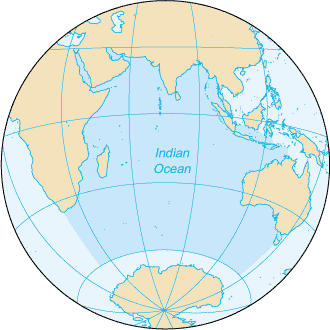
In the case of Flight 370's disappearance, lack of coordination between countries confused the search effort for at least three days when 12 countries were flying nearly 40 planes and navigating as many ships in an area east and west of Malaysia. When military and civilian personnel began sharing speculations and data about radar soundings, satellite photos, and debris sightings, the search area shifted to 1500 miles off the west coast of Australia and then an area to the northeast that was closer to Australia and in a less turbulent spot in the Indian Ocean.
Even with 26 countries involved in the search, as of September, 2014, there was still no trace of the downed plane. It was not until July, 2015 that the first wreckage from Malaysia Flight 370 turned up on the French territory of Reunion Island, off the east coast of Africa east of Madagascar. Another possible piece of the lost plane was found between Madagascar and Mozambique in March, 2016. (Debris from the tsunami that hit Japan in 2011 continued to reach Alaska four years later in 2015.) Since Madagascar is far west of the area near Australia, where the plane was thought to go down, weather and ocean current experts will help pin point where the plane might have run out of fuel. Even before the plane has been located, underwater experts have joined the mission to map the mountainous ocean floor. Despite this massive international search, after nearly three years the airplane had not been found and the search was discontinued on January 17, 2017.
The disappearance of Malaysia Airlines Flight 370 also has led to trials of new ways to track aircraft flying over ocean expanses. In a report submitted to the International Civil Aviation Organization (ICAO), a test of the global satellite communication system developed by UK firm, Inmarsat, showed it was possible for aircraft flying over oceanic airspace to report position, speed, altitude, and direction every 14 minutes at a minimal or neutral cost.
The number of people and variety of disciplines required to solve a crisis brought on by disease or a plane crash illustrates how tasks involving international cooperation are not limited to diplomats. To see how many kinds of research can involve an international effort, check out the later post, "Calling All Space Sleuths."
Not only does disease involve those versed in the biological complexity of the causes, cures, and prevention of a multi-country Ebola, flu, or Zika virus epidemics, but it also requires precautions by those involved in all aspects of transportation. Urban design and environmental science also can have an impact on how diseases are transmitted throughout the world.
In the case of Flight 370's disappearance, lack of coordination between countries confused the search effort for at least three days when 12 countries were flying nearly 40 planes and navigating as many ships in an area east and west of Malaysia. When military and civilian personnel began sharing speculations and data about radar soundings, satellite photos, and debris sightings, the search area shifted to 1500 miles off the west coast of Australia and then an area to the northeast that was closer to Australia and in a less turbulent spot in the Indian Ocean.
Even with 26 countries involved in the search, as of September, 2014, there was still no trace of the downed plane. It was not until July, 2015 that the first wreckage from Malaysia Flight 370 turned up on the French territory of Reunion Island, off the east coast of Africa east of Madagascar. Another possible piece of the lost plane was found between Madagascar and Mozambique in March, 2016. (Debris from the tsunami that hit Japan in 2011 continued to reach Alaska four years later in 2015.) Since Madagascar is far west of the area near Australia, where the plane was thought to go down, weather and ocean current experts will help pin point where the plane might have run out of fuel. Even before the plane has been located, underwater experts have joined the mission to map the mountainous ocean floor. Despite this massive international search, after nearly three years the airplane had not been found and the search was discontinued on January 17, 2017.
The disappearance of Malaysia Airlines Flight 370 also has led to trials of new ways to track aircraft flying over ocean expanses. In a report submitted to the International Civil Aviation Organization (ICAO), a test of the global satellite communication system developed by UK firm, Inmarsat, showed it was possible for aircraft flying over oceanic airspace to report position, speed, altitude, and direction every 14 minutes at a minimal or neutral cost.
The number of people and variety of disciplines required to solve a crisis brought on by disease or a plane crash illustrates how tasks involving international cooperation are not limited to diplomats. To see how many kinds of research can involve an international effort, check out the later post, "Calling All Space Sleuths."
Subscribe to:
Posts (Atom)