According to the final vote tabulation on February 27, 2019, President Buhari, who had promised to fight corruption, won re-election by a wide margin. He asked his voters not to gloat, since victory was prize enough. As expected, his opponent, Mr. Abubakar, claimed the vote count in some areas was suspect, and he said he would contest the election in court.
Nigeria's February 16, 2019 presidential election had been rescheduled to February 23. Leading candidates, current President Muhammadu Buhari and wealthy businessman Atiku Abubakar, both Fulani Muslims from northern Nigeria, blamed each other for the delay as an attempt to rig the election in their favor. The National Election Commission claimed weather conditions prevented all the ballots from reaching Nigeria's 120,000 polling places.
There was general agreement that either winner would have to deal with: Boko Haram terrorists determined to eliminate Christian influences, conflict between cattle herders and farmers, restructuring representation to provide greater balance between Muslims in the north and southern Christians, unemployment over 20%, economic hardship from volatile oil export revenue, crushing public debt, and corruption.
Buying votes and rigging elections are features of local, governor, party primary, and presidential elections, but they are far from the only sources of corruption in Nigeria. The state-owned Ajabkuta Steel Company, which has received $8 billion and "employed" 10,000 over a 40 year period, has never produced any steel, according to The Economist (February 9, 2019). Carnegie's Endowment for International Peace identified corruption as the greatest obstacle preventing Nigeria, with Africa's largest economy and population, from achieving its enormous potential.
Contract fraud, embezzlement, money laundering, bribes, and other forms of corruption siphon off billions from every economic sector: petroleum, trade, manufacturing, agriculture, transportation, energy, banking, and the environment.
Bureaucratic corruption channels funds into questionable departments. Nigeria has three space agencies that only have managed to launch five satellites into orbit.
Politicians also pocket funds meant for hospitals and clinics. In the areas of health, education, and humanitarian aid, corruption prevents international organizations from providing development and emergency assistance.
Authors of books on trust in business, Barbara Brooke Kimmel and Charles H. Green, note "the most powerful form of trust is personal." They know words require backup by action. Nigeria may lay claim to democracy, security, and progress, but these words have no meaning as long as corruption undermines every personal transaction.
Showing posts with label Muslims. Show all posts
Showing posts with label Muslims. Show all posts
Monday, February 11, 2019

Tuesday, October 23, 2018
2018-2019 Struggle for Human Rights
No struggle for human rights around the world is ever complete. The record that I began in the earlier post, "Hope for the Future," needs to be updated with some positive and negative developments.
Archbishop Oscar Romero, who was murdered by a military death squad in 1980 because he spoke out for unions and poor peasant groups against the grip of prosperous coffee growers and capitalism in El Salvador, was declared a saint of the Catholic Church in 2018.
Vietnam released and exiled "Mother Mushroom," Nguyen Ngoc Nhu Quynh, who had been jailed for writing about the country's corruption and pollution.
Boko Haram continues to kill and kidnap innocent victims in Nigeria and the Cameroon.
North Korea has re-education camps for thousands, and China also holds Muslim Uighurs in camps because their religion is said to undermine peace and security. In March, 2019, Kazakhstan would demonstrate an effort to maintain good relations with its Chinese neighbor by arresting Serikzhan Bilash for supporting Uighurs detained in Xinjiang's camps.
Russia tried unsuccessfully to poison a spy in the UK in 2018, and it continues to hold political prisoners, such as Oleg Sentsov and Oleg and Alexei Navalny. In February, 2019, Russia would arrest Michael Calvey, a U.S financier, which is reminiscent of the expulsion of Browder, whose tax expert, sometimes called his lawyer, Sergei Magnitsky, died in a Russian prison.
For criticizing the regime of King Salman and his son, Muhammad bin Salman (MBS), the Saudi Arabian journalist and US resident, Jamal Khashoggi, was murdered at the Saudi consulate in Turkey in October, 2018, but in the same month, a Turkish court released a US pastor, Andrew Brunson, who had been in prison there on false terrorism charges for two years.
Archbishop Oscar Romero, who was murdered by a military death squad in 1980 because he spoke out for unions and poor peasant groups against the grip of prosperous coffee growers and capitalism in El Salvador, was declared a saint of the Catholic Church in 2018.
Vietnam released and exiled "Mother Mushroom," Nguyen Ngoc Nhu Quynh, who had been jailed for writing about the country's corruption and pollution.
Boko Haram continues to kill and kidnap innocent victims in Nigeria and the Cameroon.
North Korea has re-education camps for thousands, and China also holds Muslim Uighurs in camps because their religion is said to undermine peace and security. In March, 2019, Kazakhstan would demonstrate an effort to maintain good relations with its Chinese neighbor by arresting Serikzhan Bilash for supporting Uighurs detained in Xinjiang's camps.
Russia tried unsuccessfully to poison a spy in the UK in 2018, and it continues to hold political prisoners, such as Oleg Sentsov and Oleg and Alexei Navalny. In February, 2019, Russia would arrest Michael Calvey, a U.S financier, which is reminiscent of the expulsion of Browder, whose tax expert, sometimes called his lawyer, Sergei Magnitsky, died in a Russian prison.
For criticizing the regime of King Salman and his son, Muhammad bin Salman (MBS), the Saudi Arabian journalist and US resident, Jamal Khashoggi, was murdered at the Saudi consulate in Turkey in October, 2018, but in the same month, a Turkish court released a US pastor, Andrew Brunson, who had been in prison there on false terrorism charges for two years.
Saturday, May 12, 2018
You Have To Be Carefully Taught
If a child has never met a blind student from Peru, a Muslim actor, or a rich Chinese businessman, how will he or she feel about these people? In the musical, South Pacific, the U.S. soldier who begins to fall in love with an island girl he meets during World War II sings "You have to be carefully taught."
Lucky children like Meghan Markle might have a black and a white parent, and a young President Obama even had a mother from the United States and a father from Kenya, got to spend early years in Indonesia, and grew to a young man in the diverse cultures of Hawaii. Lucky kids might get to know Hispanic, black, and white kids while playing basketball together on a neighborhood court. Korean and Italian kids could meet singing together in a church choir. And before a teen in a wheelchair and the school's aspiring ballerina publish their first comic book, they might have worked together on the school's newspaper.
All sorts of robotic, marketing, math, trivia, and forensic competitions bring together kids with different backgrounds and genders. Yet, news events constantly show the danger of relying on luck to form children into adults who acknowledge the similarities and respect the differences of others. The fact is, children have adult mentors who influence them to think about people in ways that help or harm the world.
In the United States, children are about to honor their Mothers on Mother's Day this weekend and their Fathers on Father's Day next month. Around the world, mothers and fathers should be honored, because they are in a powerful position. They can pass on their prejudices or open young minds.
When trendwatching.com reports the Mexican startup company Sign'n, uses software to employ artificial intelligence that translates speech into Mexican sign language, we suspect someone nurtured a young inventor's concern for those marginalized because of their hearing disability. Likewise, visually-impaired Brazilians employed to use their enhanced smell and taste senses as beer sommeliers have someone to thank for helping a young person learn to consider and remedy the needs of others.
A Muslim friend recently introduced me to a book, Crescent Moons and Pointed Minarets, that uses rhymes and English translations of Arabic to present various shapes and to convey Islamic traditions and terms. At the end of the book, a Glossary provides definitions of the Arabic words used and a phonetic guide to their pronunciations.
As an example of the way the book's author, Hena Khan, and artist, Mehrdokht Amini, combine words and art, picture how, under an arch embellished with complex borders and patterns of flowers and vines that resemble those in Persian rugs. readers learn:
Lucky children like Meghan Markle might have a black and a white parent, and a young President Obama even had a mother from the United States and a father from Kenya, got to spend early years in Indonesia, and grew to a young man in the diverse cultures of Hawaii. Lucky kids might get to know Hispanic, black, and white kids while playing basketball together on a neighborhood court. Korean and Italian kids could meet singing together in a church choir. And before a teen in a wheelchair and the school's aspiring ballerina publish their first comic book, they might have worked together on the school's newspaper.
All sorts of robotic, marketing, math, trivia, and forensic competitions bring together kids with different backgrounds and genders. Yet, news events constantly show the danger of relying on luck to form children into adults who acknowledge the similarities and respect the differences of others. The fact is, children have adult mentors who influence them to think about people in ways that help or harm the world.
In the United States, children are about to honor their Mothers on Mother's Day this weekend and their Fathers on Father's Day next month. Around the world, mothers and fathers should be honored, because they are in a powerful position. They can pass on their prejudices or open young minds.
When trendwatching.com reports the Mexican startup company Sign'n, uses software to employ artificial intelligence that translates speech into Mexican sign language, we suspect someone nurtured a young inventor's concern for those marginalized because of their hearing disability. Likewise, visually-impaired Brazilians employed to use their enhanced smell and taste senses as beer sommeliers have someone to thank for helping a young person learn to consider and remedy the needs of others.
A Muslim friend recently introduced me to a book, Crescent Moons and Pointed Minarets, that uses rhymes and English translations of Arabic to present various shapes and to convey Islamic traditions and terms. At the end of the book, a Glossary provides definitions of the Arabic words used and a phonetic guide to their pronunciations.
As an example of the way the book's author, Hena Khan, and artist, Mehrdokht Amini, combine words and art, picture how, under an arch embellished with complex borders and patterns of flowers and vines that resemble those in Persian rugs. readers learn:
Arch is the mihrab
that guides our way.
We stand and face it
each time we pray.
In contrast to picturing Muslims as over a billion religious people known for the early contributions of their mathematicians and astronomers, today's news reports Boko Haram added to its Nigerian terrorist kidnappings and killings by bombing a mosque and market. And Islamic fighters in Iraq commit genocide and sell Yazidi women and girls into slavery or hold them as sex slaves. Somehow these Muslims have not been carefully taught right from wrong.
Regimes, like those in Iran, China, and Russia, seem oppressive because they censure the broadcast and social media they allow their populations to see. But aren't we doing much the same thing, when algorithms select the books we read, the films we watch, and the news and ads we see, or when we self-censure by only watching the cable news stations that agree with us? Teaching ourselves and our children to keep open minds takes work, work both needed and worth doing...very carefully.
Saturday, March 10, 2018
China's Plan for World Domination
What developing country could resist participating in China's One Belt One Road (OBOR) and Maritime Silk Road (MSR) initiatives to construct roads, railroads, bridges, and power plants that would enable a rural exodus to jobs in urban centers, employ the unemployed, stimulate manufacturing, and facilitate trade? What developed country could resist participating in the financial enterprise of investing in China's estimated $1 trillion to $8 trillion project?
That's the good news. Students are challenged to activate their critical thinking to anticipate, and even suggest solutions for, the problems that have and will develop along these routes.
Finance: Traditionally, the international financial institutions charged with funding major projects include the World Bank, dominated by the United States; the International Monetary Fund (IMF), whose president comes from Europe; and the Asian Development Bank headed by a president from Japan. Because the funding process of these institutions was considered too slow and the required plan preparation was too costly, a New Development Bank, Asian Infrastructure Investment Bank (AIIB), and Silk Road Fund were established to pick up the pace.
Since then, the Islamic Development Bank has agreed to jointly finance African projects with the AIIB, and Japanese, British, and US banks also are looking into ways to cooperate with China. Japan and the United States did not join the AIIB, because they suspected the bank would lack concern about labor, environmental sustainability, and requirements for democratic reform, since China considers all political systems equal and claims not to interfere with a recipient's sovereignty. As it has turned out, the AIIB is careful to abide by international norms, but the bank seems to retain its image by avoiding involvement with One Belt, One Road (OBOR) projects.
After World War II, the Marshall Plan helped rebuild a Europe that had existed. China's One Belt, One Road plan attempts to build something that never existed before what exits is ready to use it. As a result, Chinese development projects and financing bury recipients, such as Angola and Zambia, in debt. Half the countries in sub-Sahara Africa now have public debt greater than half their GDPs. There is growing concern about the raw materials, state power utilities, and other compensation China might require in case of loan defaults. Sri Lanka already was asked to share intelligence about traffic passing through its now bankrupt and Chinese-seized port. Zambia's default on a Chinese loan repayment resulted in immediate discussions that could lead to seizure of Zambia's electric company, ZESCO. The following eight countries have been singled out as in danger of assuming too great a Chinese debt burden: Laos, Kyrgyzstan, the Maldives, Montenegro, Djibouti, Tajikistan, Mongolia, and Pakistan.
Pakistan's new prime minister, Imran Khan, found out countries cannot escape hard financial realities. Fed up with "hand outs from the West," Pakistan hoped to avoid the scrutiny of loan requests submitted to the IMF. But even China, in the process of using Pakistan to gain access to the mineral riches in Afghanistan's mountains and to encircle India with its OBOR projects, balked at loaning funds to cover the $10 billion Pakistan needs for the next few month's fuel imports and foreign debt repayments. Saudi Arabia only offered to consider investing in the $60 billion China-Pakistan Economic Corridor (CPEC), the part of China's OBOR that includes a deep water port at Gwadar, Pakistan, and a major dam at Karot on the Pakistan-India-Chinese border. Now that the IMF is evaluating Pakistan's loan application, China also faces scrutiny of the secret terms of its CPEC contracts.
Reminiscent of the way Britain achieved control over the Suez Canal, China is creating influence and economic dependency in a wide swath of territory. With complex partnerships, including with the developing countries themselves, and enormous amounts of money at risk, diverse financial instruments handle equity participation, public-private partnerships, insurance, loan guarantees, debt instruments, first-loss equity, challenge funds, grants, and project preparation support. In cases of shared risk, allocating amounts to partners is challenging. Reducing risks also requires staff to monitor project progress and maximize the speed of fixing mistakes. At any time, China can call in loans for non-payment.
Political conflict: Beijing's Maritime Silk Road includes the deep water port China is building at Gwadar, Pakistan, to gain access to the Arabian Sea and avoid shipping oil farther east through the congested Malacca Straight. From Gwadar, China plans a route north and east toward the Karot hydroelectric power plant on the Jhelum River southeast of Islamabad and into China's Xinjiang Uighur Autonomous Region, China, which already uses facial recognition technology to track 2.5 million in its Xinjiang province, also would gain another way to control the restive Uighur Muslim minority that lives among the Chinese Han majority. Since China's President Xi Jinping came to power in 2012, he has pushed the idea that China's atheistic political system should be considered just as valid, especially for maintaining China's peace and security, as the governments of any other countries.
Try as hard as it might, however, the Chinese Communist Party has been unable to squelch Muslim Uighurs, but also Christians and Taoists in Chengdu's panda-breeding city and Buddhists in Tibet (as well as democracy activists in Hong Kong and Taiwan). More than a million Uighurs are said to be confined in re-education camps. Increased surveillance using facial recognition, AI, and computer monitoring systems tries to catch violations. Rather than be shut out of a major market, even Google was poised to develop a "Dragonfly" search engine that would meet China's censorship requirements by excluding keywords, such as Tiananmen, until its employees refused to compromise their ethics in order to work on the project.
A part of the Pakistan to China road also passes through Kashmir, the primarily Muslim site of a territorial dispute between the nuclear powers, Pakistan and Hindu India. For the first time in 30 years, the Kashmir flash point came under a major attack in February, 2019, when a suicide bomber from Pakistan killed 40 of India's security forces. To further complicate border tensions, Saudi Arabia's crown prince, Muhammad bin Salman, who is accused of directing the murder of journalist, Jamal Khashoggi, seemed to challenge China's influence in the area by visiting with a promise to invest in Pakistan and India.
Thus far, India's military buildup, economic shortfalls in the region, and ethnic/religious conflict have prevented Beijing from surrounding India. The two countries, India and China, already needed to resolve a 2017 border dispute by establishing a hotline between them. With the launch of its Arihant submarine in November, 2018, India enhanced its military capability in the area by adding sea-based, short-range nuclear missiles capable of reaching China and Pakistan to its air- and land-based missile systems.
In the south, the Indian Ocean's strategic Maldive Islands ousted China's hand-picked president. Under former President Yameen, Chinese influence had started to replace the protection India provided after the Maldives and India achieved independence from Britain. Millions in low interest Chinese loans began funding construction of a bridge from the Maldive capital in Male to the main airport, as well as housing and a hospital that could support a naval base. Saudi Arabia also has showed interest in the Maldive atolls and constructed a major mosque there.
Beijing's effort to eliminate the need to import oil through the congested Malacca Straight also moves China closer to India in the southeast. China plans to construct a road-rail-pipeline corridor through Myanmar, from its Shan state in the east to a port on the Bay of Bengal in the Rakhine state on the Bangladesh border. The Chinese conglomerate constructing the port is financing 70% of the project, but Myanmar is hard-pressed to fund its 30%, much less the rest of the country-wide project. Myanmar's Buddhist government and military face warring factions: the Muslim Rohingyas; the Arakan Army of Buddhist Rakhine that opposes the Burman-dominated Buddhist government; and the Northern Alliance Brotherhood, a coalition of insurgents from Kachin and Shan states.
In Central Asia, China runs into conflict with Russia, especially in resource-rich Kazakhstan, sometimes called the buckle of the new Silk Road.
The South China Sea finds China challenged by the United States, Japan, the Philippines, Vietnam, Thailand, Malaysia, and Brunei. Of course, there is a chance that rising waters on the overheated planet may swamp the atolls, small islands, and reefs China has militarized there, as well as in the Maldives in the Indian Ocean.
Finally, any country's government can stall, kill, or seize a project on China's land and sea routes. History recalls how France and England struggled to build and finance the Suez Canal only to have Gamal Nasser seize it in the spirit of anti-colonial nationalism. Three months into his new position, after defeating Chinese-backed Najib Razak, Malaysia's new, 93-year-old prime minister, Dr. Mahathir Mohamad, termed Chinese loans Chinese "colonialism." He traveled to Beijing to cancel the previous government's $20 billion agreement to let China build a high speed railway and two oil pipelines. China may have a way to regain these contracts, however. Malaysia is eager to prosecute Jho Low, the Malaysian mastermind behind a plot that misappropriated funds raised by three bond offerings Goldman Sachs underwrote for a Malaysian wealth fund. China could offer to turn over Mr. Low in exchange for the resumption of the cancelled projects. To block a Chinese-financed upscale Malaysian housing project wealthy Chinese investors, but not most Malaysians, could afford, Dr. Mohamad said Malaysia would not grant visas for foreigners to live there. Anwar Ibrahim is expected to replace Mahathir Mohamad, when he resigns as prime minister.
Sierra Leone's new president, Julius Maada Bio, canceled the previous administration's contract for the Chinese-financed Mamamah International Airport. As the country's aviation ministry observed, construction of a new airport would be uneconomical when the existing one is underutilized.
China also experienced opposition, when Nepal referred a Chinese project to review by anti-corruption watchdogs. Feeling overextended, Pakistan shut down projects on the China-Pakistan Economic Corridor Beijing views as its access to the Arabian Sea. It seeks more lending from China instead of an IMF loan. Even at home, Chinese citizens are beginning to view potential defaults on loans, especially to Africa, as foreign aid better used to finance domestic needs.
Environment: Constructing roads, railroads, bridges, and power plants has a major impact on the environment. At the same time cutting trees to make way for roads, rails, and tunnels, and laying thousands of miles of concrete invite flooding by eliminating anchors for soil and ground to absorb rain, increased truck and car traffic and the added heat from burning fossil fuels to generate electricity from power plants will warm the planet and increase the need for trees to absorb greenhouse gases.
Railroad projects in Kenya and seaport construction at Walvis Bay, Namibia, led locals to demand protection for wild life. China remains a major market for the ivory and rhino horn poachers obtain by killing Africa's elephants and rhino.
Infrastructure projects also can be expected to encounter objections from non-governmental organizations (NGOs) with environmental, as well as religious, human rights, and other concerns.
Employment: With a population of 1.4 billion people, China is in a position to provide all the skilled and unskilled labor needed to design, engineer, construct, administer, staff, monitor, and maintain its OBOR and MSR projects. Should governments along these routes expect China to employ their countries' unemployed, China will see no need to pay desirable wages nor to establish exemplary working conditions. Experience in Africa shows China's railroad projects have generated protests over poor pay and treatment. African construction companies even have seen contracts to build government buildings go to Chinese firms instead of local ones. Also, African industries and shop owners that expected to benefit from Chinese-financed roads and rails have found themselves unable to compete with cheaper Chinese imports.
What cannot be ignored is how the hundreds of migrant workers employed on China's widespread infrastructure projects could pose a major threat of disease transmission, especially of AIDS. Despite the attempt of Chinese managers to confine workers to monitored compounds, employees likely will be determined to find ways to meet local women.
Looking at topographical maps will give students an idea of the challenges of constructing routes through mountains, forests, and deserts and over rivers. (The earlier post, "All Aboard for China's African Railroads," describes problems of terrain, as well as financial and other problems, that can arise with projects in developing countries.) All in all, watching the progress along China's One Belt One Road and Maritime Silk Road will give students an interesting learning experience for years to come.
That's the good news. Students are challenged to activate their critical thinking to anticipate, and even suggest solutions for, the problems that have and will develop along these routes.
Finance: Traditionally, the international financial institutions charged with funding major projects include the World Bank, dominated by the United States; the International Monetary Fund (IMF), whose president comes from Europe; and the Asian Development Bank headed by a president from Japan. Because the funding process of these institutions was considered too slow and the required plan preparation was too costly, a New Development Bank, Asian Infrastructure Investment Bank (AIIB), and Silk Road Fund were established to pick up the pace.
Since then, the Islamic Development Bank has agreed to jointly finance African projects with the AIIB, and Japanese, British, and US banks also are looking into ways to cooperate with China. Japan and the United States did not join the AIIB, because they suspected the bank would lack concern about labor, environmental sustainability, and requirements for democratic reform, since China considers all political systems equal and claims not to interfere with a recipient's sovereignty. As it has turned out, the AIIB is careful to abide by international norms, but the bank seems to retain its image by avoiding involvement with One Belt, One Road (OBOR) projects.
After World War II, the Marshall Plan helped rebuild a Europe that had existed. China's One Belt, One Road plan attempts to build something that never existed before what exits is ready to use it. As a result, Chinese development projects and financing bury recipients, such as Angola and Zambia, in debt. Half the countries in sub-Sahara Africa now have public debt greater than half their GDPs. There is growing concern about the raw materials, state power utilities, and other compensation China might require in case of loan defaults. Sri Lanka already was asked to share intelligence about traffic passing through its now bankrupt and Chinese-seized port. Zambia's default on a Chinese loan repayment resulted in immediate discussions that could lead to seizure of Zambia's electric company, ZESCO. The following eight countries have been singled out as in danger of assuming too great a Chinese debt burden: Laos, Kyrgyzstan, the Maldives, Montenegro, Djibouti, Tajikistan, Mongolia, and Pakistan.
Pakistan's new prime minister, Imran Khan, found out countries cannot escape hard financial realities. Fed up with "hand outs from the West," Pakistan hoped to avoid the scrutiny of loan requests submitted to the IMF. But even China, in the process of using Pakistan to gain access to the mineral riches in Afghanistan's mountains and to encircle India with its OBOR projects, balked at loaning funds to cover the $10 billion Pakistan needs for the next few month's fuel imports and foreign debt repayments. Saudi Arabia only offered to consider investing in the $60 billion China-Pakistan Economic Corridor (CPEC), the part of China's OBOR that includes a deep water port at Gwadar, Pakistan, and a major dam at Karot on the Pakistan-India-Chinese border. Now that the IMF is evaluating Pakistan's loan application, China also faces scrutiny of the secret terms of its CPEC contracts.
Reminiscent of the way Britain achieved control over the Suez Canal, China is creating influence and economic dependency in a wide swath of territory. With complex partnerships, including with the developing countries themselves, and enormous amounts of money at risk, diverse financial instruments handle equity participation, public-private partnerships, insurance, loan guarantees, debt instruments, first-loss equity, challenge funds, grants, and project preparation support. In cases of shared risk, allocating amounts to partners is challenging. Reducing risks also requires staff to monitor project progress and maximize the speed of fixing mistakes. At any time, China can call in loans for non-payment.
Political conflict: Beijing's Maritime Silk Road includes the deep water port China is building at Gwadar, Pakistan, to gain access to the Arabian Sea and avoid shipping oil farther east through the congested Malacca Straight. From Gwadar, China plans a route north and east toward the Karot hydroelectric power plant on the Jhelum River southeast of Islamabad and into China's Xinjiang Uighur Autonomous Region, China, which already uses facial recognition technology to track 2.5 million in its Xinjiang province, also would gain another way to control the restive Uighur Muslim minority that lives among the Chinese Han majority. Since China's President Xi Jinping came to power in 2012, he has pushed the idea that China's atheistic political system should be considered just as valid, especially for maintaining China's peace and security, as the governments of any other countries.
Try as hard as it might, however, the Chinese Communist Party has been unable to squelch Muslim Uighurs, but also Christians and Taoists in Chengdu's panda-breeding city and Buddhists in Tibet (as well as democracy activists in Hong Kong and Taiwan). More than a million Uighurs are said to be confined in re-education camps. Increased surveillance using facial recognition, AI, and computer monitoring systems tries to catch violations. Rather than be shut out of a major market, even Google was poised to develop a "Dragonfly" search engine that would meet China's censorship requirements by excluding keywords, such as Tiananmen, until its employees refused to compromise their ethics in order to work on the project.
A part of the Pakistan to China road also passes through Kashmir, the primarily Muslim site of a territorial dispute between the nuclear powers, Pakistan and Hindu India. For the first time in 30 years, the Kashmir flash point came under a major attack in February, 2019, when a suicide bomber from Pakistan killed 40 of India's security forces. To further complicate border tensions, Saudi Arabia's crown prince, Muhammad bin Salman, who is accused of directing the murder of journalist, Jamal Khashoggi, seemed to challenge China's influence in the area by visiting with a promise to invest in Pakistan and India.
Thus far, India's military buildup, economic shortfalls in the region, and ethnic/religious conflict have prevented Beijing from surrounding India. The two countries, India and China, already needed to resolve a 2017 border dispute by establishing a hotline between them. With the launch of its Arihant submarine in November, 2018, India enhanced its military capability in the area by adding sea-based, short-range nuclear missiles capable of reaching China and Pakistan to its air- and land-based missile systems.
In the south, the Indian Ocean's strategic Maldive Islands ousted China's hand-picked president. Under former President Yameen, Chinese influence had started to replace the protection India provided after the Maldives and India achieved independence from Britain. Millions in low interest Chinese loans began funding construction of a bridge from the Maldive capital in Male to the main airport, as well as housing and a hospital that could support a naval base. Saudi Arabia also has showed interest in the Maldive atolls and constructed a major mosque there.
Beijing's effort to eliminate the need to import oil through the congested Malacca Straight also moves China closer to India in the southeast. China plans to construct a road-rail-pipeline corridor through Myanmar, from its Shan state in the east to a port on the Bay of Bengal in the Rakhine state on the Bangladesh border. The Chinese conglomerate constructing the port is financing 70% of the project, but Myanmar is hard-pressed to fund its 30%, much less the rest of the country-wide project. Myanmar's Buddhist government and military face warring factions: the Muslim Rohingyas; the Arakan Army of Buddhist Rakhine that opposes the Burman-dominated Buddhist government; and the Northern Alliance Brotherhood, a coalition of insurgents from Kachin and Shan states.
In Central Asia, China runs into conflict with Russia, especially in resource-rich Kazakhstan, sometimes called the buckle of the new Silk Road.
The South China Sea finds China challenged by the United States, Japan, the Philippines, Vietnam, Thailand, Malaysia, and Brunei. Of course, there is a chance that rising waters on the overheated planet may swamp the atolls, small islands, and reefs China has militarized there, as well as in the Maldives in the Indian Ocean.
Finally, any country's government can stall, kill, or seize a project on China's land and sea routes. History recalls how France and England struggled to build and finance the Suez Canal only to have Gamal Nasser seize it in the spirit of anti-colonial nationalism. Three months into his new position, after defeating Chinese-backed Najib Razak, Malaysia's new, 93-year-old prime minister, Dr. Mahathir Mohamad, termed Chinese loans Chinese "colonialism." He traveled to Beijing to cancel the previous government's $20 billion agreement to let China build a high speed railway and two oil pipelines. China may have a way to regain these contracts, however. Malaysia is eager to prosecute Jho Low, the Malaysian mastermind behind a plot that misappropriated funds raised by three bond offerings Goldman Sachs underwrote for a Malaysian wealth fund. China could offer to turn over Mr. Low in exchange for the resumption of the cancelled projects. To block a Chinese-financed upscale Malaysian housing project wealthy Chinese investors, but not most Malaysians, could afford, Dr. Mohamad said Malaysia would not grant visas for foreigners to live there. Anwar Ibrahim is expected to replace Mahathir Mohamad, when he resigns as prime minister.
Sierra Leone's new president, Julius Maada Bio, canceled the previous administration's contract for the Chinese-financed Mamamah International Airport. As the country's aviation ministry observed, construction of a new airport would be uneconomical when the existing one is underutilized.
China also experienced opposition, when Nepal referred a Chinese project to review by anti-corruption watchdogs. Feeling overextended, Pakistan shut down projects on the China-Pakistan Economic Corridor Beijing views as its access to the Arabian Sea. It seeks more lending from China instead of an IMF loan. Even at home, Chinese citizens are beginning to view potential defaults on loans, especially to Africa, as foreign aid better used to finance domestic needs.
Environment: Constructing roads, railroads, bridges, and power plants has a major impact on the environment. At the same time cutting trees to make way for roads, rails, and tunnels, and laying thousands of miles of concrete invite flooding by eliminating anchors for soil and ground to absorb rain, increased truck and car traffic and the added heat from burning fossil fuels to generate electricity from power plants will warm the planet and increase the need for trees to absorb greenhouse gases.
Railroad projects in Kenya and seaport construction at Walvis Bay, Namibia, led locals to demand protection for wild life. China remains a major market for the ivory and rhino horn poachers obtain by killing Africa's elephants and rhino.
Infrastructure projects also can be expected to encounter objections from non-governmental organizations (NGOs) with environmental, as well as religious, human rights, and other concerns.
Employment: With a population of 1.4 billion people, China is in a position to provide all the skilled and unskilled labor needed to design, engineer, construct, administer, staff, monitor, and maintain its OBOR and MSR projects. Should governments along these routes expect China to employ their countries' unemployed, China will see no need to pay desirable wages nor to establish exemplary working conditions. Experience in Africa shows China's railroad projects have generated protests over poor pay and treatment. African construction companies even have seen contracts to build government buildings go to Chinese firms instead of local ones. Also, African industries and shop owners that expected to benefit from Chinese-financed roads and rails have found themselves unable to compete with cheaper Chinese imports.
What cannot be ignored is how the hundreds of migrant workers employed on China's widespread infrastructure projects could pose a major threat of disease transmission, especially of AIDS. Despite the attempt of Chinese managers to confine workers to monitored compounds, employees likely will be determined to find ways to meet local women.
Looking at topographical maps will give students an idea of the challenges of constructing routes through mountains, forests, and deserts and over rivers. (The earlier post, "All Aboard for China's African Railroads," describes problems of terrain, as well as financial and other problems, that can arise with projects in developing countries.) All in all, watching the progress along China's One Belt One Road and Maritime Silk Road will give students an interesting learning experience for years to come.
Tuesday, February 6, 2018
February's International Film Festival
One of the most pleasant ways to learn about a country is to go to a movie made in or about somewhere you don't live. When Oscar nominations for short and feature films are announced, it's time to start looking for theatres that show them, because many of these potential Academy Award winners have an international connection.
This year, in the animated shorts category, South Africa presents Revolting Rhymes based on Ronald Dahl's dark spin on fairy tales. One French short, Negative Space, shows a sad relationship between father and son can exist in any culture, and, in another French short, two amphibians explore a deserted mansion. These shorts are shown together with two U.S. films: the Pixar short, Lou, that ran before Cars and Kobe Bryant's retirement letter, Dear Basketball.
Since the live action shorts nominated for Oscars often portray news events, they can be a pleasant way to see both uplifting and unpleasant aspects of a country. Watu Wote (All of Us) shows how Muslims risked their lives to protect the Christians riding on a bus with them, when Islamic terrorists attacked in Kenya. The British short, The Silent Child, introduces the social worker who taught a deaf 4-year-old girl the sign language that enabled her to come out of the shadows and be included in family conversations. Two U.S. entries cover a school shooting in Atlanta titled DeKalb Elementary and My Nephew Emmett based on the 1955 racist murder of Emmett Till. Australian humor is on display in The Eleven O'Clock, a short about an appointment between a psychiatrist and patient that try to treat each other.
Families already may have seen the animated feature, Coco, which has a Mexican theme depicting how a death in the family shouldn't end memories of a relative. Loving Vincent probably won't have wide distribution, but if young people have a chance to see this Polish-British feature, it might be their only time to see a movie where each frame about Vincent Van Gogh is made by an oil painting. Since Angelina Jolie produced The Breadwinner, this animated feature likely has wider distribution. It shows how an 11-year-old girl disguised herself as a boy to grow up with more opportunities under the Taliban in Afghanistan.
Although too advanced to be appropriate or understood by young people, the live action foreign language films nominated for Academy Awards provide adults with points of view from Chile (A Fantastic Woman), Lebanon (The Insult), Russia (Loveless), Hungary (On Body and Soul), and Sweden (The Square).
Oscar winners will be announced on Sunday, March 4, 2018.
This year, in the animated shorts category, South Africa presents Revolting Rhymes based on Ronald Dahl's dark spin on fairy tales. One French short, Negative Space, shows a sad relationship between father and son can exist in any culture, and, in another French short, two amphibians explore a deserted mansion. These shorts are shown together with two U.S. films: the Pixar short, Lou, that ran before Cars and Kobe Bryant's retirement letter, Dear Basketball.
Since the live action shorts nominated for Oscars often portray news events, they can be a pleasant way to see both uplifting and unpleasant aspects of a country. Watu Wote (All of Us) shows how Muslims risked their lives to protect the Christians riding on a bus with them, when Islamic terrorists attacked in Kenya. The British short, The Silent Child, introduces the social worker who taught a deaf 4-year-old girl the sign language that enabled her to come out of the shadows and be included in family conversations. Two U.S. entries cover a school shooting in Atlanta titled DeKalb Elementary and My Nephew Emmett based on the 1955 racist murder of Emmett Till. Australian humor is on display in The Eleven O'Clock, a short about an appointment between a psychiatrist and patient that try to treat each other.
Families already may have seen the animated feature, Coco, which has a Mexican theme depicting how a death in the family shouldn't end memories of a relative. Loving Vincent probably won't have wide distribution, but if young people have a chance to see this Polish-British feature, it might be their only time to see a movie where each frame about Vincent Van Gogh is made by an oil painting. Since Angelina Jolie produced The Breadwinner, this animated feature likely has wider distribution. It shows how an 11-year-old girl disguised herself as a boy to grow up with more opportunities under the Taliban in Afghanistan.
Although too advanced to be appropriate or understood by young people, the live action foreign language films nominated for Academy Awards provide adults with points of view from Chile (A Fantastic Woman), Lebanon (The Insult), Russia (Loveless), Hungary (On Body and Soul), and Sweden (The Square).
Oscar winners will be announced on Sunday, March 4, 2018.
Tuesday, November 14, 2017
What Can We Learn from Terrorists?
I remember seeing an article that I thought sounded ridiculous until I read it The headline was something like "What We Can Learn from People Who Live in a Dump." It turned out these people found in the dump what they needed for shelter and cooking and the scrap they sold to earn an income. Their livelihood was recycling writ large. It was just like the train loads of scrap iron that become new steel or the discarded rock piles reprocessed to ferret out every bit of copper. In the same way countries with no lithium mines will have to learn to make new batteries out of lithium extracted from used items.
So, what wisdom can we extract from terrorists? They think about God far more than those who say, "I don't believe in God," and those who blithely assume God created each and every full blown plant, animal, and human.
In his book, The Kingdom of Speech, Tom Wolfe recounts an exchange between Charles Darwin and a group of naive students who wanted to know how evolution "got under way and how exactly, physically, it started up -- from what?" One student was not satisfied with Darwin's answer that evolution probably started with "four or five cells floating in a warm pool somewhere." He asked where the cells came from and who put the cells in the pool. In 1871, Darwin said he didn't know and in 2017, since no one has created even one cell out of nothing and the greatest scientist has discovered what exists rather than created anything, the obvious answer is God.
In the Declaration of Independence, Thomas Jefferson expressed the self-evident truth that all men are "endowed by their Creator with certain unalienable Rights." The First Amendment of the Constitution went on to guarantee certain rights, including that Congress could not prohibit the free exercise of religion. Through texts, traditions, the words of learned scholars, and the well-formed consciences of individuals, many religious beliefs related to the existence of God have developed. Is He or She? Is God one person, three, or hundreds? Was Jesus God? Did he rise from the dead or was he a hologram, spirit, or frog-like being stimulated by electricity? Are we here to accumulate wealth or to serve the poor, pray, and adore God? Is God vengeful or merciful? Is there life of the body or soul or both after death?
Where Muslim extremists go off the rails is when they use Allah to justify killing infidels who hold different religious beliefs. Similarly, pro-life zealots who use their religion to justify killing doctors who perform abortions are also misguided.
In summary, we can learn two main ideas from terrorists: 1) God is too big a subject to dismiss without study, and 2) religious beliefs do not justify killing those with different religious beliefs.
(See the earlier post, "This We Believe," to learn some of the beliefs of the world's major religions.)
So, what wisdom can we extract from terrorists? They think about God far more than those who say, "I don't believe in God," and those who blithely assume God created each and every full blown plant, animal, and human.
In his book, The Kingdom of Speech, Tom Wolfe recounts an exchange between Charles Darwin and a group of naive students who wanted to know how evolution "got under way and how exactly, physically, it started up -- from what?" One student was not satisfied with Darwin's answer that evolution probably started with "four or five cells floating in a warm pool somewhere." He asked where the cells came from and who put the cells in the pool. In 1871, Darwin said he didn't know and in 2017, since no one has created even one cell out of nothing and the greatest scientist has discovered what exists rather than created anything, the obvious answer is God.
In the Declaration of Independence, Thomas Jefferson expressed the self-evident truth that all men are "endowed by their Creator with certain unalienable Rights." The First Amendment of the Constitution went on to guarantee certain rights, including that Congress could not prohibit the free exercise of religion. Through texts, traditions, the words of learned scholars, and the well-formed consciences of individuals, many religious beliefs related to the existence of God have developed. Is He or She? Is God one person, three, or hundreds? Was Jesus God? Did he rise from the dead or was he a hologram, spirit, or frog-like being stimulated by electricity? Are we here to accumulate wealth or to serve the poor, pray, and adore God? Is God vengeful or merciful? Is there life of the body or soul or both after death?
Where Muslim extremists go off the rails is when they use Allah to justify killing infidels who hold different religious beliefs. Similarly, pro-life zealots who use their religion to justify killing doctors who perform abortions are also misguided.
In summary, we can learn two main ideas from terrorists: 1) God is too big a subject to dismiss without study, and 2) religious beliefs do not justify killing those with different religious beliefs.
(See the earlier post, "This We Believe," to learn some of the beliefs of the world's major religions.)
Sunday, November 12, 2017
What to Look For at the Olympics in February: Fashion
Any woman who has tried to buy a new winter coat this season knows the selection is limited to one style, a black sack. Fashion designers have an opportunity to gain inspiration from the wide variety of coats athletes from 90 countries will be wearing when they enter South Korea's stadium for the opening ceremony of the Winter Olympics. Most talked about on what the USA athletes wore were their fringed leather gloves right out of the ol' West.
The running outfit of Shalane Flanagan, the U.S. woman who won the New York City Marathon on November 5, 2017, should be as much of an inspiration to fashion designers as her winning time was to track athletes. Her red and black top was coupled with an unattached red sleeve on her right arm and an unattached black one on her left. Not the usual attire for a distance runner.
And speaking of athletes inspiring fashion, look for female Muslims sporting NIKE's new Pro Hijab when they take to the field at the Summer Olympics in 2020.
The running outfit of Shalane Flanagan, the U.S. woman who won the New York City Marathon on November 5, 2017, should be as much of an inspiration to fashion designers as her winning time was to track athletes. Her red and black top was coupled with an unattached red sleeve on her right arm and an unattached black one on her left. Not the usual attire for a distance runner.
And speaking of athletes inspiring fashion, look for female Muslims sporting NIKE's new Pro Hijab when they take to the field at the Summer Olympics in 2020.
Friday, September 8, 2017
So You Want a Career in Fashion. Do It!
Don't let all the talk about artificial intelligence, machine learning, and robotics scare you into another field. Who knows, outfits for robots may be the next new thing? In any case, you only need to watch the "Project Runway" TV show to realize interest in fashion is as global as interest in the Internet of Things. Designers on "Project Runway" are male, female, and other; Japanese-American, African-American, and Muslim. In fact, the Muslim designer's long, modest fashion won the show's second competition. And this season, "Project Runway" also requires designers to create stylish clothes for women who take every size up to and including size 22.
But "Project Runway" is not the only one breaking the traditional fashion mold. Fashion magazines, Vogue, Harper's Bazaar, and Elle, have responded to competition from the international fashion reach of Facebook and Google. Where consumers and advertisers want products in local languages tailored to cultural dress codes, political policies, and local designers, models, and icons, there are separate editions, such as Vogue Arabia, Vogue Latin America, Vogue Poland, Vogue Czech Republic and Vogue Ukraine. Naomi Campbell, among others, supports the idea of launching Vogue Africa. When it is possible to create editorial content compatible with international interests and brands and using international celebrities, the same major campaign can run in as many as 25, 32, or 46 separate editions.
Based on consumer interests and advertising trends, David Carey, president of Harper's Bazaar's Hearst publisher, expects local content to shrink somewhat as global content increases in future years.
But "Project Runway" is not the only one breaking the traditional fashion mold. Fashion magazines, Vogue, Harper's Bazaar, and Elle, have responded to competition from the international fashion reach of Facebook and Google. Where consumers and advertisers want products in local languages tailored to cultural dress codes, political policies, and local designers, models, and icons, there are separate editions, such as Vogue Arabia, Vogue Latin America, Vogue Poland, Vogue Czech Republic and Vogue Ukraine. Naomi Campbell, among others, supports the idea of launching Vogue Africa. When it is possible to create editorial content compatible with international interests and brands and using international celebrities, the same major campaign can run in as many as 25, 32, or 46 separate editions.
Based on consumer interests and advertising trends, David Carey, president of Harper's Bazaar's Hearst publisher, expects local content to shrink somewhat as global content increases in future years.
Saturday, June 3, 2017
Do World Religions Employ the Antitrust Wink?
It would be a rare religious leader who at one time or another failed to express a desire to make the world a better place. As a Benedictine wrote, "That which each of us does to proclaim God's love makes a wonderful difference in our world."
Are statements like this said with the winks John Brooks describes in a chapter on antitrust price fixing in his book Business Adventures? He tells how executives of competing companies would wink to cancel the following advice: Avoid any agreements, expressed or implied, that could be viewed as violating the 1890 Sherman Act and the 1914 Clayton Act that make setting noncompetitive price levels illegal.
When Pope Francis could not visit the pyramids last April, because Muslim extremists vow to attack Egypt's Christians, it does seem some who claim to lead the world's religions give their followers confusing signals. And again and again from the hatred turned against Judaism in the Holocaust to the 24 Coptic Christians killed while riding a bus to a monastery south of Cairo and the two men killed when they tried to defend Muslim girls in Portland, Oregon, last month, religious followers get the winked messages.
But can't signals, such as peace symbols, also be forged to unite members of all religions?
Are statements like this said with the winks John Brooks describes in a chapter on antitrust price fixing in his book Business Adventures? He tells how executives of competing companies would wink to cancel the following advice: Avoid any agreements, expressed or implied, that could be viewed as violating the 1890 Sherman Act and the 1914 Clayton Act that make setting noncompetitive price levels illegal.
When Pope Francis could not visit the pyramids last April, because Muslim extremists vow to attack Egypt's Christians, it does seem some who claim to lead the world's religions give their followers confusing signals. And again and again from the hatred turned against Judaism in the Holocaust to the 24 Coptic Christians killed while riding a bus to a monastery south of Cairo and the two men killed when they tried to defend Muslim girls in Portland, Oregon, last month, religious followers get the winked messages.
But can't signals, such as peace symbols, also be forged to unite members of all religions?
Tuesday, November 22, 2016
Mixed Messages from Saudi Arabia
I like watching CNBC, because a station that follows the stock market has to keep up, not only with economics, but also with political and social trends. Following the U.S. presidential election, Prince Alwaleed bin Talal, chairman and controlling shareholder of Saudi Arabia's Kingdom Holding Company and one of the largest foreign investors in the US, told CNBC host, Jim Cramer, "We look at you (your country) as being the vanguard and being the leaders of the world."
Prince Alwaleed reminded me of the time I began teaching a section on Medieval Italy by asking students to list what they knew about Italy. Roman Empire, pizza, pasta, and home of the Pope helped initiate a discussion of how fragmented the country was before unification in 1870. Now, I asked myself, "What do I know about Saudi Arabia?" Lots of oil, little water, home of 9/11 terrorists, Muslim, women not allowed to drive, considers Iran an enemy. I need to know more.
The Kingdom of Saudi Arabia was not formed until 1932. In the 1950s, the US participated in the country's oil boom through Aramco, the Arabian American Oil Company. US heavy machinery companies also participated in the oil-financed construction boom that transformed a desert into a wealthy country with ports, roads, schools, hospitals, and power plants.
Despite these close US-Saudi connections, some Sunni Muslims in Saudi Arabia, as well as those from the enemy Shi'ite branch of Muslims in Persian Iran, harbored hatred of the US for its support of Israel against the Palestinians and resented the US presence in Saudi Arabia. At present, Iranian-backed rebels in Yemen fire long-range missiles into Saudi Arabia.
Although Osama bin Laden's family came from poor South Yemen, his father won favor with Saudi's king and gained lucrative construction contracts. Bin Laden was born in Saudi Arabia and spent most of his early life there in Jeddah. Due to the Muslim terrorist activities he inspired from his later headquarters in Sudan, including a suspected attempt on the life of Egyptian President, Hosni Mubarak, Saudi King Fahd was pressured to revoke bin Laden's citizenship and passport in March, 1994. He left Sudan for Afghanistan in May, 1996.
Fifteen of the 19 hijackers involved in the September 11, 2001 attacks on the US were Saudi nationals. Senior Saudi officials denied any role in the attacks and the 9/11 commission found no evidence linking the Saudi government with funding for the operation. Nonetheless, in September 2016, the US Congress passed the Justice Against Sponsors of Terrorism Act (JASTA) that gives the families of terrorist victims the right to sue governments suspected of playing a role in a terrorist attack on US soil. Congress overrode President Obama's veto of the bill and JASTA became a law which potentially undermines the close US-Saudi relationship and counter terrorism cooperation between the two countries.
In Saudi Arabia, cuts in salaries and subsidies due to falling oil prices are understandably unpopular with the Saudi public. Saudi's Vision 2030 economic program is designed to reduce the country's dependence on oil revenues. On CNBC, Prince Alwaleed told Cramer that he is a member of a group looking into energy alternatives to oil.
Besides the importance of oil in Saudi Arabia's future economy, succession to the Saudi throne also bears watching. Currently, King Salman of the House of Saud supports both Crown Prince Mohammed bin Nayef, his 57-year-old nephew and minister of interior who is next in the line of succession, and his son, Deputy Crown Prince Mohammed bin Salman, the 31-year-old contender who could leapfrog past his cousin. Speculation heightened when Crown Prince Muqrin bin Aldulaziz resigned his position in April, 2015, to make room for the Deputy Crown Prince.
Prince Alwaleed reminded me of the time I began teaching a section on Medieval Italy by asking students to list what they knew about Italy. Roman Empire, pizza, pasta, and home of the Pope helped initiate a discussion of how fragmented the country was before unification in 1870. Now, I asked myself, "What do I know about Saudi Arabia?" Lots of oil, little water, home of 9/11 terrorists, Muslim, women not allowed to drive, considers Iran an enemy. I need to know more.
The Kingdom of Saudi Arabia was not formed until 1932. In the 1950s, the US participated in the country's oil boom through Aramco, the Arabian American Oil Company. US heavy machinery companies also participated in the oil-financed construction boom that transformed a desert into a wealthy country with ports, roads, schools, hospitals, and power plants.
Despite these close US-Saudi connections, some Sunni Muslims in Saudi Arabia, as well as those from the enemy Shi'ite branch of Muslims in Persian Iran, harbored hatred of the US for its support of Israel against the Palestinians and resented the US presence in Saudi Arabia. At present, Iranian-backed rebels in Yemen fire long-range missiles into Saudi Arabia.
Although Osama bin Laden's family came from poor South Yemen, his father won favor with Saudi's king and gained lucrative construction contracts. Bin Laden was born in Saudi Arabia and spent most of his early life there in Jeddah. Due to the Muslim terrorist activities he inspired from his later headquarters in Sudan, including a suspected attempt on the life of Egyptian President, Hosni Mubarak, Saudi King Fahd was pressured to revoke bin Laden's citizenship and passport in March, 1994. He left Sudan for Afghanistan in May, 1996.
Fifteen of the 19 hijackers involved in the September 11, 2001 attacks on the US were Saudi nationals. Senior Saudi officials denied any role in the attacks and the 9/11 commission found no evidence linking the Saudi government with funding for the operation. Nonetheless, in September 2016, the US Congress passed the Justice Against Sponsors of Terrorism Act (JASTA) that gives the families of terrorist victims the right to sue governments suspected of playing a role in a terrorist attack on US soil. Congress overrode President Obama's veto of the bill and JASTA became a law which potentially undermines the close US-Saudi relationship and counter terrorism cooperation between the two countries.
In Saudi Arabia, cuts in salaries and subsidies due to falling oil prices are understandably unpopular with the Saudi public. Saudi's Vision 2030 economic program is designed to reduce the country's dependence on oil revenues. On CNBC, Prince Alwaleed told Cramer that he is a member of a group looking into energy alternatives to oil.
Besides the importance of oil in Saudi Arabia's future economy, succession to the Saudi throne also bears watching. Currently, King Salman of the House of Saud supports both Crown Prince Mohammed bin Nayef, his 57-year-old nephew and minister of interior who is next in the line of succession, and his son, Deputy Crown Prince Mohammed bin Salman, the 31-year-old contender who could leapfrog past his cousin. Speculation heightened when Crown Prince Muqrin bin Aldulaziz resigned his position in April, 2015, to make room for the Deputy Crown Prince.
Friday, August 12, 2016
Empower Yourself: Know Your Enemy
When facing a bully, an unfair teacher or police officer, an angry parent or one who ignores you, a potential employer, or a terrorist group, what is the natural reaction? Cower in a corner, plot revenge, accept the enemy's position and join the opposition?
Only by understanding an enemy can you gain confidence in tailoring an effective approach to each situation. Bill Gates was said to know more about his competitors' products than his competitors did. One size does not fit all, when dealing with enemies.
In his book, Playing to the Edge, Michael V. Hayden, who headed two U.S. intelligence agencies, explained the MICE system for recruiting spies. Those close to enemy leaders who are willing to betray their countries are not motivated by one thing. Some want Money; some share your Ideology; some are Compromised because they are about to be exposed for something they did; and some who have a huge Ego feel they aren't appreciated. Different motivations require different approaches.
U.S. President Lyndon Johnson knew exactly what each member of the U.S. Senate wanted (a bridge in his home state, a trip to Europe with his wife, a certain committee assignment), when he was Senate majority leader. On the other hand, his failure to understand the motivation of Vietnam's revolutionary leader had dire consequences,
Wednesday Marten gained the results she wanted, when she decided to study the social elite who were ignoring her on New York City's upper East Side. She wrote in Primates of Park Avenue how her study enabled her to join Manhattan's high society. Victims of bullying might benefit by studying popular kids.
Without an understanding of an enemy's culture, however, Michael Morell, a former director at the Central Intelligence Agency, pointed out in the New York Times Opinion section (August 5, 2016) how easy it is to fall into an enemy's trap. Those ignorant of the point of view of Muslim extremists who see themselves engaged in a holy religious war against the secular West live up to this enemy stereotype with every anti-Muslim position they take and every anti-Muslim statement they make. If the enemy likes what you are doing, he may compliment you and you will keep on doing his bidding. What does a young man do, if a gang leader compliments him for killing a rival gang member?
By putting together bits and pieces of the present, it even is possible to understand good and bad futures before they occur. In his book, Submission, Michel Houellebecq anticipates how an Islamic party would go about winning an election and imposing Islamic law in France. Such knowledge, actually any knowledge about an enemy, really is power.
(The idea of understanding an enemy also is discussed in the earlier blog post, "Fight, Flight, or Something Else.")
Only by understanding an enemy can you gain confidence in tailoring an effective approach to each situation. Bill Gates was said to know more about his competitors' products than his competitors did. One size does not fit all, when dealing with enemies.
In his book, Playing to the Edge, Michael V. Hayden, who headed two U.S. intelligence agencies, explained the MICE system for recruiting spies. Those close to enemy leaders who are willing to betray their countries are not motivated by one thing. Some want Money; some share your Ideology; some are Compromised because they are about to be exposed for something they did; and some who have a huge Ego feel they aren't appreciated. Different motivations require different approaches.
U.S. President Lyndon Johnson knew exactly what each member of the U.S. Senate wanted (a bridge in his home state, a trip to Europe with his wife, a certain committee assignment), when he was Senate majority leader. On the other hand, his failure to understand the motivation of Vietnam's revolutionary leader had dire consequences,
Wednesday Marten gained the results she wanted, when she decided to study the social elite who were ignoring her on New York City's upper East Side. She wrote in Primates of Park Avenue how her study enabled her to join Manhattan's high society. Victims of bullying might benefit by studying popular kids.
Without an understanding of an enemy's culture, however, Michael Morell, a former director at the Central Intelligence Agency, pointed out in the New York Times Opinion section (August 5, 2016) how easy it is to fall into an enemy's trap. Those ignorant of the point of view of Muslim extremists who see themselves engaged in a holy religious war against the secular West live up to this enemy stereotype with every anti-Muslim position they take and every anti-Muslim statement they make. If the enemy likes what you are doing, he may compliment you and you will keep on doing his bidding. What does a young man do, if a gang leader compliments him for killing a rival gang member?
By putting together bits and pieces of the present, it even is possible to understand good and bad futures before they occur. In his book, Submission, Michel Houellebecq anticipates how an Islamic party would go about winning an election and imposing Islamic law in France. Such knowledge, actually any knowledge about an enemy, really is power.
(The idea of understanding an enemy also is discussed in the earlier blog post, "Fight, Flight, or Something Else.")
Sunday, July 31, 2016
Muslim Perspective: Conclusion of a 3-Part Series
What was the Muslim perspective after World War II? At first, Syria, Lebanon, Jordan, Iraq, Saudi Arabia, Egypt, and Yemen agreed with Britain's suggestion to form an Arab League to protect their independence from outside threats, especially from the Soviet Union. But a common opposition to the new Israeli state proved to be a stronger unifying force. Muslim countries that had no part in murdering Jewish prisoners in the Holocaust were unwilling to recognize Israeli independence. They responded with a declaration of war, when a UN resolution ended Britain's Palestinian Mandate and created the new state of Israel on May 15, 1948. The United States, with the largest concentration of Jewish people outside of Israel, went to the aid of Israel.
After Mohammed's death, Sunni and Shi'ite Muslims took different directions and became bitter enemies (For an explanation of the rift, see the section, Mohammed's Legacy, in the earlier post, "This We Believe."). Both Muslim sects had splinter groups determined to annihilate Israel, and, by extension, Israel's ally, the United States. The new fundamentalist Shi'ite regime that took over in Iran in 1979 permitted militants to hold 62 Americans in the U.S. embassy for over a year. Israel viewed exiled Palestinian Sunnis and Iranian-backed Hezbollah Shia in Lebanon as terrorists. To rid its northern border of the threat posed by both groups, Israel supported the 1982 raid by Maronite Christian militias that resulted in a refugee camp massacre.
Seen as an ally of the Israeli forces behind the 1982 raid, the United States became an Hezbollah target. After a suicide bomber drove a truck full of explosives into the U.S. embassy in Lebanon in April, 1983, Iran directed another suicide operation that killed 241 at the U.S.Marine barracks there in October. Tel Aviv, which had destroyed Iraq's Osirak nuclear reactor in 1981, pressured Washington to see that Iran's efforts to develop a nuclear bomb would not succeed.
Only because of a blatant invasion of Kuwait by Iraq in 1990 was President George H.W.Bush, with UN backing, able to assemble the international force that took just four days to defeat Iraq and liberate Kuwait. In other circumstances, the U.S. was a target in 1993 for Muslim terrorists who set off a bomb in the garage of the World Trade Center in New York and for the terrorists, trained in al Qaeda camps in Afghanistan, who bombed the U.S. embassies in Kenya and Tanzania in 1998. With a successful "business plan" in hand, the Muslim mastermind behind these attacks traveled to Sudan in 1995 to remind Osama bin Laden how effective suicide bombers could be against Americans. (For additional information about the Muslim perspective, see the earlier post, "Why Do They Hate Us?")
After Mohammed's death, Sunni and Shi'ite Muslims took different directions and became bitter enemies (For an explanation of the rift, see the section, Mohammed's Legacy, in the earlier post, "This We Believe."). Both Muslim sects had splinter groups determined to annihilate Israel, and, by extension, Israel's ally, the United States. The new fundamentalist Shi'ite regime that took over in Iran in 1979 permitted militants to hold 62 Americans in the U.S. embassy for over a year. Israel viewed exiled Palestinian Sunnis and Iranian-backed Hezbollah Shia in Lebanon as terrorists. To rid its northern border of the threat posed by both groups, Israel supported the 1982 raid by Maronite Christian militias that resulted in a refugee camp massacre.
Seen as an ally of the Israeli forces behind the 1982 raid, the United States became an Hezbollah target. After a suicide bomber drove a truck full of explosives into the U.S. embassy in Lebanon in April, 1983, Iran directed another suicide operation that killed 241 at the U.S.Marine barracks there in October. Tel Aviv, which had destroyed Iraq's Osirak nuclear reactor in 1981, pressured Washington to see that Iran's efforts to develop a nuclear bomb would not succeed.
Only because of a blatant invasion of Kuwait by Iraq in 1990 was President George H.W.Bush, with UN backing, able to assemble the international force that took just four days to defeat Iraq and liberate Kuwait. In other circumstances, the U.S. was a target in 1993 for Muslim terrorists who set off a bomb in the garage of the World Trade Center in New York and for the terrorists, trained in al Qaeda camps in Afghanistan, who bombed the U.S. embassies in Kenya and Tanzania in 1998. With a successful "business plan" in hand, the Muslim mastermind behind these attacks traveled to Sudan in 1995 to remind Osama bin Laden how effective suicide bombers could be against Americans. (For additional information about the Muslim perspective, see the earlier post, "Why Do They Hate Us?")
Wednesday, July 27, 2016
Muslim Perspective: Part 1 of a 3-Part Series
When I was writing about the effort Nelson Mandela and Ali Soufan made to understand their enemies (Blog post: "Fight, Flight, or Something Else"), I realized: 1) Muslims are not my enemies, 2) Some terrorists act on their interpretation of Islam, and 3) I want to learn more about the Muslim perspective. What I have learned thus far follows in the first of a 3-Part Series.
Muslims can look back on historic conquests over the fractured Balkan states north of Greece, the eastern Mediterranean, North Africa, Spain, and the islands off Italy. Just northwest of the nearby ruins of Babylon, the ancient home of Hammurabi, Nebuchadnessar II, and Alexander the Great, Baghdad was part of the sprawling 7th century Islamic empire conquered after Mohammed's death in 632. Aside from paying taxes to their Arab conquerors, life for those in this vast area remained largely unchanged. Cosmopolitan Baghdad, which may have had a population of two million by the ninth century, resembled a city in ancient Rome. Traders from India, China, and the East Indies brought their luxury wares of spices, sugar, gems, silks,and porcelains to the wealthy port.
In lands conquered by early Muslims, citizens who were Arab, Persian, Byzantine, Greek, Hindu, and Christian shared a peaceful co-existence. Famous biblical sites in Egypt and Palestine had begun to attract Christian pilgrims as early as the second century. According to fourth century sources, both women and men reported they had faced theft, murder, and other dangers on their way to see where Jesus had lived, but there was no mention of Muslims blocking their way.
By the eleventh century, everything changed. Newly converted, fervent Muslim Seljuk Turks began attacking Christian pilgrims en route to the Holy Land. In response, Pope Urban II called for the Crusade that recovered Jerusalem in 1099. Missionaries attempted to convert Muslims in North Africa and western Asia, but Saladin, the Iraqi-born Sultan of Egypt and Syria, retook Jerusalem in 1187 by defeating the Third Crusade led by Richard the Lion Hearted. The last territory recaptured by the Crusaders was lost in 1291.
A new band of Turkish converts to Islam replaced the Seljuk Turks during the fourteenth and fifteenth centuries. Named for their leader, Osman, they set out to establish the Ottoman Empire. First to fall were Slavic Serbia and Bulgaria on the Balkan Peninsula. Constantinople was defeated in 1453 and Romania in 1500. Control of Syria, Palestine, Egypt, most of North Africa, and Tigris-Euphrates valley followed.
By 1700, the Muslim Empire began two centuries of decline. In the east, Russia's power was on the rise just as corruption riddled the Ottoman Empire's government and its army failed to keep up with military advances. At the end of a six-year war in 1774, Russia won better treatment for Christians in the Ottoman Empire, dominated the northern Crimean coast of the Black Sea, and secured a warm water port with free passage to the eastern Mediterranean through the Dardanelle Straights, the canal-like sliver of water between the Black and Aegean Seas. Success was cut short by Napoleon's victories over Russia, Austria, and Prussia in 1805 and 1806. By 1815, however, Napoleon's army was outnumbered by the combined forces of Moscow's allies: Britain the Netherlands, Austria, and Prussia.
Muslims can look back on historic conquests over the fractured Balkan states north of Greece, the eastern Mediterranean, North Africa, Spain, and the islands off Italy. Just northwest of the nearby ruins of Babylon, the ancient home of Hammurabi, Nebuchadnessar II, and Alexander the Great, Baghdad was part of the sprawling 7th century Islamic empire conquered after Mohammed's death in 632. Aside from paying taxes to their Arab conquerors, life for those in this vast area remained largely unchanged. Cosmopolitan Baghdad, which may have had a population of two million by the ninth century, resembled a city in ancient Rome. Traders from India, China, and the East Indies brought their luxury wares of spices, sugar, gems, silks,and porcelains to the wealthy port.
In lands conquered by early Muslims, citizens who were Arab, Persian, Byzantine, Greek, Hindu, and Christian shared a peaceful co-existence. Famous biblical sites in Egypt and Palestine had begun to attract Christian pilgrims as early as the second century. According to fourth century sources, both women and men reported they had faced theft, murder, and other dangers on their way to see where Jesus had lived, but there was no mention of Muslims blocking their way.
By the eleventh century, everything changed. Newly converted, fervent Muslim Seljuk Turks began attacking Christian pilgrims en route to the Holy Land. In response, Pope Urban II called for the Crusade that recovered Jerusalem in 1099. Missionaries attempted to convert Muslims in North Africa and western Asia, but Saladin, the Iraqi-born Sultan of Egypt and Syria, retook Jerusalem in 1187 by defeating the Third Crusade led by Richard the Lion Hearted. The last territory recaptured by the Crusaders was lost in 1291.
A new band of Turkish converts to Islam replaced the Seljuk Turks during the fourteenth and fifteenth centuries. Named for their leader, Osman, they set out to establish the Ottoman Empire. First to fall were Slavic Serbia and Bulgaria on the Balkan Peninsula. Constantinople was defeated in 1453 and Romania in 1500. Control of Syria, Palestine, Egypt, most of North Africa, and Tigris-Euphrates valley followed.
By 1700, the Muslim Empire began two centuries of decline. In the east, Russia's power was on the rise just as corruption riddled the Ottoman Empire's government and its army failed to keep up with military advances. At the end of a six-year war in 1774, Russia won better treatment for Christians in the Ottoman Empire, dominated the northern Crimean coast of the Black Sea, and secured a warm water port with free passage to the eastern Mediterranean through the Dardanelle Straights, the canal-like sliver of water between the Black and Aegean Seas. Success was cut short by Napoleon's victories over Russia, Austria, and Prussia in 1805 and 1806. By 1815, however, Napoleon's army was outnumbered by the combined forces of Moscow's allies: Britain the Netherlands, Austria, and Prussia.
Wednesday, June 29, 2016
Fight, Flight, or Something Else
We all have enemies. The alarm clock that tells us it's time to get up, when we'd prefer to sleep in. The bully who terrorizes us on social media. Our usual reaction is fight or flight. And we know the results. Violence leads to more violence and destruction, a shattered alarm clock. Flight can result in the kind of isolation from all people and depression that Sebastian Junger describes veterans suffer, when they return home after their tribal bonding with buddies in a war zone.
When unusual circumstances make fight and flight impossible in a prison situation, we get a glimpse of a third way to deal with enemies. If it helps avoid violence and loneliness, it could be worth a try.
While reading Lawrence Wright's book, The Looming Tower, I came across the report of an interrogation between Ali Soufan, a Muslim FBI agent, and Abu Jandal, who served as an Osama bin Laden bodyguard. After listening to Abu Jandal describe himself as a revolutionary trying to rid the world of the evil that came mainly from the United States, Soufan realized Abu Jandal had a very limited knowledge of the United States. He gave him a history of the United States in Arabic. Since Soufan had learned Abu Jandal was a diabetic, he also brought him sugarless wafers with his coffee.
The sugarless-wafers-and-coffee-gesture reminded me that I had read Nelson Mandela had done something similar during the 27 years he was locked up in a South African prison. When one of his guards came in to run the projector on a movie night, Mandela heard him complaining that the tea he was carrying was cold. On the next movie night, Mandela was able to provide the guard with a cup of hot tea and cookies. Mandela would later invite the guard to his inauguration as President of South Africa.
While in prison, Mandela learned the Afrikaans language of the Dutch descendants who imposed the apartheid restrictions on blacks in South Africa. He also studied the Afrikaner history and philosophy.
Being a Muslim himself, Soufan could engage Abu Jandal in a discussion of the Quran 's instructions for the honorable conduct of warfare. "Are not women and children to be protected?" he asked. Soufan went on to point out al-Qaeda even killed Muslims in the attacks on the U.S. embassies in East Africa and in New York. Abu Jandal insisted, "The Sheikh is not that crazy. It was the Israelis." When he could no longer deny what the overwhelming evidence showed to be true, Abu Jandal provided information about the structure of al-Qaeda, locations of hideouts, and escape plans.
My granddaughter, who will be a high school senior this fall, is on the "Senior Citizens" committee created to help freshmen feel at home in the new surroundings that house 2,200 students seven hours a day. Since her mother had been on a similar high school committee, she passed on some advice about what to tell freshmen. I told them, if they see me in the hall, don't be afraid to come over and tell me how things are going or to ask for advice. Introduce me to your friends. I'm not a big bad senior who knows it all. A few years ago I was a freshman and next year I'll be a freshman again in college. Fight, flight, or understand.
When unusual circumstances make fight and flight impossible in a prison situation, we get a glimpse of a third way to deal with enemies. If it helps avoid violence and loneliness, it could be worth a try.
While reading Lawrence Wright's book, The Looming Tower, I came across the report of an interrogation between Ali Soufan, a Muslim FBI agent, and Abu Jandal, who served as an Osama bin Laden bodyguard. After listening to Abu Jandal describe himself as a revolutionary trying to rid the world of the evil that came mainly from the United States, Soufan realized Abu Jandal had a very limited knowledge of the United States. He gave him a history of the United States in Arabic. Since Soufan had learned Abu Jandal was a diabetic, he also brought him sugarless wafers with his coffee.
The sugarless-wafers-and-coffee-gesture reminded me that I had read Nelson Mandela had done something similar during the 27 years he was locked up in a South African prison. When one of his guards came in to run the projector on a movie night, Mandela heard him complaining that the tea he was carrying was cold. On the next movie night, Mandela was able to provide the guard with a cup of hot tea and cookies. Mandela would later invite the guard to his inauguration as President of South Africa.
While in prison, Mandela learned the Afrikaans language of the Dutch descendants who imposed the apartheid restrictions on blacks in South Africa. He also studied the Afrikaner history and philosophy.
Being a Muslim himself, Soufan could engage Abu Jandal in a discussion of the Quran 's instructions for the honorable conduct of warfare. "Are not women and children to be protected?" he asked. Soufan went on to point out al-Qaeda even killed Muslims in the attacks on the U.S. embassies in East Africa and in New York. Abu Jandal insisted, "The Sheikh is not that crazy. It was the Israelis." When he could no longer deny what the overwhelming evidence showed to be true, Abu Jandal provided information about the structure of al-Qaeda, locations of hideouts, and escape plans.
My granddaughter, who will be a high school senior this fall, is on the "Senior Citizens" committee created to help freshmen feel at home in the new surroundings that house 2,200 students seven hours a day. Since her mother had been on a similar high school committee, she passed on some advice about what to tell freshmen. I told them, if they see me in the hall, don't be afraid to come over and tell me how things are going or to ask for advice. Introduce me to your friends. I'm not a big bad senior who knows it all. A few years ago I was a freshman and next year I'll be a freshman again in college. Fight, flight, or understand.
Wednesday, December 23, 2015
Holiday Season Raises Fears in Brussels and Indonesia
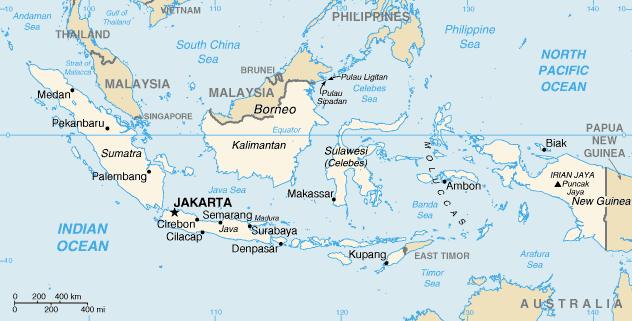 Brussels canceled its New Year's fireworks' display and the Indonesian archipelago continues on high alert after the arrest of nine alleged Islamic terrorists involved in a plot to assassinate police, Shi'ite Muslims, and churchgoers on the main islands of Java, Sumatra, and Borneo during the 2015 Christmas and New Year holiday season. Australian authorities are urging tourists to stay away from Indonewia at this time.
To protect Christians and others in this predominantly Sunni Muslim country, "Operation Candle" has deployed 150,000 security forces at churches, airports, railway stations, shopping malls, and other public places. There is an intensified manhunt by 1300 security officers for Abu Wardah Santoso, the ISIS militant leader of the East Indonesia Mujahidin and the operator of a terrorist training camp in Poso, Central Sulawesi.
The earlier post, "Australian Report Links Indonesian Pilots to Islamic Militants," outlines the dangers posed by Indonesian terrorists in the airline industry.
The Strategy of Prayer
 When I heard that a Muslim from Yemen set his computer to remind him to pray five times a day, I thought of Jean-Francois Millet's famous painting, The Angelus. The work of this 19th century French artist pictures a man and woman who stop work on their farm when bells call them to pray at noon, one of the three times in the day the Angelus prayer is said. Was their prayer a petition for a good potato yield, gratitude for their harvest, adoration, or repentance?
In 2016's Christian Holy Week, when terrorists tore up lives in a Brussels airport and rail station, we were reminded to pray for peace among neighbors, religions, and countries.
At Christmas, we recognize that God didn't just get the universe started by creating something out of nothing and then forget about us. He came to Earth and experienced our joys and sorrows. And after He rose from the dead, He said the Holy Spirit would come to guide mankind into all truth.
When we lived in Philadelphia, my daughter attended her early grades at Friends Select, where the headmaster of the school founded by Quakers was Jewish. Every week, all the students walked a few blocks to a 100-year-old Friends meeting house. There, they sat in silence until the Holy Spirit moved some or none to speak. In this holy season, the wisdom to bring peace may be but a moment of silent prayer away.
The God much greater than ourselves, who has no beginning or end (a concept we cannot begin to understand), is at our beck and call. We don't need to set our computers to remind us when to pray. Whether we are young or old, farmer or tycoon, Muslim, Christian, Jewish, Buddhist, Hindu, Shinto, Sikh, or Zoroaster, we can pray anytime. And in our silence, we'll receive wisdom.
Tuesday, December 15, 2015
What Are You Wearing in the New Year?
 As celebrities walk the red carpets at the Golden Globes, Oscars, and other award shows, reporters ask them who they are wearing, and designers look forward to the publicity they receive from their answers.
I once heard that President Kennedy's wife Jackie answered the who-are-you-wearing question by saying, "Mine." At every age, we all do say something about ourselves when we get dressed. Think about it. Pictures and sayings on T-shirts might tell what comic book or TV show characters a child likes. These shirts can proclaim, "Future Scientist" or "Daddy's Little Girl."
Clothes also can be uniforms that show students attend certain schools, march in bands, or play on various teams. The earlier post, "Recess Differs Around the World," shows uniforms worn by students at various schools around the world.
Judging from photos of men at conferences on climate change or G-7 meetings, world leaders in their dark power suits and white shirts also wear uniforms. Women leaders do too. An article about German Chancellor Angela Merkel, Time magazine's "Person of the Year," told how she presented then US Secretary of State, Hillary Clinton, with a framed copy of a German newspaper with the headline, "Angela Merkel? Hillary Clinton?" The photo accompanying the article showed both women wearing blazers and black slacks. (Their heads were cropped off.) Now that Mrs. Clinton is running for President, she has adopted a new style that older women might begin to copy. Interesting collars and cuffs accent her longer jackets, and she wears pants that are the same color as her jackets.
Some US school girls have begun wearing hijab head scarves in solidarity with their Muslim sisters. Italian design house, Dolce & Gabbana, has launched a new collection of fashionable hijabs and long abayas for its Muslim and other customers. When I saw Paul Ryan, the new Speaker of the US House of Representatives growing a beard, I thought he might be showing his solidarity with the billion-plus Muslims who are not terrorists, but I learned he was imitating Joseph Gurney Cannon, who was the last Speaker, over 100 years ago, who had a beard. (You can check out the beard of Cannon, Speaker from 1903 to 1911, on the Internet.)
When students grow older, they may decide to protect animals by not wearing fur or to protect the environment by wearing graphic T-shirts that invite others to "Save the Arctic." (See the earlier post, "North Pole Flag.") A wide variety of the sustainable clothing options now being developed will be available to youngsters in the future. Leftover high-quality luxury yarn that is insufficient to produce a full line of clothes is already being combined into sweaters that can last a lifetime. Clothing manufacturers are exploring ways to make zero-waste garments from recycled materials (See the earlier posts, "The World of Fashion" and "Recycled Fashion Firsts.") and to create new disposal methods that do not add to landfills. Waste-reduction groups are urging consumers to treasure and repair their garments rather than throw them out.
When I worked in retail, I used to tell customers, who couldn't seem to find anything they liked, that sometimes you need to shop in your closet. Babies, for example, often are baptized in outfits their parents, and even their grandparents, wore for their baptisms. What kids wear next year may be a combination of something they, or their parents, already own.
Thursday, July 23, 2015
What Do Starbucks and ISIS Have in Common?
 Whether you're friendless in a big city or big school, you're going to be drawn to a welcoming environment. Baristas who greet you by name and remember your order and organizations that promise boyfriends and a purpose in life have found the secret of success. They are not going to point out the down sides associated with what they offer.
What can be done to counteract the lure of terrorist groups and gangs? Offer positive alternatives for bonding in sports teams, theater productions, church choirs, robot competitions. Provide classes in school and out that teach skills directly related to landing a good-paying career. Publicize internships that provide experience, not just in taking orders, but in an environment that invites them to contribute ideas and to learn to lead in a way that doesn't offend others.
Separation of church and state need not be interpreted to rule out studying world religions in schools. Unless myths about Catholics, Muslims, Jewish people, Buddhists, and other religious followers are dispelled, these falsehoods will continue to undercut positive beliefs that can foster tolerance. Just as the Internet can be used to bully and promote violence, techies can use social media to muster posses that post cartoons, jokes, and songs that focus on fun and inclusion. What stylish young woman who works out to keep her figure trim and who keeps up on the latest mascara, nail polish, and hair and skin care advice really wants her boyfriend to demand she wear a burka?
Saturday, July 11, 2015
Australian Report Links Indonesian Pilots to Islamic Militants
 A recent Australian report about Indonesian pilots with ISIS ties raises questions about a possible relationship to the disappearance of Malaysia Airlines Flight 370 in March, 2014.
(See earlier post, "Who Needs International Expertise?")
According to the Australian report, Ridwan Agustin was a proud Indonesian pilot who flew AirAsia flights to Hong Kong and Singapore prior to September, 2014. Thereafter, he changed his name to Ridwan Ahmad Indonesty and began expressing support for ISIS. AirAsia stated the company no longer employed Ridwan Agustin and his wife, Diah Suci Wulandari, a flight attendant, but refused to provide details of the flight routes they flew.
By March, 2015, the Australian Federal Police reported Ridwan listed his location as Raqqa, Syria. Since 2012, an estimated 500 people have traveled from Indonesia to the Middle East, including Iraq and Syria, to join terrorist groups estimated to now total 800 ISIS radicals in Indonesia. A weekly report for March 3-10, 2015 from the National Counter Terrorism Center mentioned Malaysians and Indonesians had formed a joint weapons training unit, Majmu'ah al'Arkhabiliy, commanded by ISIS in Raqqa, Syria.
Access to and knowledge of aviation security and safety makes radicalized pilots a serious threat. Some 300 pilots, flight attendants, flight instructors, radar and air traffic controllers, and ground crew from Indonesia, Australia, Malaysia, Switzerland, Germany, France, the Middle East, UK, and USA exchange information on Instagram and Facebook.
There are five known ISIS recruiting centers in Indonesia, one of which was responsible for killing 202 people in the 2002 Bali bombing. Another attack in Bali occurred in 2005. Reports are pending for a crash by AirAsia Airbus 320 en route to Singapore that killed 155 plus the crew in December, 2014 and for an Indonesian military airplane crash in July, 2015 that killed at least 135.
An Indonesian military-trained pilot, Tommy Hendratno (also known as Tomi Aby Alfatih), who had known connections to Ridwan Agustin and who expressed concern for the plight of Muslims and support for ISIS, flew private charter and commercial flights to Bali, Malaysia, and Dubai for Premiair before he quit the company on June 1, 2015. He had attended three training sessions (the last one in February, 2015) in the US at Flight Safety International in St. Louis, Missouri.
Monday, May 11, 2015
Why Do They Hate Us?
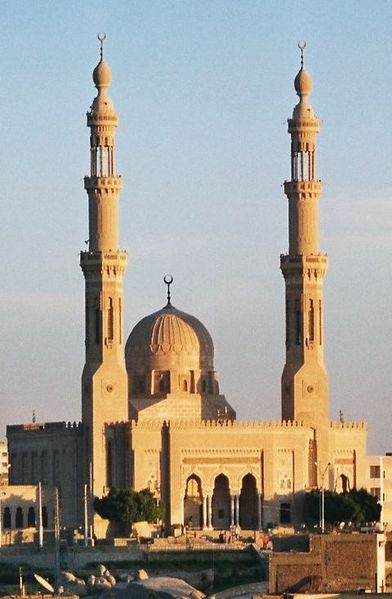 Let's begin by recognizing that Indonesia, a country where 86% of its estimated 252,812,245 population is Muslim, is a democracy with a traditional commitment to religious diversity. Despite opposition from extremists, Time magazine (April 27/May 4, 2015) noted that Indonesia's President Joko Widodo appointed a Christian woman as a district chief in Jakarta. In other words, hate for the West is not an emotion shared by all Muslims.
Zak Ebrahim, whose father murdered a militant Jewish Defense League rabbi and helped plan the first World Trade Center bombing in 1993, observed in his book, The Terrorist's Son, "murderous hatred has to be taught...forcibly implanted. It's not a naturally occurring phenomenon." It is, therefore, not to justify or condemn the feelings of Muslims who hate the West but to lay out the reasons Ebrahim's father, El-Sayyid Nosair, and those in Lawrence Wright's book, The Looming Tower: al-Qaeda and the Road to 9/11, give to explain why they hate the West.
Wright reminds us that Muslims went in two different directions after the death of Mohammed. The vast majority of Mohammed's followers are Sunnis who believe caliphs, Islamic clerics, should be elected. In contrast Shia Muslims, such as the Iranian Muslims who are Persians rather than Arabs, expected a hereditary caliphate, rule of Islamic clerics, to begin with Mohammed's cousin and son-in-law, Ali ibn Abi Talib. Within the Sunni majority, a fundamentalist subset of Salafists believe the only valid Islamic practices are the "early Muslim" (Salaf) ways followed during the time of Mohammed (See a description in the earlier blog post, "This We Believe."). In Egypt, Hasan al-Banna founded the Muslim Brothers in 1928 in order to form an Islamic state where the government, a Sharia legal code based on 500 immutable verses from the Quran, and lives would be centered on God. The Muslim Brotherhood came to be seen as a social service agency that provided jobs, schools, and hospitals and as an organization willing to achieve an Islamic state through the political process and compromise. Within the Brotherhood, a "secret apparatus," or army, also was formed to achieve this aim by violent means. The Ayatollah Ruhollan Khomeini, who formed a rigid theocratic state in the wealthy, modern country of Iran in 1979, sanctions this kind of terror and the use of the sword by warriors in a jihad, holy war, against infidels. Iran became a model for those who would impose religious dictatorships by force.
To devout Muslims, infidels are those who practice a full array of godless, immoral behavior: homosexuality, adultery, divorce, the sexual freedom of women who flirt and wear enticing colors, close male and female dancing, jazz that arouses primitive instincts, drinking liquor and drunkenness, racism, violent sports, individualism, and materialism. Muslims believe Islam will triumph over both capitalists and communists, because modernity in the West, rather than focusing all aspects of life on God, has separated the secular and sacred, mind and spirit, state and religion, and science and theology.
However, Muslim aspirations for forming an Islamic theocracy in Egypt were crushed by the secular regime of Gamal Abdul Nasser; Israel's swift victory in the 1967 Six Day War; and Anwar al-Sadat's secular democratic state, his ban on religious student organizations and traditional Islamic garb worn by university women, and Egypt's peace agreement with Israel. When a military plot to kill Sadat was successful in 1981, thousands were imprisoned in a 12th century dungeon where they were severely tortured. Among the prisoners was Ayman al-Zawahiri, a member of an underground cell that kept alive the idea of a jihad movement that would establish an Islamic state. When Zawahiri, who was a doctor, first went to Pakistan in 1980 to care for Afghan refugees who fled across the border following the Soviet invasion, he noted the training received by the Afghan freedom fighters or holy warriors, the "mujahideen," and how the area could serve as a base for recruiting an army of jihadists to take over Egypt and ultimately the West, considered to be the enabling force behind the Egyptian regime and state of Israel. Zawahiri's organization, which was strapped for money, would join forces with Osama bin Laden in the well financed al-Qaeda organization.
The divide between supporters of secular governments and Islamic theocracies shows itself in a variety of countries. In Bangladesh, the secular Shahbag movement squares off against Ansar al-Islam Bangladesh, a group with ties to al-Qaeda in India. Al-Qaeda is taking credit for the May 12, 2015 murder of Ananta Bijoy Dash, who wrote for the Free Mind website that promotes secularism in Bangladesh.. Earlier, other Bangladesh bloggers, Avijit Roy, Oyasiqur Rhaman, and Ahmed Rajib Haider also had been killed by young Islamic activists. Dash had told friends that he did not expect anyone to kill him in his home in Sylhet.
It should be noted that religion is not the only cause for the rise of what has become known as Islamic fundamentalism. Racism, and in some cases colonialism, has had an impact on non-whites.
In Egypt, for example, the poverty, disease, and illiteracy of the local population stood in stark contrast to the sporting clubs, hotels, bars, casinos, movie theatres, restaurants, and department stores that catered to the English upper classes and troops who began coming to Egypt when it became a British Protectorate in 1882. In fact, British troops continued to maintain a base in the Suez Canal Zone throughout half of the 20th century.
Subscribe to:
Posts (Atom)