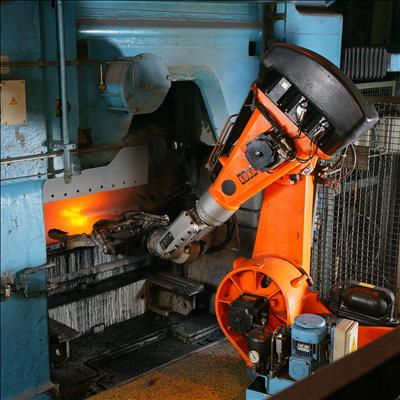
China, the United States, Vietnam, South Korea, and Europe are rushing to replace human intelligence with artificial intelligence (AI). Recent magazine articles try to reassure readers that they need not fear being replaced by robots, but the evidence is far from conclusive.
An article in The Economist magazine (January 12, 2019) claimed China can cushion falling employment in export-related industries and its tech sector by increasing jobs in labor-intensive services "from restaurants to couriers." But the December 2018/January 2019 issue of the AARP magazine arrived with news that the vending machine business grew 26% in 2018. Sales went up once machines began accepting payments for beverages and snacks by processing credit cards and other cashless payments. The same magazine also touted the "Starship delivery robot," tested in 100 cities around the world, that uses cameras and sensors, not couriers, to avoid traffic by using sidewalks to deliver meals.
According to "The Truth about Robots," an article in TIME magazine (February 4-11, 2019), AI will not replace some jobs: creative jobs performed by inventors, scientists, novelists, artists; complex, strategic jobs of executives, diplomats, economists; and empathetic and compassionate jobs of teachers, nannies, and doctors. Considering there are a limited number of these positions, automation is making inroads into many of them, and others are low-paid, I am not reassured.
AI tells consumers, if you like that, you'll also like this. It suggests more things to buy but not more ways to make money to buy them. Unemployment raises the specter of modern Luddites, civil unrest, and fear of death by unmanned weapons attacking from land, sea, and space. Jobless, frightened humans are going to protest at home, to cause refugee disease and terrorist problems when they migrate to look for work elsewhere, and to prove vulnerable to scams.
Retraining the workforce seems a key path to the future. When executives in any field spot a new direction their business is going, trendwatching.com suggests they form alliances with academic institutions to help teachers train students for future opportunities. The 3M company, for example, created a free, 110-hour college course to help teachers prepare elementary and middle school students for a science competition that opened young eyes to future careers.
At the very least, countries need to focus on educating the public. Left to themselves, the untethered elite will go on blissfully making fortunes and inventing and doing things without considering the consequences as a helpless majority stands by. John Gray's critique of modern secular humanism identifies the mismatch between the human need for income-producing employment and technology's rush to replace human labor. In his new book, Seven Types of Atheism, he writes, "The cumulative increase of knowledge in science has no parallel in ethics or politics, philosophy or the arts."
There was a time when well-educated folks looked out at the world and decided they could help the sick with "Doctors without Borders" or field a Peace Corps to teach all sorts of skills. Dr. Lorna Hahn organized an association that brought together newly-independent countries with experts who knew how to do things like write constitutions.-
We are at a crossroads, where humanity needs the wisdom, for example, to use CRISPR-Cas9 technology to develop uniform crops machines can harvest to feed the human race, while refraining from using CRISPR-Cas9 technology to edit genes that can eliminate all or part of the human race. (Also see the earlier post, "The Where Did I Come From? Game.") We need experts with ideas about how to engage the billions of workers robots are rushing to replace.
Showing posts with label Peace Corps. Show all posts
Showing posts with label Peace Corps. Show all posts
Friday, January 18, 2019

Saturday, November 10, 2018
How Can Bananas Be 29 Cents a Pound?
You may have noticed Chiquita prints labels on bananas from Honduras over pink ribbons supporting breast cancer research. Possibly the company has seen research by Kantar Consulting in the UK. Kantar's Purpose 2020 study found "almost two-thirds of millennials and centennials...express a preference for brands that have a point of view and stand for something." Consultants went on to conclude consumers expect brands to use their social power for positive change.
Nowadays, the world has a wide variety of models that affect positive change. Religious missionaries and JFK's Peace Corps show how to bring education and skill training to impoverished areas. Experienced nongovernmental organizations rush water, food, and medical quick-fix support when earthquakes and other natural disasters strike, while international banks grant low-cost loans to finance the projects and equipment for long-term solutions. Foundations, universities, and major stockholders pressured South Africa to end apartheid by withdrawing investments from South African companies. Supermarket shoppers lent their economic power to Cesar Chavez's campaign to better conditions for lettuce pickers.
The mothers, children, and other relatives walking, riding, and floating north to escape violence and poverty in Central America crave positive social change. According to ethicalconsumer.org, United Fruit, now Chiquita, and Standard Fruit, now Dole, came to Central America in the 1890s, because fertile land and government corruption provided excellent conditions for their banana businesses. In time, grocery chains habitually began to use bananas as loss leaders, offering them at low prices to attract shoppers who would buy other items, such as greeting cards that can be $3 or more, at profitable prices. These shoppers now are in a position to pressure supermarkets to buy from suppliers who treat workers fairly. Customers, who work for a living themselves, understand employees are entitled to fair compensation for their work. Those who climb trees to harvest bananas in Guatemala cannot be expected to subsidize grocers by accepting low wages, poor education and housing, and medical problems from unsafe working conditions.
Today's greater access to worldwide information prompts both consumer concern for the exploitation of labor in foreign countries and exposure to the consequences of government corruption. The Ethics and Anti-Corruption Commission in Kenya recognizes foreign companies involved in corrupt practices "ruin our country." At the same time, what company wants to risk prosecution for bribing government officials for a construction contract in Brazil or to pay off officials in the Democratic Republic of the Congo, if the same commodities are available in Australia?
Migrant refugees don't want to walk miles to seek asylum from violence and poverty. Consumers and businesses have the power to change the conditions that can help them stay home.
Nowadays, the world has a wide variety of models that affect positive change. Religious missionaries and JFK's Peace Corps show how to bring education and skill training to impoverished areas. Experienced nongovernmental organizations rush water, food, and medical quick-fix support when earthquakes and other natural disasters strike, while international banks grant low-cost loans to finance the projects and equipment for long-term solutions. Foundations, universities, and major stockholders pressured South Africa to end apartheid by withdrawing investments from South African companies. Supermarket shoppers lent their economic power to Cesar Chavez's campaign to better conditions for lettuce pickers.
The mothers, children, and other relatives walking, riding, and floating north to escape violence and poverty in Central America crave positive social change. According to ethicalconsumer.org, United Fruit, now Chiquita, and Standard Fruit, now Dole, came to Central America in the 1890s, because fertile land and government corruption provided excellent conditions for their banana businesses. In time, grocery chains habitually began to use bananas as loss leaders, offering them at low prices to attract shoppers who would buy other items, such as greeting cards that can be $3 or more, at profitable prices. These shoppers now are in a position to pressure supermarkets to buy from suppliers who treat workers fairly. Customers, who work for a living themselves, understand employees are entitled to fair compensation for their work. Those who climb trees to harvest bananas in Guatemala cannot be expected to subsidize grocers by accepting low wages, poor education and housing, and medical problems from unsafe working conditions.
Today's greater access to worldwide information prompts both consumer concern for the exploitation of labor in foreign countries and exposure to the consequences of government corruption. The Ethics and Anti-Corruption Commission in Kenya recognizes foreign companies involved in corrupt practices "ruin our country." At the same time, what company wants to risk prosecution for bribing government officials for a construction contract in Brazil or to pay off officials in the Democratic Republic of the Congo, if the same commodities are available in Australia?
Migrant refugees don't want to walk miles to seek asylum from violence and poverty. Consumers and businesses have the power to change the conditions that can help them stay home.
Monday, January 6, 2014
Work Around the World
Since Zogby's polls have uncovered a craving for technology training, mentoring, internships, and practical experience by young people throughout the world, he sees an opportunity for mobile, tech-savvy cohorts to see the world and help provide their new contacts with a business profession at the same time.
In England, without waiting for an International Technology Corps to take off, the Manchester Museum of Science and Industry (mosi) sponsors "iTech: design your future," an event that inspires students at a young age to begin thinking about careers that involve creative, digital, and other modern technologies. Information about the event is available from ambassadors@mosi.org.uk.
Students aged 13 to 18, who already know a thing or two about what technology can do, might like to enter this year's Google Science Fair by going to googlesciencefair.com. Submissions are due by May 12, 2014.
For other ideas about job opportunities around the world, see the earlier blog post, "What Do You Want to Be?"
Friday, November 30, 2012
Getting to Know You

Until these real time computerized translations or face-to-face meetings can occur, the next best thing is to exchange letters or e-mails with children who live in other countries. An episode on the PBS show, "Arthur," showed how correspondence with a child in Turkey dispelled the notion that children there lived in tents and rode to school on camels. There are a variety of ways to find foreign pals, but, until a real one is located, items in a kit from littlepassports.com help children learn about one country each month, and they can pretend to write letters from foreign countries they have studied. From Russia, a young make-believe correspondent might write:
Do you like to draw? I do. Yesterday our class visited the Hermitage Museum, where
we saw a painting of Napoleon. He looked very heroic, but we are learning that his
army tried unsuccessfully to defeat Russia in winter. Our winters are very cold, and we
get a lot of snow.
If a Russian pen pal is found, it would be fun for a child to compare a real letter with this pretend one.
Foreign students are in a good position to help children who are searching for a real pen pal. Classmates could have cousins and other relatives who would like to correspond with someone in the United States. Neighborhood families may be hosting foreign students who are eager to maintain U.S. ties after they return home. Then too, a local college or university is a good source of babysitters. Those from foreign countries may develop a lasting relationship that they want to maintain.
Aside from relying on personal contacts to find an international pen pal, organizations often have established structures that either can or do facilitate person to person correspondence across borders. Some agencies, such as Pearl S. Buck International (psbi.org), encourage benefactors to write to the children they sponsor. Through translators, the children send return messages to those who support them. Members of international organizations, such as Boy Scout and Girl Scout troops, are in a good position to ask their leaders to find counterparts in other countries. Children also should urge cities and churches with sister cities and parishes to help them contact foreign students. The Peace Corps maintains a website, peacecorps.gov/wws/educators, that enables teachers to locate members willing to correspond with their classes. And ePals.com also helps facilitate joint projects between U.S. teachers and teachers in foreign countries.
In some areas, children may not have to go far to visit a neighborhood where foreign immigrants maintain much of their culture. A walk through Chinatown of Little Italy is an easy way to visit shops, meet people from foreign countries, and sample native foods. While traveling near and far through the United States, there are many opportunities to seek out communities that have preserved a distinctive foreign lifestyle. In Door County, Wisconsin, for example, children will find descendants of Norwegians and Swedes who settled there in the 19th century. Surrounded by brightly painted Dala horses, they can pour lingonberry syrup on their pancakes and watch goats nibble grass from the roofs of nearby log cabins.
No doubt, these foreign contacts will lead children to want to visit foreign countries. For some ideas about foreign travel, go to the earlier blog post, "See the World." Also see the blog post, "How Do You Say?"
Subscribe to:
Posts (Atom)