- SERRV (serrv.org/category/gifts)
- UNICEF (market.unicefusa.org)
- Heifer (heifer.org/marketplace)
- World Wildlife Fund (gifts.worldwildlife.org)
- National Wildlife Federation (shopnwf.org)
- kiva micro loans (kiva.org)
- Samaritan's Purse (samaritanspurse.org/operation-christmas-child)
- Arbor Day Foundation (shop.arborday.org)
Showing posts with label Heifer International. Show all posts
Showing posts with label Heifer International. Show all posts
Wednesday, October 30, 2019
Holiday Gifts Come From Away
Investigate presents that help others and the world.

Friday, August 23, 2013
Dairy Cows on the Moove
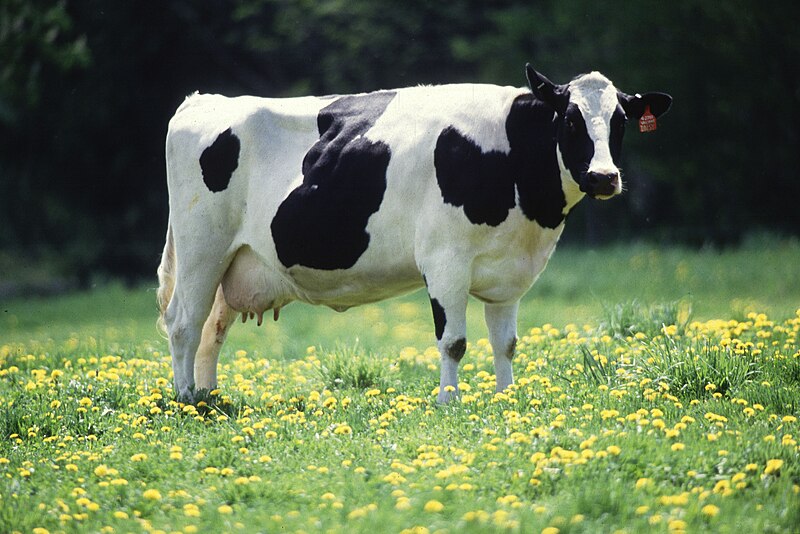 From the newly opened "Millions of Milkshakes" in Bahrain to everyone's need for bone-building calcium, there is worldwide consumption of milk, butter, cheese, yogurt, ice cream, skim milk powder, and whey products from dairy cows. Once prosperity led to better nutrition options in India, for example, current production of milk, formerly a scarce commodity, reached 132 million tons, compared to 22 million in 1970, according to TIME magazine (November 18, 2013). Members of dairy cooperatives, many with only one or two cows, have now made India the world's largest milk producer and a dairy exporter.
Young 4H members, dairy farmers, and international dairy cow shippers, such as Dens Ocean Livestock Express (livestock@densocean.be) and the ones used by T.K.Exports (livestockgeneticsbytke.com), have a prosperous future. The U.S. has become the world's largest cheese exporter. And with more women working the decline in breastfeeding has led to a boom in baby milk powder sales. West Coast dairy processors in the U.S., as well as a companies, such as Mengniu in China, are taking advantage of this increased demand in China and other Asian countries. There also is a growing world market for whey-based ingredients used in infant formula and human and animal nutritional supplements that is offering new opportunities for dairy products.
Just outside Harbin in Shuangcheng (northeast China), Nestle has invested in a $400 million Dairy Farming Institute. The aim is to train about 700 students annually to become the dairy farmers, managers, and agribusiness suppliers who will meet China's growing demand for milk in a sustainable manner. In the past, China's dairy industry, which had reported sales of $28 billion in 2014, has had tainted milk problems from poor sanitation and deaths from infant formula.
In the United States, dairy farmers have an outstanding research facility at the University of Wisconsin's Babcock Center for Dairy Research, named for Dr. S.M. Babcock. The Center is the largest dairy research institution in the United States. Along with studying how to increase milk production, students learn how to be business competitors, not only with dairy farmers in Wisconsin, California, New York, Arizona, and Texas, but also in the world market. Since the Center has an outreach program, it provides technical support and information about findings that help dairies, suppliers, government regulatory agencies, and domestic and international dairy organizations.
Profitability, in the dairy farming business, relies on forecasting demand and careful record keeping and analysis of the cost of the feed cows need to maintain their size and health and to produce milk before excess feed just becomes manure. New Zealand's dairy giant, Fonterra, for example, reported that although more milk was processed into milk powder which has a higher return, rising input costs caused a 53% six-month drop in net profits. The desire to control all aspects of raw material to final product, there is some cross-country vertical integration in the dairy industry. For example, the Chinese company, Pengxin, has acquired both dairy farms in New Zealand and corn farms in Bolivia. China's state-owned Bright Food Group also has controlling interests in dairy producers in New Zealand and in Israel's Tnuva.
Wisconsin's Dept. of Agriculture, Trade, and Consumer Protection distributes $200,000 in annual grants to farmers to finance studies of dairy feed, housing, and other factors that improve milk production. By calling 855-943-2479, dairy farmers and processors can find out about resources and technical assistance available from the State of Wisconsin. Currently, the State also is offering a $50,000 "Grow Wisconsin Dairy Processor Grant" to a licensed Wisconsin dairy processing plant that writes a proposal that would benefit the industry. The application form, due by February 21, 2014, is available at GrowWisconsinDairy.wi.gov.
In recognition of Dr. Babcock's contribution to the milk industry, he received awards from dairymen in New Zealand and the Wisconsin legislature. In the future, an award may be given to someone who solves the problem of reducing the climate changing greenhouse methane gas released by cow flatulence. Considering a cow, by chewing its cud, expels 4.42 pounds of carbon dioxide for every gallon of milk it produces, methane is a serious concern. Phosphorus runoff from the cow manure that pollutes lake and other water sources also becomes a major problem when the number of big storms increases. But there also are uses for cow poop, check out the 251 facts in Dawn Cusick's kid's book, Get the Scoop on Animal Poop.
The Financial Times (April 9, 2014) reported that the major impact of methane on global warming has motivated companies and research institutions, such as the following, to study ways to reduce methane emissions from cows:
- The Innovation Center for U.S. Dairy in Illinois
- C-Lock Company in South Dakota
- The National Institute of Agricultural Technology in Argentina
The U.S. Department of Agriculture is funding a $10 million, 5-year study to determine how the dairy industry can reduce greenhouse gas from methane 25% by 2020.Promising ideas about how to reduce cow-produced methane include: anti-methane grains and dietary supplements laced with basil or garlic, an improved digestive system for cows, scanners that monitor the gas content of cow burps, a strap-on-backpack connected to tubes that collect methane gas from cow stomachs, and a reduction in the world's cattle herd (In the U.S. there are 88 million cattle). To date, these ideas are too expensive to be practical. The Resources Defense Council did mention that methane from cows could power cars and refrigerators, if it could be harnessed.
Methane is not the only cow-related problem. Phosphorus runoff from manure is a major contributor to water pollution, since it causes the growth of harmful blue-green algae. Limited phosphorus reduction is now achieved by digesters that use an anaerobic process to separate liquids from solids and then capture and burn off methane gas to generate electricity. Another machine that relies on a nutrient concentration system is also being used to remove excess phosphorus. Thus far, however, most raw manure remains untreated.
It is interesting to note, according to Laurie Winn Carlson, in her book, Cattle: An Informal Social History, that Dr. Babcock never took out a patent on the machine he developed to measure the fat content of milk, because he believed it should be available to all. His invention prevented milk diluted by water to be sold for full price and enabled cows to be ranked not only by the quantity of milk they produced but also by the fat content of their milk. A cow that produces milk with a high fat content is doubly valuable because her eggs can be harvested and sold for artificial insemination. Cattle of the World by John Friend describes the process of harvesting fertilized eggs from dairy cows and freezing semen from bulls known to produce outstanding calves. In the frozen form, semen from desirable bulls can be exported to improve and/or provide cross-breeding with dairy cattle herds anywhere in the world.
The variety of dairy cow characteristics John Pukite mentions in his book, A Field Guide to Cows: How to Identify and Appreciate America's 52 Breeds, suggests reasons why farmers import specific dairy breeds out of the world's approximately 920 different cow breeds. The Holstein-Friesian dairy cow, found in at least 125 countries, produces the largest amount of milk, but she feeds on a concentrated diet of grain/corn, lives in an environmentally controlled barn, and needs regular veterinary care. In contrast, quite a few dairy breeds, such as the Canadienne, Galloway, Jersey, and Brown Swiss, graze in pastures out-of-doors. The Brown Swiss, like the Jersey, Guernsey, Pinzgauer, and Ayrshire, produces milk with a high butterfat content and also is second only to the Holstein in terms of milk yield. Multipurpose breeds, such as the Maine-Anjou, MeuseRhineYssel, and Normande, are bred for both milk and beef throughout the world. The hides of the Galloway and Pinzgauer also are known for their good quality leather. All dairy cows are usually easy to handle. Some, like the Salers and Simmental, have good mothering instincts. The South Devon, Red Poll, and a few other breeds have long lifespans.
Whereas, the ships that carried beef cattle across the Atlantic Ocean to England in the 1880s were overcrowded and filthy, health protocols now cover the ventilation, watering, feeding, and manure handling conditions of live animals when they are in transit by ship. Cargo planes also are specially fitted to ensure the safe, humane transit of livestock. At livestockexporters-usa.com,
the online newsletters of the Livestock Exporters Association (LEA) provide dairy cattle exporters with information about policies of the U.S.Department of Agriculture's Animal and Plant Health Inspection Service (APHIS) regarding, among other information, the health certifications of livestock exports and insurance underwriting guidelines for ocean transit of animals, as well as information about new markets, such as Jordan and Iraq.
Dairy cows are not just traded among agriculturally developed countries. Through the not-for-profit Heifer International organization, children, scout troops, schools, and parents can donate cows to impoverished families around the world. Just go to the heifer.org website to contribute the $500 it takes to donate a cow, or $50 for a share of a heifer, and see some of the happy recipients who have learned to care for their gifts. Since families who receive a cow from Heifer International agree to pass on the first calf offspring to another needy family, each donation is a part of an endless chain devoted to eliminating world hunger and poverty. In Kenya, Heifer International also holds a 40 percent share in a plant that cools and processes milk and seeks new markets for the 6000 households that gain a secure monthly income by bringing their milk to the plant.
Monday, September 24, 2012
Hope for the Future
 When we hear that terrorist groups have attacked tourists in Tunisia, burned a Jordanian pilot to death, or killed journalists in Paris, it is well to remember, not only other losses, but also bright victories.
Children look forward to their birthdays, trips to the playground, and new pets. When they begin to discover the world, with all its pluses and minuses, they have more to anticipate, and they expand their opportunities for potential happiness. They might make friends with foreign pen pals, save to travel abroad, raise enough walkathon money to buy a cow for a family in Vietnam, rejoice when a political prisoner is set free, or help a nation survive a natural disaster. Some day they even could come up with inventions to improve the lives of impoverished families, just like Marcin Jakubowski and Gabriele Diamanti did. For posting a free tractor design, budget, and instructional video online and designing the Eliodomestico solar powered water distiller, Time magazine credited these inventors with two of the 25 best inventions of 2012.
There have been many reasons to celebrate in the recent past. What an exciting day it was in 1990, when South Africa's heroic leader, Nelson Mandela, was released from Robben Island after 27 years in prison! Again in 2008, how thrilling it was when a daring rescue freed Ingrid Betancourt, former presidential candidate, from the guerrilla group who had held her captive in Colombia's jungle for six years! And, what rejoicing there was in 2010, when 33 Chilean miners who were thought lost were successfully rescued after spending 69 days underground. Again in 2010, supporters in Burma had reason to cheer when the country's repressive military regime released opposition leader and 1991 Nobel Peace Prize winner, Aung San Suu Kyi, from house arrest. In 2015 her party would win the first civilian majority in parliament in 50 years, and, in 2016, her aide, Htin Kyaw, would be elected the first civilian President in over 50 years. Joy erupted in 2011, when China released Ai Weiwei, the artist/activist who dared to criticize the country's Communist Party on Twitter. Chen Guangcheng, the blind lawyer China imprisoned for helping women forced to have abortions, was freed in 2012 and is now living in the United States. Malala, the Pakistani girl shot in the head for espousing education for females, not only recovered but won the Nobel Peace Prize in 2014. By year end, 2014 also saw the release of U.S. AID worker, Alan Gross, in Cuba and the restoration of U.S.-Cuban relations, as well as North Korea's release of Kenneth Bae and two other Americans. Three other Americans were released from North Korea prior to a summit between Kim Jong Un and President Trump in 2018. In February, 2015, India announced that Taliban captors had released Father Alexis Prem Kumar, who had been serving as director of Jesuit refugee services in Afghanistan when he was abducted. And the Ebola virus stopped spreading in Sierra Leone, Liberia, and Guinea. Four US citizens were released from prison in Iran in 2016, and, in August, 2016, a cease fire in Colombia marked the beginning of the end of a fifty year battle between government troops and the Marxist guerrillas known as FARC. In Venezuela, the Holts, who were arrested on fabricated weapons charges after an American man married a Venezuelan woman, gained freedom in May, 2018 thanks to the negotiations by a U.S. delegation that included Senator Bob Corker from Tennessee and Senator Orin Hatch from Mr. Holt's home state of Utah.
Indeed, it took eight years, but in 2014 five men finally were convicted in Russia for killing outspoken human rights activist and journalist, Anna Politkovskaya (See more details about those charged with her murder at the later blog post, "Hearing Voices from Mexico and Russia."). Nine years after two assassins used Polonium-210 to kill Alexander Litvinenko, former Russian Federal Security Service (FSB is a successor to the KGB) officer turned critic of Putin's corruption and MI6 source after he escaped to Britain in 2000, London's high court laid out the details of its Metropolitan police investigation. Results of an inquiry will be disclosed by the end of 2015. Since about 97% of all polonium, which is a silent, invisible, normally unidentifiable agent of death, is produced at a Russian nuclear site, Litvinenko's murder appears linked to Russia, and possibly Putin's connection to Russia's biggest organized crime syndicate. Two later Russian attempts to poison enemies failed. Former military spy, Sergei Skripal, left the hospital in late May, 2018. Finally, it has taken three decades, but Pyongyang agreed in July, 2014, to investigate the disappearance of Japanese nationals missing in North Korea.
There is hope that joy will erupt again some day, when all of the 276 female students Boko Haram kidnapped in Chibok, Nigeria, in 2014 are released (82 were exchanged for six of the terrorist group's imprisoned members in May, 2017, and more were released in 2018.). There will be other causes for joy when Russia overturns the three and a half year sentence of Oleg Navalny, the younger brother of anti-government blogger, Alexei, who was given house arrest after his three and a half year prison term for fraud was suspended (Alexei removed his ankle monitoring device, continues to walk around Moscow like a free man, and inspired an anti-corruption protest march on March 26, 2017; he again was arrested and released after another rally in July.); Syria and the ISIS terrorist group send captives home alive; Hamas and Israel reach an agreement that frees an Israeli soldier; North Korea ends its threats of a nuclear missile attack on the U.S. and overturns the ruling that sentenced US college student, Otto Warmbler, to 15 years of hard labor (Warmbler was sent home in a coma and died in June, 2017). China has yet to release human rights lawyer, Pu Zhiqiang, or cancel the prison sentences of dissidents, Xu Zhiyong and Liu Xiaobo (diagnosed with terminal liver cancer and died in July, 2017), a leader of the 1989 Tiananmen Square democracy movement and winner of the 2010 Nobel Peace Prize. Mr. Liu Xiaobo's widow, Liu Xia, was released from house arrest in 2018 and allowed to go into exile in Germany. Some day peace will come to Syria, Ukraine, Iraq, Afghanistan, Libya, and Yemen the way it emerged from conflict in the countries of the former Yugoslavia. To prevent future tragedies, we also can hope that much will be learned from the U.S. drone attack on an al-Qaeda compound in January, 2015 that inadvertently killed Italian humanitarian worker, Giovanni Lo Porto, and Dr. Warren Weinstein, a U.S. A.I.D. contractor captured when his guards were overcome while they were eating breakfast in Pakistan.
Speaking at a 2008 conference on health and national development sponsored by the Association on Third World Affairs, Albert Santoli, president of the nongovernmental organization (NGO), Asia America Initiative, told how he, as a non-Muslim working among an almost completely Muslim population in the Sulu Archipelago, the tri-border area of Indonesia, Malaysia, and the Philippines, was adopted by the largest guerrilla band. The medicine his organization provided cured the leader's daughter of malaria. When Muslims heard that help was coming from people who did not know them, including Christian colleges, they were shocked, said Santoli. "Whoever needs help gets help and that opens up doors and it builds bridges," he said.
Children can help
In her book, How to be an Everyday Philanthropist: 330 Ways to Make a Difference in Your Home, Community, and World--At No Cost, Nicole Bouchard Boles seized on the notion that those who want to help need to find small ways to start. Since nongovernmental organizations already have begun to unravel world problems, either individually or collectively as students in school, scouting, and other youth groups, children can participate in ongoing NGO projects. Local Rotary Clubs, for example, may need help packing the ShelterBoxes Tom Henderson developed to provide the supplies people need after floods, earthquakes, and other international disasters. The website, charitynavigator.org, is among those that help identify organizations most worthy of support.
By now, many youngsters have gone Trick-or-Treating for the United Nations Children's Fund (UNICEF), while they collected Halloween candy for themselves. What they may not know is that they can take credit for raising funds that have provided immunizations, vitamins, antibiotics, food, clean water, and education to help the world's poorest children get a good start in life in 190 countries and territories. Information about where to pick up and return UNICEF collection boxes is available at the website, trickortreatforunicef.org, or by calling 1-800-FOR-KIDS. Should schools and organizations be looking worthy projects, they might consider raising funds to buy mosquito nets, blankets, or water wells through UNICEF's "Inspired Gifts Program." Information about this program is available by calling 1-866-237-2224 or by visiting inspiredgifts.org.
Operation International Children, launched originally as Operation Iraqi Children in 2004, is another project directly related to students. Promoted by actor Gary Sinise, the organization was founded by U.S. soldiers who distribute kits containing pencils, rulers, crayons, notebook paper, and other school supplies in war torn areas. Information about how to get involved with this program is available at the operationinternationalchildren.com website.
Learning that a Ugandan coffee farmer earns 66 cents for every $100 a coffee consumer spends in a developed country's grocery store could inspire a student to facilitate direct distribution to consumers. If students can arrange to have their schools or other community groups host a sale, the nonprofit organization, SERRV, can supply coffee and chocolate from their farmer partners, as well as individually made, handcrafted items from artisans, around the world. To obtain an information packet, visit serrv.org/SERRVOurWorld or call 1-800-423-0071.
Heifer International taps into children's love of animals. Instead of bringing gifts to a birthday party, one mother asked young partygoers to bring donations for Heifer International that would provide impoverished families with dairy cows, pigs, chicks, ducks, goats, sheep, and bees. To raise money for Heifer, one 13-year-old girl in North Carolina makes jewelry and sells her creations at craft fairs, the public library, churches, and other venues. Her efforts have raised over $10,000. The Heifer International brochures and heifer.org website picture the happy young recipients who have received and are learning to care for the animal gifts funds provide. Since aided families pass on each animal's offspring to other families, children who make donations to Heifer International are part of an endless chain devoted to eliminating world hunger and poverty.
For over 50 years, Amnesty International has made sure the names of political prisoners, such as those mentioned above, are not forgotten. The Chinese proverb, "It is better to light a candle than curse the darkness" inspires the letter writing campaigns and human rights defenders that provide hope that freedom of speech can become a universal human right. When learning that someone has been imprisoned for speaking out, adults can help students write to their government leaders to ask them to initiate diplomatic contact that will help free these victims. In the US, students also can find the addresses of the US Embassies of foreign countries in A World Almanac and send letters over and over again to the offending country asking for the prisoner's freedom.
Entrepreneurial children who line up neighbors willing to pay for lawn mowing, snow shoveling, baby sitting, and dog walking are the perfect prospects to develop the creative ideas and activities needed to remedy festering global ills. Proactive youngsters will find outlets for their energy in sister city events related to international issues. In Madison, Wisconsin, for example, young people learned that after East Timor (now Timor-Leste) gained independence from Indonesia in 2002, it lost much, when the departing military and militias burnt homes, schools, and hospitals. these young people then rode their bikes in "Tour de Timor," which publicized the plight of sister city, Ainaro.
Like cities with sister cities, churches often send youth delegations to help with projects in sister parishes. When the young travelers return, they multiply the effect of their visits by inviting congregations to hear their informative presentations. Since religions cross national boundaries, churches often are active on the international scene in other ways. Their affiliated youth groups can participate in good works, such as those performed by the Quakers Friends' Service Committee and the Lutheran World Relief program that provides quilts and layettes to babies in Africa.
Models and motivation
Technology savvy youngsters can find models among the experts who saw natural disasters, medical emergencies, poor educational opportunities, dangerous kerosene lamps, and a lack of information about product markets as problems that could be solved by computers, satellite access, solar panels, and cell phones. Engineers already have come up with ways to aid farmers in lesser developed countries with low-tech, hand-cranked, foot-pedaled, and bicycle-powered radios, water pumps, oil seed presses, and laptop computers. For example, an African entrepreneur invented a playground merry-go-round that South African students turn to pump clean water for Boikarabelo, their village outside Johannesburg.
To encourage students to create technological solutions to the world's toughest problems, Microsoft sponsors the Imagine Cup for high school and college students 16 years and older. Find details at imaginecup.com, and aim to compete in the World Wide Finals. One Billion Minds, a program similar to the Imagine Cup, was founded in 2007 by Sanjukt K. Saha. He plans to motivate a billion minds to use science, technology, design, and social innovation to solve problems in the emerging world. To date, graduates from 180 universities in 103 countries have gone to the onebillionminds.com website to find out how they can participate in this program as Challengers or Solvers. Each year, Hult International Business School, with five campuses in the U.S., U.K.,China, and the UAE, challenges teams of university students to solve global social problems posed by non-governmental organizations (NGOs). The winning team and NGO partners then receive $1 million to launch their solution. Find competition details at hultglobalcasechallenge.com.
Nobel Prize winners listed on the nobelpeaceprize.org website also can inspire children to serve the global community in other ways. Young girls can derive inspiration from women such as Wangari Maathai of Kenya, who won the prize in 2004 for mobilizing a campaign to fight global warming by planting trees. Like the three women who were honored in 2011 for their efforts on behalf of women's rights, they too can identify and work to correct discrimination against women. Tawakkui Karman, the first Arab woman to win a Nobel Peace Prize, exemplifies how anti-government protests, like the Arab Spring revolution she helped lead in Yemen, are only democratic when they recognize women's equality. The two Liberian honorees, President Ellen Johnson Sirleaf and Leymah Gbowee, showed how women, including Christian and Muslim women, can work together to end wars and attacks on them by men.
Nobel Prize winners also can start young people thinking about ways to alleviate the world's physical and economic suffering. Frenchman Bernard Kouchner saw the need to minister to those injured in war torn areas and pulled together the international group of medical volunteers who won the 1999 Nobel Peace Prize for "Doctors Without Borders." In 2006, Muhammad Yunus of Bangladesh was honored for founding the Grameen Bank, a financial institution that provides microsized loans to small businesses, often owned by women, in less developed countries. Following in his footsteps, Nancy Barry, president of Women's World Banking, has loaned 18 million poor women $10 to $10,000 each to start their own businesses. Through kiva.org, students can make their own $25 microloans to small overseas entrepreneurs, farmers, or students who lack tuition funds. In The International Book of Bob, you can read about Bob Harris' visits with those who run Kiva-financed projects.
Since 2003, every year TIME magazine has published an issue devoted to "The 100 Most Influential People in the World." Students can read through the short biographies of titans, leaders, artists, pioneers, and icons to find a place in the world where they could do the most good.
Those who have witnessed world suffering can inspire young people to action. For Nathaniel Wright, the talk Sudanese Catholic Bishop Macram Max Gassis gave on genocide in the Darfur area of the Sudan was more than another class lecture. It motivated him to form STAND (Students Taking Action Now: Darfur), a national student movement designed to raise awareness of the refugees suffering in Darfur, Sudan, and to provide the education and rehabilitation needed to improve their lives. His website, standnow.org, joins savedarfur.org as a resource children can check to find information about benefit events for Darfur as well as dates for fasts and protests. Recognized by Reebok as the first recipient of its Human Rights Young Activist Award, Wright has gone on to become an analyst in the Office of Congressional Ethics at the U.S. House of Representatives.
Although many global problems remain, there have been successes besides those already mentioned: apartheid has ended in South Africa, the Berlin Wall no longer exists, and Germany has been reunited. Some of those who thought they could get away with committing human atrocities have been indicted and prosecuted by international and domestic courts. There is hope and happiness in the future. Both fill the hearts of the children who will become future world leaders.
Subscribe to:
Posts (Atom)