Yesterday, I entered an elevator with a man who continued talking on his Smartphone in a foreign language. After I pushed the button for my floor, I looked toward him and was about to ask, "Where to?" He had seen the button I pushed while he was listening to someone on his phone, and he just shook his head indicating he was going to the same floor as I was.
I have been in elevators when friends who had been speaking together in a foreign language instantly switched to English to ask the floor button they should push for me. I also have been in vans taking hotel passengers to an airport, when the Spanish-speaking driver could switch to English to ask which terminals we needed.
One of my globe-trotting, English-speaking friends developed a technique for asking directions in a foreign country. She looks for a young woman who she assumes, usually correctly, studied English.
Of course, studying a foreign language before visiting a foreign country works, too.
Research outcomes based on studies at the University of Pennsylvania provide some useful advice to help adults learn a foreign language and to help parents and teachers enable children to enjoy knowing a new language. I read that babies first put together the word a parent says with the object the parent shows them. A baby's eyes have to go to the object when the baby hears the word for the object. This process reminded me of the German teacher who held up a turkey statue and asked us what is was before she told us the German word for turkey. We tried our best and said something like, "grosse Vogel" to imply it was a big bird.
The point is, language research found we progress from learning nouns to verbs and finally ideas. We have to build up a vocabulary to be able to infer more meanings. Parents, teachers, and children can begin together to learn a foreign language. Find a foreign language book or dictionary and make a list of the foreign words for objects in the home or classroom, foods, toys, and the like. Practice using these nouns with each other as you go about the day. Then, try to describe these items without each other seeing them. Use gestures and any other means you can think of to help you decide what other words you need to learn for colors, shapes, describing how objects are used or how big they are.
Exceptions to language "rules" are a special challenge. Some verbs, for example, don't end in "ed" the way traveled and dined do. Counting introduces the need to memorize exceptions. Studies show once an English-speaking child can count to 73, he or she can continue counting indefinitely. I don't know where the so called "tipping point" for infinite counting is in other languages, but a fiend tells me it's sooner in Spanish.
Studies indicate a child who knows how to count is on the way to mastering basic arithmetic skills. In any language, once a child knows one plus one is two he or she can buy or sell and won't be cheated out of a dime because a nickel is larger. Alexander Hamilton knew how to put the financial system of the new United States in order, because he handled shipping costs and revenue on the docks of Puerto Rico at an early age.
As we begin to make a list of resolutions for 2019, we might think about adding learning, and helping children learn, bits and pieces of another language.
Showing posts with label England. Show all posts
Showing posts with label England. Show all posts
Saturday, November 3, 2018

Wednesday, October 10, 2018
Children, Write History
Think of what we know because of the Diary of Anne Frank and Laura Ingalis Wilder's Little House on the Prairie books. Future generations will be indebted to the children of all ages everywhere in the world who write about their lives in the 21st century. Future generations also will be indebted to the parents, grandparents, teachers, and guardians who preserve these accounts and carefully tuck them away.
A country's history molds the way citizens think about what is important to them and what they hope never happens again. History also uncovers myths. What will finding a song a 10-year-old girl writes in Saudi Arabia today reveal about her life in 2018?
Recently, myths were dispelled, when more than 350,000 of King George III's private and public papers, stored in the Round Tower at Windsor Castle since his 1820 death, were opened to scholars. According to Pulitzer Prize-winning historian, Rick Atkinson, King George's good handwriting was easy to read. It revealed the mental illness that affected him later in life had no bearing on his thoughts and actions during the American Revolution.
Unlike his German-born grandfather and father, George III was born in England, spoke English, understood he was a monarch who shared power with Parliament, and did not assume the divine right of kings, as France's monarch did. He loved and was faithful to his wife and the mother of his 15 children, two of whom, William IV and George IV, he took a personal interest in grooming to become future kings.
King George considered the loss of what would become the United States the beginning of the end of the British empire in Canada, Ireland, India, and the West Indies. He read intelligence English agents gained by opening correspondence from the "New World." After he learned General Washington's rag tag troops not only launched a surprise crossing of the Delaware River that killed or captured over 900 German mercenary Hessians on Christmas Eve, but also went on to take Trenton and defeat three British regiments in Princeton, he knew General William Howe was right about a costly war lasting beyond 1777. And he would have to ask Parliament for more money. The celebration ending the Seven Years War was over.
A country's history molds the way citizens think about what is important to them and what they hope never happens again. History also uncovers myths. What will finding a song a 10-year-old girl writes in Saudi Arabia today reveal about her life in 2018?
Recently, myths were dispelled, when more than 350,000 of King George III's private and public papers, stored in the Round Tower at Windsor Castle since his 1820 death, were opened to scholars. According to Pulitzer Prize-winning historian, Rick Atkinson, King George's good handwriting was easy to read. It revealed the mental illness that affected him later in life had no bearing on his thoughts and actions during the American Revolution.
Unlike his German-born grandfather and father, George III was born in England, spoke English, understood he was a monarch who shared power with Parliament, and did not assume the divine right of kings, as France's monarch did. He loved and was faithful to his wife and the mother of his 15 children, two of whom, William IV and George IV, he took a personal interest in grooming to become future kings.
King George considered the loss of what would become the United States the beginning of the end of the British empire in Canada, Ireland, India, and the West Indies. He read intelligence English agents gained by opening correspondence from the "New World." After he learned General Washington's rag tag troops not only launched a surprise crossing of the Delaware River that killed or captured over 900 German mercenary Hessians on Christmas Eve, but also went on to take Trenton and defeat three British regiments in Princeton, he knew General William Howe was right about a costly war lasting beyond 1777. And he would have to ask Parliament for more money. The celebration ending the Seven Years War was over.
Friday, April 7, 2017
World Energy Attitude Shifts
According to a report by the International Energy Agency (IEA), in 2016 the global economy grew and carbon dioxide emissions from energy production did not. In fact, the IEA found worldwide carbon dioxide emissions have remained the same for three years.
Progress is uneven but promising. China reduced emissions 1% last year, and India just passed tougher auto emissions standards in March, 2017. Where lower priced alternatives to coal have encouraged countries to switch to natural gas, renewable power sources, and nuclear energy. carbon dioxide output has declined or stabilized. In every country, improved energy efficiency has helped the environment in terms of carbon dioxide reduction and less deforestation. In Malawi, for example, rural and urban consumers have been willing to consider replacing traditional three-stone fires with an investment in clay, metal, or thermoelectric stoves that burn charcoal more efficiently than charcoal and much more efficiently than wood.
The growing concern about climate change has stimulated the search for green energy alternatives. In Norway, the Ocean Sun company is working on solar farms that can float on the ocean and transmit power back to crowded urban areas. Others are looking into technology for floating wind turbines, for generating power from hydrogen, and for using the hydropower of waves, tides, and rivers.
At its gold mines in Suriname and Burkina Faso, Toronto-based IAMGOLD is using solar energy to reduce the use of diesel oil that generates greenhouse gases. The company sees the hybrid diesel solar photovoltaic engine, built by the Finnish group Wartsila at its gold mine in Burkina Faso, not only as a way to make an environmental contribution to the world but also as a way to reduce energy costs, protect against fuel price volatility, and increase local employment.
Efforts to convert the power of Atlantic Ocean waves into energy in the Orkney Islands north of the Scottish mainland and at the Wave Hub facility in Cornwell off the far southwest coast of England have been less successful. Besides the prohibitive cost, tricky engineering problems and the need to develop new materials capable of withstanding storm stresses and corrosive salt water require solutions. A device needs to handle the variety of pounding storms and normal waves, up and down motions, and wave speeds. Navigation needs to avoid these devices. And biologists view the moving parts of underwater turbines as a threat to sea mammals, fish, and diving birds. Yet, the UK's European Marine Energy Centre in the Orkneys attracts tests by Wave-tricity's Ocean Wave Rover and Finland's Wello Oy Penguin. Australia's Carnegie company has been financing CETO's Wave Energy Technology which has placed giant buoys off the coast of Cornwell in an attempt to produce emission-free energy and desalinated freshwater.
Progress is uneven but promising. China reduced emissions 1% last year, and India just passed tougher auto emissions standards in March, 2017. Where lower priced alternatives to coal have encouraged countries to switch to natural gas, renewable power sources, and nuclear energy. carbon dioxide output has declined or stabilized. In every country, improved energy efficiency has helped the environment in terms of carbon dioxide reduction and less deforestation. In Malawi, for example, rural and urban consumers have been willing to consider replacing traditional three-stone fires with an investment in clay, metal, or thermoelectric stoves that burn charcoal more efficiently than charcoal and much more efficiently than wood.
The growing concern about climate change has stimulated the search for green energy alternatives. In Norway, the Ocean Sun company is working on solar farms that can float on the ocean and transmit power back to crowded urban areas. Others are looking into technology for floating wind turbines, for generating power from hydrogen, and for using the hydropower of waves, tides, and rivers.
At its gold mines in Suriname and Burkina Faso, Toronto-based IAMGOLD is using solar energy to reduce the use of diesel oil that generates greenhouse gases. The company sees the hybrid diesel solar photovoltaic engine, built by the Finnish group Wartsila at its gold mine in Burkina Faso, not only as a way to make an environmental contribution to the world but also as a way to reduce energy costs, protect against fuel price volatility, and increase local employment.
Efforts to convert the power of Atlantic Ocean waves into energy in the Orkney Islands north of the Scottish mainland and at the Wave Hub facility in Cornwell off the far southwest coast of England have been less successful. Besides the prohibitive cost, tricky engineering problems and the need to develop new materials capable of withstanding storm stresses and corrosive salt water require solutions. A device needs to handle the variety of pounding storms and normal waves, up and down motions, and wave speeds. Navigation needs to avoid these devices. And biologists view the moving parts of underwater turbines as a threat to sea mammals, fish, and diving birds. Yet, the UK's European Marine Energy Centre in the Orkneys attracts tests by Wave-tricity's Ocean Wave Rover and Finland's Wello Oy Penguin. Australia's Carnegie company has been financing CETO's Wave Energy Technology which has placed giant buoys off the coast of Cornwell in an attempt to produce emission-free energy and desalinated freshwater.
Sunday, March 5, 2017
Space-Searching International Team Sees Results
Using NASA's Kepler Space Telescope, astronomers have found 150,000 stars with 4,706 planets casting a shadow, when they orbit past. The February 23, 2017, issue of Nature reported astronomer Michael Gillon at a Belgium university headed a team that used telescopes in Chile, Hawaii, South Africa, Morocco, Spain, and England to find the Trappist-1 solar system with a planet, Trappist-1e, that maintains a habitable temperature above freezing and below boiling as it orbits around its sun-like star.
Light from stars is scattered and absorbed differently, if orbiting planets have an atmosphere with a chemical composition. Atmospheric gases, such as methane, oxygen, or carbon dioxide, signal the possibility of water and life. The Hubble Space Telescope has been able to tell what atmospheric gases from two of the Trappist-1 planets don't have, but the spectroscopes the James Webb Space Telescope will carry when it launches, possibly in October, 2018, will be capable of more atmospheric analysis.
Light from stars is scattered and absorbed differently, if orbiting planets have an atmosphere with a chemical composition. Atmospheric gases, such as methane, oxygen, or carbon dioxide, signal the possibility of water and life. The Hubble Space Telescope has been able to tell what atmospheric gases from two of the Trappist-1 planets don't have, but the spectroscopes the James Webb Space Telescope will carry when it launches, possibly in October, 2018, will be capable of more atmospheric analysis.
Thursday, May 19, 2016
International Flight Fatalities
When Egyptian Air Flight MS804 from Paris to Cairo went down in the Mediterranean Sea on May 19, 2016, efforts to find the lost passengers and plane required a coordinated international search reminiscent of the continuing search for Malaysia Airlines Flight 370 in the Indian Ocean.
What comparisons could a student make? The main countries studying Flight MS804's crash are Egypt, Greece, France, England, and the United States. The search for Flight 370 has involved up to 26 countries.
Using an Atlas of the Bible and a World Atlas, I see this might be a good season to look for debris in the Mediterranean. According to the missionary travels of St. Paul, the safe sailing season, when the Mediterranean is free of storms, is from May 27 to September 14. The sea was rough during the first few days of the search, but the black box voice and flight data recorder finally was recovered on June 16. Thus far, although the recorder revealed smoke detectors went off in a toilet and under the cockpit just before the crash, whether fire was caused by a mechanical problem or a bomb is not known.
The World Atlas showed the water where Flight MS804 went down is roughly 5,000 to 10,000 feet deep. It was dark when Flight 840 disappeared off radar around 2:30 am, and no eye witnesses in the normally busy eastern Mediterranean immediately came forward with information. Neither have any terrorists groups taken credit for downing the plane. The lack of a sighting may indicate navigation instruments were compromised by a smoldering fire rather than by the flash of a bomb.
In the Indian Ocean west of Australia, where Flight 370 disappeared, the water is 20,000 or more feet deep. Currents off Australia move in a counterclockwise motion toward Africa, while the Mediterranean's currents flow south and easterly. Very little debris from Flight 370 has been found off east Africa's coast. and all searches for the missing plane were discontinued January 17, 2017. Flight MS804 was located in the Mediterranean east of the crash site and north of Alexandria, but no agreement about the cause of the crash has been reached.
What comparisons could a student make? The main countries studying Flight MS804's crash are Egypt, Greece, France, England, and the United States. The search for Flight 370 has involved up to 26 countries.
Using an Atlas of the Bible and a World Atlas, I see this might be a good season to look for debris in the Mediterranean. According to the missionary travels of St. Paul, the safe sailing season, when the Mediterranean is free of storms, is from May 27 to September 14. The sea was rough during the first few days of the search, but the black box voice and flight data recorder finally was recovered on June 16. Thus far, although the recorder revealed smoke detectors went off in a toilet and under the cockpit just before the crash, whether fire was caused by a mechanical problem or a bomb is not known.
The World Atlas showed the water where Flight MS804 went down is roughly 5,000 to 10,000 feet deep. It was dark when Flight 840 disappeared off radar around 2:30 am, and no eye witnesses in the normally busy eastern Mediterranean immediately came forward with information. Neither have any terrorists groups taken credit for downing the plane. The lack of a sighting may indicate navigation instruments were compromised by a smoldering fire rather than by the flash of a bomb.
In the Indian Ocean west of Australia, where Flight 370 disappeared, the water is 20,000 or more feet deep. Currents off Australia move in a counterclockwise motion toward Africa, while the Mediterranean's currents flow south and easterly. Very little debris from Flight 370 has been found off east Africa's coast. and all searches for the missing plane were discontinued January 17, 2017. Flight MS804 was located in the Mediterranean east of the crash site and north of Alexandria, but no agreement about the cause of the crash has been reached.
Thursday, June 5, 2014
The Lure of Shale Oil Independence
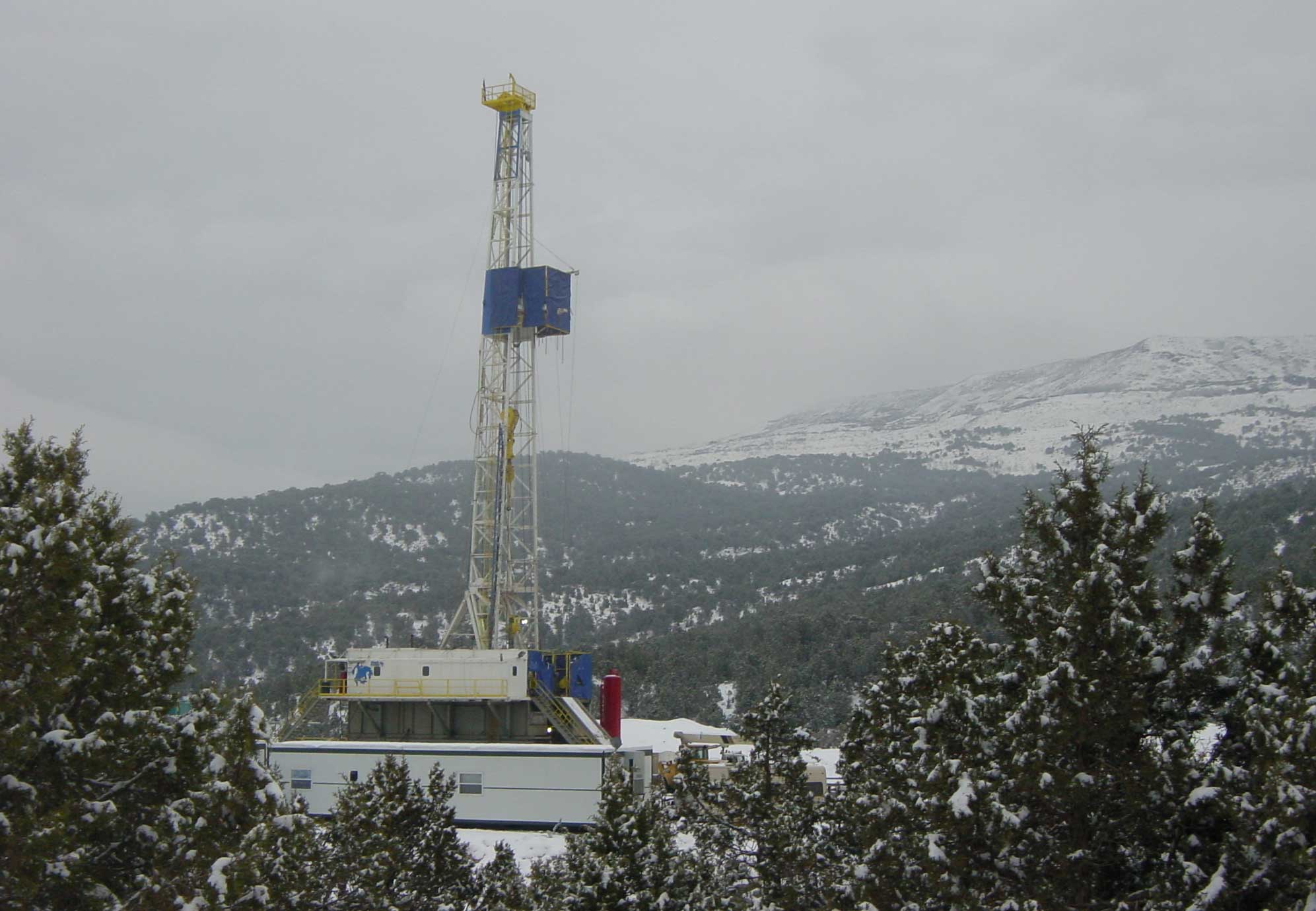 With oil trading at over $70 a barrel, demand up, and questions about supply from Iran and elsewhere, interest in fracking has rebounded in September, 2018. Soft oil and gas prices in 2015 and 2016 had dampened enthusiasm for investments in shale oil. BHP Billiton, the Australian-based metals and energy company, took a $4.9 billion write-off in January, 2016, on its shale oil investment in the United States. In the short and medium term, BHP saw shale too expensive to compete with traditional oil and gas production. BHP expected its shale investments to be profitable in the long run, however. As soon as crude edged toward $70 a barrel in early August, 2018, BHP sold its US shale holdings to BP for $10.5 billion.
What if there is a shale oil deposit under your home? Fracking, which blasts oil and natural gas out of shale rock, has caused countries to ignore serious consequences. (See the earlier post, "North Pole Flag.")
President Obama favored energy renewables over fracking. At the moment, wind and solar technologies need fossil fuel backups for windless, cloudy days and nighttime, but Bill Gates, who just announced his intention to invest a billion dollars in clean energy, said government investment in innovations research will lead to even more private investment in technologies that will overcome the need for fuels that contribute to greenhouse gases.
While ignoring private property rights is just one of the problems associated with fracking, or hydraulic fracturing, protesters in England drew attention to the need to consider this fracking drawback by erecting a satiric sign outside the country home of British Prime Minister, David Cameron, this month. The sign apologized for the inconvenience caused by setting up fracking operations under his home without permission.
With its economy dependent on income from oil and natural gas, Russia is said to be funding anti-fracking groups. While this may or may not be true, there are legitimate reasons for concern about the fracking process. To release trapped oil and natural gas, at high pressure, companies pump fluid composed of 99% water and sand and 1% chemicals into dense rock formations thousands of feet below ground. Companies, such as Royal Dutch Shell, which has a contract with China's Sinopec Corp. to exploit shale gas deposits in the Sechuan Basin and Ordos, try to reassure people that the wells they drill are far below drinking water supplies and that they isolate water supplies from fracking fluids by inserting concrete and steel barriers into their wells. Considering the shortage of clean water in eight of the 20 countries with the largest shale gas resources, it does not seem wise to base the safety of water supplies on company assurances.
Although Algeria, for example, is believed to have the world's third or fourth largest recoverable shale gas reserves, protesters are more concerned about potential damage to the delicate aquifer system that furnishes water for people, animals, and crops not only in Algeria, but also in Libya and Tunisia. Fear that Halliburton's $70 billion hydraulic fracking project would pollute ground water and disturb the environment set off a violent protest in Ain Salah, a rural Algerian town in the Sahara Desert. Early in 2015, demonstrations spread to at least three other towns and Algiers. Deep well drilling to increase the amount of water needed for fracking can have an impact on local water sources and a cumulative effect that causes water levels to drop in lakes farther away. Flowback of the water and chemicals used in fracking plus the radioactive materials picked up deep in the earth is stored in plastic-lined open pits at drilling sites. While some of this toxic stew is trucked away and treated to remove toxins, the rest is released into streams and rivers that pollute drinkable water.
Since companies are not required to disclose what chemicals they are using, there is no way to test the effect they have underground. I am reminded of the birds on an island in the North Pacific Ocean who are dying because of eating debris from humans over 1,250 miles away. Although bottle caps, cigarette lighters, and razor blades thrown into the ocean disappear, they can do plenty of harm.
The sand drilling companies blast into shale helps hold cracks open to let oil and natural gas flow to the wellhead. Mining this sand brings noise, truck and rail traffic, and fine silica dust pollution to the population in areas where often there are no nonmetallic mining laws to regulate the hours, trucking routes, and other aspects of sand mining operations. People living near (a half mile away or closer) a sand mine have developed asthma and needed to use an inhaler. They cannot open their windows and have to install air filtration systems in their homes. Since signing a contract with a sand mining company can make a landowner wealthy, individuals have an incentive to ignore the disappearing hills, lung damage, and other consequences that can come with sand mining. Product manufacturers and commodity producers, however, that are having shipping delay problems because they are competing for rail capacity with frac sand are beginning to complain.
Also, sand mines can use between 420,000 and two million gallons of water a day. To remove impurities from the sand, the chemical, polyacrylamide, which has traces of a known carcinogen, can enter surface and ground water at a mine site from wastewater ponds.
The Food and Water Watch organization, which began sponsoring a Global Frackdown three years ago, opposes UN efforts to include fracking in its Sustainable Energy for All Initiative. The many problems associated with fracking do not justify including the process in the same category as renewable wind and solar energy sources. The organization, Americans Against Fracking, which pulls together groups working to ban fracking helped New York ban the process after a two-year investigation concluded that fracking could not be done safely. A bill now pending in the U.S. Congress would ban fracking on public lands, where it already has begun in Pennsylvania's Allegheny National Forest, and Virginia has agreed to allow it in the George Washington National Forest.
Finally, there is concern about the possibility that fracking can cause earthquakes, such as the small ones geologists discovered in Ohio in April, 2014. Clearly, there is a need for tough permit requirements, when a fault already exists near drilling operations.
As more and more people around the world rely on industrial jobs and demand heat, air conditioning, and cars, care for the environment will come up against pressure to find new sources of oil and natural gas. What projects will students develop to help adults see the unseen effects of dangerous extraction methods?
Subscribe to:
Posts (Atom)