Showing posts with label religion. Show all posts
Showing posts with label religion. Show all posts
Monday, July 20, 2020
What Does Success Look Like?
When a "Black Lives Matter" group took over the pavilion in a park to broadcast a message by bullhorn last night, I was reminded of this question an interviewer asked a Black author on the "Book TV" program.
I guess I would have answered her question by saying success in a Black neighborhood would look like a well-maintained school, no Pay-Day loan and liquor stores or abortion clinics. The kindly Black man on the "Today" show this morning, who had adopted a "family" of a dozen or so multiracial children would have answered differently. As would Rev. Derrick DeWitt, the director of the Maryland Baptist Aged Home whose residents have had no infections during the COVID-19 epidemic. Jasmine Guillory, an attorney who writes romance novels with Black female lead characters, might judge her success by publication of PARTY OF TWO, her fifth novel.
Everywhere on the globe, no matter what your aim is: reforming a police department, feeding a hungry world or living a happy and fulfilling life, before beginning a task, ask yourself, "What will success look like?"

Monday, November 11, 2019
No Time To Be Stupid
China's leader, Mr. Xi Jinping, asserts every country's government is legitimate, even one like his that censors everything a person sees and says and uses facial recognition technology to monitor the activities of every citizen. There are numerous ramifications of acknowledging despotic governments that ignore human rights and theocratic governments that require all people to follow the same religious beliefs and practices deserve the same respect and fealty as governments founded on democratic principles.
Take the example of neurotechnologies capable of inserting electrodes into a brain to temporarily reduce the time it takes to memorize multiplication tables, a football playbook, or the codes and plans of a military enemy. Invasion into a brain also has other effects. Blood leakage into a brain's compartments from such an insert eventually reduces normal cell activities, such as memory and thinking. The impact on one brain function also can "cross talk" to impact other brain functions, such as the moral ability to discern right from wrong.
Some scientists devote themselves to technologies that enhance the individual, commercial, and military applications of human individuals, robots, and drones. Other humans use technology to binge-watch shows, socialize on smartphones, or order lipstick and mascara. Around the world, everyone has a stake in supporting governments devoted to: 1) promoting technologies that are good for society and 2) impeding the development and controlling the use of technologies that injure humans.
Take the example of neurotechnologies capable of inserting electrodes into a brain to temporarily reduce the time it takes to memorize multiplication tables, a football playbook, or the codes and plans of a military enemy. Invasion into a brain also has other effects. Blood leakage into a brain's compartments from such an insert eventually reduces normal cell activities, such as memory and thinking. The impact on one brain function also can "cross talk" to impact other brain functions, such as the moral ability to discern right from wrong.
Some scientists devote themselves to technologies that enhance the individual, commercial, and military applications of human individuals, robots, and drones. Other humans use technology to binge-watch shows, socialize on smartphones, or order lipstick and mascara. Around the world, everyone has a stake in supporting governments devoted to: 1) promoting technologies that are good for society and 2) impeding the development and controlling the use of technologies that injure humans.
Tuesday, March 26, 2019
Taking a Break
I want to express what a joy it has been to touch base with blog visitors from 85 different countries and to take a moment to review topics covered in past entries.
In my introductory post on July 17, 2012, I said I hoped to help kids feel comfortable with the globalization that would be part of their lives. Today I add my hope that human rights violations decrease in their lifetime, toleration for all religions grows, and AI, 3D printing, 6G networks, VR, the IofT, and other technological advances enhance rather than threaten their futures.
I was surprised to see that my first post about China was not until Feb.2015. Since then, Beijing launched its One Belt One Road and Maritime Silk Road global expansion, increased its military hard power, and added soft power films and International Flower Festivals to its cuddly pandas.
During the past seven years, the African continent also gained importance. One of the blog's single most popular posts, with 140 views, was "Games Children Play," which provided instructions for filling bags for students with samples of Africa's coffee, tea, chocolate, cotton, and other products. Both research in and distribution of remedies for malaria, AIDS, and other diseases now tackle their devastating impact on Africa's progress. Mobile phones already facilitate banking, information about markets, catching animal poachers, and street repairs. Exploitation and corruption are at least recognized, if not yet cured.
Finally, I want to thank all the sources, from trendwatching.com to globalsistersreport.org, that have provided the information I was able to convey to you
In my introductory post on July 17, 2012, I said I hoped to help kids feel comfortable with the globalization that would be part of their lives. Today I add my hope that human rights violations decrease in their lifetime, toleration for all religions grows, and AI, 3D printing, 6G networks, VR, the IofT, and other technological advances enhance rather than threaten their futures.
I was surprised to see that my first post about China was not until Feb.2015. Since then, Beijing launched its One Belt One Road and Maritime Silk Road global expansion, increased its military hard power, and added soft power films and International Flower Festivals to its cuddly pandas.
During the past seven years, the African continent also gained importance. One of the blog's single most popular posts, with 140 views, was "Games Children Play," which provided instructions for filling bags for students with samples of Africa's coffee, tea, chocolate, cotton, and other products. Both research in and distribution of remedies for malaria, AIDS, and other diseases now tackle their devastating impact on Africa's progress. Mobile phones already facilitate banking, information about markets, catching animal poachers, and street repairs. Exploitation and corruption are at least recognized, if not yet cured.
Finally, I want to thank all the sources, from trendwatching.com to globalsistersreport.org, that have provided the information I was able to convey to you
Monday, February 25, 2019
An Enemy Is Nothing to Fear
An enemy is someone to study. During 27 years of captivity in South Africa, Nelson Mandela studied the Afrikaners, descendants of South Africa's Dutch settlers, who created the apartheid system that made blacks second class citizens in their own country. He learned their language, studied their leaders and made friends with their prison guards. South Africa no longer has an apartheid system.
My old home town of Chicago has a lot of local problems, a high murder rate is one. But Chicago also is enrolling more high school students in International Baccalaureate (IB) programs. (There also are IB programs for younger students.) These programs enable students to look out at the world with confidence, not fear.
Students who can trace the Yangtze River from the busy port at Shanghai to the lake district at Wuhan and westward to China's largest city, which IB students are apt to know is Chongqing, rather than Beijing, are not afraid to learn about China's economic and military expansion. They also know the Chinese Communist Party is struggling to block the exercise of constitutional guarantees, attendance at religious services, democracy protests in Hong Kong, tax evasion by its movie stars, Gobi Desert sand storms from adding to air pollution and climate change's rising seas from swamping its artificial islands.
International Baccalaureate programs, begun in 1968, originally were developed for the children of diplomats, military officers, and business executives frequently transferred to different countries. By satisfying rigorous IB standards, students are prepared to satisfy entrance requirements at colleges and universities wherever they might live. To learn more about IB programs and to find schools that offer them, go to ibo.org.
(Also see the earlier post "Introduce Disadvantaged Kids to the World.")
My old home town of Chicago has a lot of local problems, a high murder rate is one. But Chicago also is enrolling more high school students in International Baccalaureate (IB) programs. (There also are IB programs for younger students.) These programs enable students to look out at the world with confidence, not fear.
Students who can trace the Yangtze River from the busy port at Shanghai to the lake district at Wuhan and westward to China's largest city, which IB students are apt to know is Chongqing, rather than Beijing, are not afraid to learn about China's economic and military expansion. They also know the Chinese Communist Party is struggling to block the exercise of constitutional guarantees, attendance at religious services, democracy protests in Hong Kong, tax evasion by its movie stars, Gobi Desert sand storms from adding to air pollution and climate change's rising seas from swamping its artificial islands.
International Baccalaureate programs, begun in 1968, originally were developed for the children of diplomats, military officers, and business executives frequently transferred to different countries. By satisfying rigorous IB standards, students are prepared to satisfy entrance requirements at colleges and universities wherever they might live. To learn more about IB programs and to find schools that offer them, go to ibo.org.
(Also see the earlier post "Introduce Disadvantaged Kids to the World.")
Wednesday, June 27, 2018
Self Help for Human Rights
On the "Jeopardy" TV quiz show June 25, 2018, three bright contestants did not recognize the last line of the US. Declaration of Independence. Today's emphasis on science, technology, engineering, and math does nothing to foster the value and rights of a human being.
The philosophers and religious thinkers of the United States who justified independence from England and forged a Constitution were schooled in the liberal arts, Greek and Roman statesmanship, and the rights confirmed on humans by natural law. What percentage of the world's seven billion plus population now considers self evident the truths that all men are created equal and endowed by their Creator with certain inalienable rights?
Williamsburg, a restored early American historic village in Virginia, published the following quiz that invites us to match U.S. revolutionaries with quotations they used to inspire followers. Their words provide an ongoing self help reminder for humans.
1._____I write so that King George III may read without his spectacles.
2._____If this be treason, make the most of it.
3._____I desire you would remember the ladies and be more generous and favorable to them than
your ancestors.
4._____The British are coming.
5._____ I only regret that I have but one life to lose for my country.
6._____Don't fire till you see the whites of their eyes.
7._____I have not yet begun to fight.
8._____In every human breast, God has implanted a principle, which we call love of freedom.
A. Nathan Hale, a spy for the colonists
B. Abigail Adams
C. John Hancock
D. Patrick Henry
E. William Prescott
F. Phillis Wheatley, a slave
G.John Paul Jones
H. Paul Revere
The philosophers and religious thinkers of the United States who justified independence from England and forged a Constitution were schooled in the liberal arts, Greek and Roman statesmanship, and the rights confirmed on humans by natural law. What percentage of the world's seven billion plus population now considers self evident the truths that all men are created equal and endowed by their Creator with certain inalienable rights?
Williamsburg, a restored early American historic village in Virginia, published the following quiz that invites us to match U.S. revolutionaries with quotations they used to inspire followers. Their words provide an ongoing self help reminder for humans.
1._____I write so that King George III may read without his spectacles.
2._____If this be treason, make the most of it.
3._____I desire you would remember the ladies and be more generous and favorable to them than
your ancestors.
4._____The British are coming.
5._____ I only regret that I have but one life to lose for my country.
6._____Don't fire till you see the whites of their eyes.
7._____I have not yet begun to fight.
8._____In every human breast, God has implanted a principle, which we call love of freedom.
A. Nathan Hale, a spy for the colonists
B. Abigail Adams
C. John Hancock
D. Patrick Henry
E. William Prescott
F. Phillis Wheatley, a slave
G.John Paul Jones
H. Paul Revere
(You'll find answers in the earlier post, "The Perfect Test.")
Saturday, June 9, 2018
Successful Revolutions Require Organization
Massive rallies and marches fail to result in change, unless they are supported by organizations. It takes political parties to win elections, military forces to stage a coup, pressure from organized religions, and labor unions to change corporations and institutions of learning.
Individuals with ideas for reform can write books, but organizations need to put these ideas into operational form. When would-be reformers approach Nancy Pelosi, the former Speaker of the U.S. House of Representatives, for her endorsement, she asks if they can muster a group of at least one thousand. Crowdfunding on social media suggests one way to gain support for causes.
Where are groups already assembled? On college campuses, war and South Africa's apartheid protesters gained traction. Members of Jewish temples, Muslim mosques, African-American and other Christian churches share common causes.
In Prague, dissidents hung out at the Art Deco cafe, Kavarna Slavia, to plot the Velvet Revolution that ended communism in Czechoslovakia. The Cafe Gallery and Bassiani night clubs in Tbilisi, Georgia, now attract young people ready to break out of post-Soviet police and interior ministry restraints and to embrace liberalized Western culture. The clubs serve as a gathering space, not only for locals, but also for tourists, rappers, and DJs with European followings. Young Russians received social media news of a club protest that led demonstrators to the steps of Georgia's parliament.
Individuals with ideas for reform can write books, but organizations need to put these ideas into operational form. When would-be reformers approach Nancy Pelosi, the former Speaker of the U.S. House of Representatives, for her endorsement, she asks if they can muster a group of at least one thousand. Crowdfunding on social media suggests one way to gain support for causes.
Where are groups already assembled? On college campuses, war and South Africa's apartheid protesters gained traction. Members of Jewish temples, Muslim mosques, African-American and other Christian churches share common causes.
In Prague, dissidents hung out at the Art Deco cafe, Kavarna Slavia, to plot the Velvet Revolution that ended communism in Czechoslovakia. The Cafe Gallery and Bassiani night clubs in Tbilisi, Georgia, now attract young people ready to break out of post-Soviet police and interior ministry restraints and to embrace liberalized Western culture. The clubs serve as a gathering space, not only for locals, but also for tourists, rappers, and DJs with European followings. Young Russians received social media news of a club protest that led demonstrators to the steps of Georgia's parliament.
Saturday, April 21, 2018
Turn Place into Career Opportunity
While wondering why I sometimes see the moon in the West when I go to bed and then see a faint moon in the South, when I get up, I realized I never thought about anything like this when I lived in cities. Living with a clear sky over a wide open space in Wisconsin, I was motivated to find a book that explained how the Earth's rotation interacts with the location of the moon as the Earth orbits the Sun.
Place has the power to influence the problems a person, animal, insect, or plant might choose to solve. For example, I remember seeing a documentary about an insect living in the desert survived on one drop of water a day. The bug figured out how to tip its body forward on a slant in order for the water that condensed on its body overnight slid down into its mouth. In a similar manner, South Africa's drought inspired a school to use overnight condensation to provide drinking water for its students.
Researchers, living in a place where two species, coyotes that usually kill red foxes, interact in peace, observed that coyotes and foxes had no reason to compete when an area had an abundance of resources. Other researchers living in a place where mice carry the deer ticks that cause Lyme disease found the number of ticks could be reduced by providing mice with nesting materials treated with pesticide.
Sadly, many who live in places where they have the advantage of knowing the most about a problem fail to think about solutions. In fact, they often choose to contribute to the problem. Drugs and crime go hand-in-hand from West Africa to Amsterdam and from Mexico to New York and places in between. Coal miners are not known for embracing a switch to alternate energy sources. Religious differences lead to conflict rather than peace.
"(F)ar too many of us see the economic status quo as normal. It is not normal," writes John Hope Bryant in his book, The Memo. Then, he asks, "What are we going to do about it?" Bryant was writing about recognizing and changing poverty-prone neighborhoods, but the same can be said about political instability, gender inequality, or heating up the planet. Wherever we are, our places have large and small problems that are not normal. We are in the best place to understand these problems and to change them for the better.
Place has the power to influence the problems a person, animal, insect, or plant might choose to solve. For example, I remember seeing a documentary about an insect living in the desert survived on one drop of water a day. The bug figured out how to tip its body forward on a slant in order for the water that condensed on its body overnight slid down into its mouth. In a similar manner, South Africa's drought inspired a school to use overnight condensation to provide drinking water for its students.
Researchers, living in a place where two species, coyotes that usually kill red foxes, interact in peace, observed that coyotes and foxes had no reason to compete when an area had an abundance of resources. Other researchers living in a place where mice carry the deer ticks that cause Lyme disease found the number of ticks could be reduced by providing mice with nesting materials treated with pesticide.
Sadly, many who live in places where they have the advantage of knowing the most about a problem fail to think about solutions. In fact, they often choose to contribute to the problem. Drugs and crime go hand-in-hand from West Africa to Amsterdam and from Mexico to New York and places in between. Coal miners are not known for embracing a switch to alternate energy sources. Religious differences lead to conflict rather than peace.
"(F)ar too many of us see the economic status quo as normal. It is not normal," writes John Hope Bryant in his book, The Memo. Then, he asks, "What are we going to do about it?" Bryant was writing about recognizing and changing poverty-prone neighborhoods, but the same can be said about political instability, gender inequality, or heating up the planet. Wherever we are, our places have large and small problems that are not normal. We are in the best place to understand these problems and to change them for the better.
Tuesday, November 14, 2017
What Can We Learn from Terrorists?
I remember seeing an article that I thought sounded ridiculous until I read it The headline was something like "What We Can Learn from People Who Live in a Dump." It turned out these people found in the dump what they needed for shelter and cooking and the scrap they sold to earn an income. Their livelihood was recycling writ large. It was just like the train loads of scrap iron that become new steel or the discarded rock piles reprocessed to ferret out every bit of copper. In the same way countries with no lithium mines will have to learn to make new batteries out of lithium extracted from used items.
So, what wisdom can we extract from terrorists? They think about God far more than those who say, "I don't believe in God," and those who blithely assume God created each and every full blown plant, animal, and human.
In his book, The Kingdom of Speech, Tom Wolfe recounts an exchange between Charles Darwin and a group of naive students who wanted to know how evolution "got under way and how exactly, physically, it started up -- from what?" One student was not satisfied with Darwin's answer that evolution probably started with "four or five cells floating in a warm pool somewhere." He asked where the cells came from and who put the cells in the pool. In 1871, Darwin said he didn't know and in 2017, since no one has created even one cell out of nothing and the greatest scientist has discovered what exists rather than created anything, the obvious answer is God.
In the Declaration of Independence, Thomas Jefferson expressed the self-evident truth that all men are "endowed by their Creator with certain unalienable Rights." The First Amendment of the Constitution went on to guarantee certain rights, including that Congress could not prohibit the free exercise of religion. Through texts, traditions, the words of learned scholars, and the well-formed consciences of individuals, many religious beliefs related to the existence of God have developed. Is He or She? Is God one person, three, or hundreds? Was Jesus God? Did he rise from the dead or was he a hologram, spirit, or frog-like being stimulated by electricity? Are we here to accumulate wealth or to serve the poor, pray, and adore God? Is God vengeful or merciful? Is there life of the body or soul or both after death?
Where Muslim extremists go off the rails is when they use Allah to justify killing infidels who hold different religious beliefs. Similarly, pro-life zealots who use their religion to justify killing doctors who perform abortions are also misguided.
In summary, we can learn two main ideas from terrorists: 1) God is too big a subject to dismiss without study, and 2) religious beliefs do not justify killing those with different religious beliefs.
(See the earlier post, "This We Believe," to learn some of the beliefs of the world's major religions.)
So, what wisdom can we extract from terrorists? They think about God far more than those who say, "I don't believe in God," and those who blithely assume God created each and every full blown plant, animal, and human.
In his book, The Kingdom of Speech, Tom Wolfe recounts an exchange between Charles Darwin and a group of naive students who wanted to know how evolution "got under way and how exactly, physically, it started up -- from what?" One student was not satisfied with Darwin's answer that evolution probably started with "four or five cells floating in a warm pool somewhere." He asked where the cells came from and who put the cells in the pool. In 1871, Darwin said he didn't know and in 2017, since no one has created even one cell out of nothing and the greatest scientist has discovered what exists rather than created anything, the obvious answer is God.
In the Declaration of Independence, Thomas Jefferson expressed the self-evident truth that all men are "endowed by their Creator with certain unalienable Rights." The First Amendment of the Constitution went on to guarantee certain rights, including that Congress could not prohibit the free exercise of religion. Through texts, traditions, the words of learned scholars, and the well-formed consciences of individuals, many religious beliefs related to the existence of God have developed. Is He or She? Is God one person, three, or hundreds? Was Jesus God? Did he rise from the dead or was he a hologram, spirit, or frog-like being stimulated by electricity? Are we here to accumulate wealth or to serve the poor, pray, and adore God? Is God vengeful or merciful? Is there life of the body or soul or both after death?
Where Muslim extremists go off the rails is when they use Allah to justify killing infidels who hold different religious beliefs. Similarly, pro-life zealots who use their religion to justify killing doctors who perform abortions are also misguided.
In summary, we can learn two main ideas from terrorists: 1) God is too big a subject to dismiss without study, and 2) religious beliefs do not justify killing those with different religious beliefs.
(See the earlier post, "This We Believe," to learn some of the beliefs of the world's major religions.)
Saturday, June 3, 2017
Do World Religions Employ the Antitrust Wink?
It would be a rare religious leader who at one time or another failed to express a desire to make the world a better place. As a Benedictine wrote, "That which each of us does to proclaim God's love makes a wonderful difference in our world."
Are statements like this said with the winks John Brooks describes in a chapter on antitrust price fixing in his book Business Adventures? He tells how executives of competing companies would wink to cancel the following advice: Avoid any agreements, expressed or implied, that could be viewed as violating the 1890 Sherman Act and the 1914 Clayton Act that make setting noncompetitive price levels illegal.
When Pope Francis could not visit the pyramids last April, because Muslim extremists vow to attack Egypt's Christians, it does seem some who claim to lead the world's religions give their followers confusing signals. And again and again from the hatred turned against Judaism in the Holocaust to the 24 Coptic Christians killed while riding a bus to a monastery south of Cairo and the two men killed when they tried to defend Muslim girls in Portland, Oregon, last month, religious followers get the winked messages.
But can't signals, such as peace symbols, also be forged to unite members of all religions?
Are statements like this said with the winks John Brooks describes in a chapter on antitrust price fixing in his book Business Adventures? He tells how executives of competing companies would wink to cancel the following advice: Avoid any agreements, expressed or implied, that could be viewed as violating the 1890 Sherman Act and the 1914 Clayton Act that make setting noncompetitive price levels illegal.
When Pope Francis could not visit the pyramids last April, because Muslim extremists vow to attack Egypt's Christians, it does seem some who claim to lead the world's religions give their followers confusing signals. And again and again from the hatred turned against Judaism in the Holocaust to the 24 Coptic Christians killed while riding a bus to a monastery south of Cairo and the two men killed when they tried to defend Muslim girls in Portland, Oregon, last month, religious followers get the winked messages.
But can't signals, such as peace symbols, also be forged to unite members of all religions?
Wednesday, February 24, 2016
Can You Be Modern and Belong to an Organized Religion?
Whenever world renowned scientists proclaim they are atheists, I wonder if they know how to create some thing out of nothing and how they can discount the religious beliefs that have come down through the ages.
Professors at the Harvard Divinity School's Religious Literacy Project and Wellesley College must have been thinking about the bigotry and prejudice that discounting another's religious beliefs fuels, when they created the free online class on religious literacy that starts March 1. They recognize that religions are not stagnant. They are evolving and religious texts have various historical and contemporary interpretations.
Since religion plays an important and complex role in the lives of young and old around the world, from time to time, I have written posts on the topic: "Why Do They Hate Us?" "Respect the Faith," and "This We Believe." The Harvard/Wellesley series should be much more informative. You can learn more at eds.org/xseries/world-religions-through-scriptures#why-xseries.
Professors at the Harvard Divinity School's Religious Literacy Project and Wellesley College must have been thinking about the bigotry and prejudice that discounting another's religious beliefs fuels, when they created the free online class on religious literacy that starts March 1. They recognize that religions are not stagnant. They are evolving and religious texts have various historical and contemporary interpretations.
Since religion plays an important and complex role in the lives of young and old around the world, from time to time, I have written posts on the topic: "Why Do They Hate Us?" "Respect the Faith," and "This We Believe." The Harvard/Wellesley series should be much more informative. You can learn more at eds.org/xseries/world-religions-through-scriptures#why-xseries.
Wednesday, December 23, 2015
The Strategy of Prayer
 When I heard that a Muslim from Yemen set his computer to remind him to pray five times a day, I thought of Jean-Francois Millet's famous painting, The Angelus. The work of this 19th century French artist pictures a man and woman who stop work on their farm when bells call them to pray at noon, one of the three times in the day the Angelus prayer is said. Was their prayer a petition for a good potato yield, gratitude for their harvest, adoration, or repentance?
In 2016's Christian Holy Week, when terrorists tore up lives in a Brussels airport and rail station, we were reminded to pray for peace among neighbors, religions, and countries.
At Christmas, we recognize that God didn't just get the universe started by creating something out of nothing and then forget about us. He came to Earth and experienced our joys and sorrows. And after He rose from the dead, He said the Holy Spirit would come to guide mankind into all truth.
When we lived in Philadelphia, my daughter attended her early grades at Friends Select, where the headmaster of the school founded by Quakers was Jewish. Every week, all the students walked a few blocks to a 100-year-old Friends meeting house. There, they sat in silence until the Holy Spirit moved some or none to speak. In this holy season, the wisdom to bring peace may be but a moment of silent prayer away.
The God much greater than ourselves, who has no beginning or end (a concept we cannot begin to understand), is at our beck and call. We don't need to set our computers to remind us when to pray. Whether we are young or old, farmer or tycoon, Muslim, Christian, Jewish, Buddhist, Hindu, Shinto, Sikh, or Zoroaster, we can pray anytime. And in our silence, we'll receive wisdom.
Thursday, July 23, 2015
What Do Starbucks and ISIS Have in Common?
 Whether you're friendless in a big city or big school, you're going to be drawn to a welcoming environment. Baristas who greet you by name and remember your order and organizations that promise boyfriends and a purpose in life have found the secret of success. They are not going to point out the down sides associated with what they offer.
What can be done to counteract the lure of terrorist groups and gangs? Offer positive alternatives for bonding in sports teams, theater productions, church choirs, robot competitions. Provide classes in school and out that teach skills directly related to landing a good-paying career. Publicize internships that provide experience, not just in taking orders, but in an environment that invites them to contribute ideas and to learn to lead in a way that doesn't offend others.
Separation of church and state need not be interpreted to rule out studying world religions in schools. Unless myths about Catholics, Muslims, Jewish people, Buddhists, and other religious followers are dispelled, these falsehoods will continue to undercut positive beliefs that can foster tolerance. Just as the Internet can be used to bully and promote violence, techies can use social media to muster posses that post cartoons, jokes, and songs that focus on fun and inclusion. What stylish young woman who works out to keep her figure trim and who keeps up on the latest mascara, nail polish, and hair and skin care advice really wants her boyfriend to demand she wear a burka?
Saturday, June 27, 2015
Personal Response to the World's Problems
 Some effort is better than none. Asked if we are alone in the universe, former NASA astronaut, Barbara Morgan, responded in Time magazine (July 6-12, 2015), "In every crack in the sidewalk, there's something growing....Life seems to want to take hold...." Last year about this time, one bucket of ice water dumped over a person's head helped hope take hold for people suffering from ALS by raising $94 million to find a cure (See the earlier blog post, "Good Works Multiply Fast.")
Learn that Nestle is filling the plastic water bottles it sells with ground water pumped out of drought-stricken, fire-prone California's San Bernardino National Forest. An even bigger problem: Why would someone in a developed country which has strict health and safety regulations to keep water free of pesticides and pollution drink water transported in plastic bottles from another country?
Response: Fill reusable bottles with water from taps or pumps in areas where water is protected by clean water acts.
Learn that nearly 800 million people in the world don't have enough to eat every day.
Response: Bring a can of soup or fruit to a shelter for homeless people, a food pantry, or church collection center.
Learn that usable items are thrown away in dumps that pollute the land and pose health risks for children tempted to play in them.
Response: Hold a yard sale to sell outgrown clothes and toys. Maybe, even give the proceeds of the sale to a charity.
Learn that a "religious" terrorist group has used a bomb to hurt people it doesn't like.
Response: Read the Barron's book series, This is my faith, or another children's book on religions to find out the true beliefs of Muslims, Catholics, Hindus, Buddhists, etc. that have nothing to do with violence against those who practice other or no religions.
Learn the drawbacks of drilling for oil in the Arctic (See the earlier blog post, "North Pole Flag."), fracking (See the post, "The Lure of Shale Oil Independence."), and greenhouse gases (See the posts, "Pollution Update" and "A Healthy Environment.").
Response: Walk or ride a bike to reduce the need to be driven in a car that burns gasoline and look for ways to use less electricity from coal-burning power plants. What can you do without turning on a light, computer, or TV?
Learn that pesticides can harm the bees needed to pollinate crops and can reduce the milkweed food supply butterflies need to eat. (See the earlier blog post, The Bees and the Birds ".).
Response: In backyard and community gardens, pull out weeds by hand.
Learn that someone has been hurt or killed because of the color of their skin, where they were born, their religion, who they love, because they are girls, or because they want to vote.
Response: Pray for greater understanding, tolerance, and respect among all people in the world.
Monday, May 11, 2015
Why Do They Hate Us?
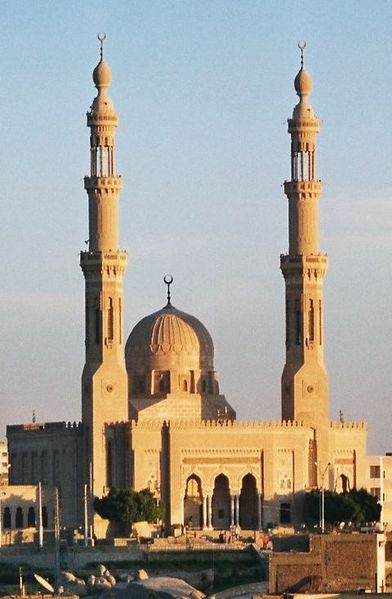 Let's begin by recognizing that Indonesia, a country where 86% of its estimated 252,812,245 population is Muslim, is a democracy with a traditional commitment to religious diversity. Despite opposition from extremists, Time magazine (April 27/May 4, 2015) noted that Indonesia's President Joko Widodo appointed a Christian woman as a district chief in Jakarta. In other words, hate for the West is not an emotion shared by all Muslims.
Zak Ebrahim, whose father murdered a militant Jewish Defense League rabbi and helped plan the first World Trade Center bombing in 1993, observed in his book, The Terrorist's Son, "murderous hatred has to be taught...forcibly implanted. It's not a naturally occurring phenomenon." It is, therefore, not to justify or condemn the feelings of Muslims who hate the West but to lay out the reasons Ebrahim's father, El-Sayyid Nosair, and those in Lawrence Wright's book, The Looming Tower: al-Qaeda and the Road to 9/11, give to explain why they hate the West.
Wright reminds us that Muslims went in two different directions after the death of Mohammed. The vast majority of Mohammed's followers are Sunnis who believe caliphs, Islamic clerics, should be elected. In contrast Shia Muslims, such as the Iranian Muslims who are Persians rather than Arabs, expected a hereditary caliphate, rule of Islamic clerics, to begin with Mohammed's cousin and son-in-law, Ali ibn Abi Talib. Within the Sunni majority, a fundamentalist subset of Salafists believe the only valid Islamic practices are the "early Muslim" (Salaf) ways followed during the time of Mohammed (See a description in the earlier blog post, "This We Believe."). In Egypt, Hasan al-Banna founded the Muslim Brothers in 1928 in order to form an Islamic state where the government, a Sharia legal code based on 500 immutable verses from the Quran, and lives would be centered on God. The Muslim Brotherhood came to be seen as a social service agency that provided jobs, schools, and hospitals and as an organization willing to achieve an Islamic state through the political process and compromise. Within the Brotherhood, a "secret apparatus," or army, also was formed to achieve this aim by violent means. The Ayatollah Ruhollan Khomeini, who formed a rigid theocratic state in the wealthy, modern country of Iran in 1979, sanctions this kind of terror and the use of the sword by warriors in a jihad, holy war, against infidels. Iran became a model for those who would impose religious dictatorships by force.
To devout Muslims, infidels are those who practice a full array of godless, immoral behavior: homosexuality, adultery, divorce, the sexual freedom of women who flirt and wear enticing colors, close male and female dancing, jazz that arouses primitive instincts, drinking liquor and drunkenness, racism, violent sports, individualism, and materialism. Muslims believe Islam will triumph over both capitalists and communists, because modernity in the West, rather than focusing all aspects of life on God, has separated the secular and sacred, mind and spirit, state and religion, and science and theology.
However, Muslim aspirations for forming an Islamic theocracy in Egypt were crushed by the secular regime of Gamal Abdul Nasser; Israel's swift victory in the 1967 Six Day War; and Anwar al-Sadat's secular democratic state, his ban on religious student organizations and traditional Islamic garb worn by university women, and Egypt's peace agreement with Israel. When a military plot to kill Sadat was successful in 1981, thousands were imprisoned in a 12th century dungeon where they were severely tortured. Among the prisoners was Ayman al-Zawahiri, a member of an underground cell that kept alive the idea of a jihad movement that would establish an Islamic state. When Zawahiri, who was a doctor, first went to Pakistan in 1980 to care for Afghan refugees who fled across the border following the Soviet invasion, he noted the training received by the Afghan freedom fighters or holy warriors, the "mujahideen," and how the area could serve as a base for recruiting an army of jihadists to take over Egypt and ultimately the West, considered to be the enabling force behind the Egyptian regime and state of Israel. Zawahiri's organization, which was strapped for money, would join forces with Osama bin Laden in the well financed al-Qaeda organization.
The divide between supporters of secular governments and Islamic theocracies shows itself in a variety of countries. In Bangladesh, the secular Shahbag movement squares off against Ansar al-Islam Bangladesh, a group with ties to al-Qaeda in India. Al-Qaeda is taking credit for the May 12, 2015 murder of Ananta Bijoy Dash, who wrote for the Free Mind website that promotes secularism in Bangladesh.. Earlier, other Bangladesh bloggers, Avijit Roy, Oyasiqur Rhaman, and Ahmed Rajib Haider also had been killed by young Islamic activists. Dash had told friends that he did not expect anyone to kill him in his home in Sylhet.
It should be noted that religion is not the only cause for the rise of what has become known as Islamic fundamentalism. Racism, and in some cases colonialism, has had an impact on non-whites.
In Egypt, for example, the poverty, disease, and illiteracy of the local population stood in stark contrast to the sporting clubs, hotels, bars, casinos, movie theatres, restaurants, and department stores that catered to the English upper classes and troops who began coming to Egypt when it became a British Protectorate in 1882. In fact, British troops continued to maintain a base in the Suez Canal Zone throughout half of the 20th century.
Wednesday, March 4, 2015
New York's Schools Close for Muslim Holy Days and Chinese New Year
How can you show students the importance of respecting each other's religious beliefs and national celebrations?

Beginning in the 2015-2016 school year, New York City will add free days to its public school calendar for Muslim holy days and the Chinese New Year. By making Eid al-Adha (September 24, 2015) and Eid al-Fitr, which occurs during summer school, free days, the new calendar recognizes the size of NYC's Muslim population. Almost one million and nearly 10% of New York City's public school population are Muslim.
New York City joins U.S. school districts in Vermont, Massachusetts, and New Jersey, which already close to observe Muslim holy days.
(Religion also is the topic of earlier blog posts, "Respect the Faith" and "This We Believe.")
.jpg/402px-Muslim_group_going_on_a_field_trip_to_the_Church_(2666971803).jpg)
Beginning in the 2015-2016 school year, New York City will add free days to its public school calendar for Muslim holy days and the Chinese New Year. By making Eid al-Adha (September 24, 2015) and Eid al-Fitr, which occurs during summer school, free days, the new calendar recognizes the size of NYC's Muslim population. Almost one million and nearly 10% of New York City's public school population are Muslim.
New York City joins U.S. school districts in Vermont, Massachusetts, and New Jersey, which already close to observe Muslim holy days.
(Religion also is the topic of earlier blog posts, "Respect the Faith" and "This We Believe.")
Thursday, April 10, 2014
Respect the Faith
In this holy season, while Jewish people are celebrating Passover and Christians are about to recall the Resurrection of Christ on Easter, it might be a good opportunity for children to think about the need to respect the holy days of all religions. Freedom to exercise an individual's religion was considered a right important enough to be written explicitly in and guaranteed by the First Amendment of the U.S. Constitution. Students may know Muslim classmates who are free to attend religious services on Friday, Jewish children who go to their temples on Saturday, or Christian children who attend church on Sunday. They can ask friends about holy days they may not celebrate, such as the beginning of the Muslim holy season, Ramadan, on June 28, 2014, or the Jewish Day of Atonement, Yom Kippur, on October 4, 2014.
Learning about foreign countries is not complete without learning that followers of different religions are concentrated in certain parts of the world. Africa has both Christians and Muslims; Asia has Muslims, Buddhists, and Hindus; most Christians are in Europe, Latin America, and North America; the Jewish population is concentrated in Israel and the United States. It is all too easy for those in the majority who practice one religion in a country to oppress the minority. In Syria, the Christian minority suffers at the hands of the Sunni Muslim majority, and in Egypt Islamist mobs have destroyed Christian churches, orphanages, and businesses, according to TIME magazine (April 21, 2014). While a quarter of the Middle East's population was Christian in 1914; fewer than 5% are now Christian, since Christians left to escape harassment and physical violence. Given the usual inclination of a majority to dominate a minority, it is commendable to see that Pakistan and Sri Lanka recognize their countries' minorities on their flags (See the earlier blog post, "A Salute to Flags.").

More details about major religions can be found in the earlier blog post, "This We Believe."
Learning about foreign countries is not complete without learning that followers of different religions are concentrated in certain parts of the world. Africa has both Christians and Muslims; Asia has Muslims, Buddhists, and Hindus; most Christians are in Europe, Latin America, and North America; the Jewish population is concentrated in Israel and the United States. It is all too easy for those in the majority who practice one religion in a country to oppress the minority. In Syria, the Christian minority suffers at the hands of the Sunni Muslim majority, and in Egypt Islamist mobs have destroyed Christian churches, orphanages, and businesses, according to TIME magazine (April 21, 2014). While a quarter of the Middle East's population was Christian in 1914; fewer than 5% are now Christian, since Christians left to escape harassment and physical violence. Given the usual inclination of a majority to dominate a minority, it is commendable to see that Pakistan and Sri Lanka recognize their countries' minorities on their flags (See the earlier blog post, "A Salute to Flags.").

More details about major religions can be found in the earlier blog post, "This We Believe."
Thursday, March 28, 2013
Young Voices
 For 90 years, the Scholastic Art and Writing Awards have recognized the outstanding ways students in grades seven through twelve have expressed their views of the world. When my granddaughter won a gold key this year for her modern fable about the consequences of a wolf's deception, I had an opportunity to look through the book of submissions from last year's winners that she received.
With World Creativity and Innovation Week coming up April 15-21, this might be a good time for parents and teachers to encourage children and students to think about the world and compare what they draw and say with some of the representations and comments of Scholastic Art and Writing Award winners.
One student disputed the stereotypes of color: yellow Asians, black Africans, brown Indians, and white Americans. She saw herself in many colors.
World hunger was a topic that came up in several essays. A girl who wrote about villages where people "are skin and bones, their ribs visible" and their eyes always sad ended by saying that she never stops praying that, like "a blade of grass," these villagers can be "new and fresh." But a young immigrant from Laos who is a waitress in a bowling alley looks at American children in wonder when they "swallow between rounds" of arcade games and "drop food on the floor."
Boys think about war. One made a sculpture showing a young man being persuaded to enlist in the Army. Another wrote about depth charges attacking a U-boat in World War II. A poet whose entry went from boy to old man included a stanza about being "a soldier with the callused heart mindlessly...following orders and longing for a purpose."
Religion was a subject covered in art and word. Monks and Hindu statues caught the eyes of young photographers. One student looked at Christianity, Buddhism, and Islam and decided it was possible to start a world religion by deciding whom to exclude and what beliefs were contrary to the status quo.
There were a number of unsettling dystopian views of the future. Meat and gems could not save a boy from a rare fever, and, when everything was plastic, only an old worn blanket could hold memories.
For information about how students can share their voices with other young people and adults next year, login to artandwriting.org later this year.
Tuesday, August 14, 2012
This We Believe

Since religions tend to concentrate in certain geographical areas, knowing even a few facts about the world's primary faiths helps children understand people from other countries. To than end, Barron's has published the series, This is my faith, to give children an overview of the world's major religions. In a country, such as Bangladesh, all major Muslim, Christian, Hindu, and Buddhist holy days are national holidays. But different beliefs also can cause conflicts between peoples holding strong religious convictions. Christians launched Crusades against Muslims, and many Muslims oppose the Jewish state of Israel.
Mohammed's legacy
Of the world's more than six billion people who declare themselves a certain religion, nearly one out of every five is a Muslim. There are 150 million Muslims in both India and Pakistan and 125 million each in Bangladesh and Indonesia. Major concentrations of Muslims also can be found in Malaysia, Iraq, Iran, Afghanistan, Lebanon, Turkey, Syria, Saudi Arabia, Yemen, Egypt, Algeria, and Morocco.
Interest in the Islamic faith increased after September 11, 2001, when Muslims from the al-Qaeda organization flew the suicide missions that destroyed the twin towers in New York City and damaged the Pentagon in Washington, D.C. The airplane hijackers saw themselves turning the West's technology against a materialistic, anything-goes lifestyle contrary to their religious beliefs. To counter this point of view, churches, schools, and other organizations began to publish materials and sponsor programs showing the Muslim faith espouses a pious way of life that does not sanction suicide, killing innocent civilians, or destroying places of worship. Friendship Press (friendshippress.org), for example, published the book God is One: The Way of Islam.
The Muslim faith was founded by Mohammed, who was born about 570 into an Arab family in Mecca on the Red Sea coast of what is now Saudi Arabia. Drawing on Jewish and Catholic religious teachings he turned away from the worship of idols and recognized one true God, Allah. As a result of the divine revelations he received from the angel Gabriel, Mohammed assumed the role of the last and greatest prophet, in the line of Moses and Jesus. His teachings were collected and written in Arabic in the Muslims' sacred book, the Qur'an. Hadiths describing Mohammed's attitudes and lifestyle tell Muslim men to wear full beards and refrain from drinking alcohol, gambling, collecting interest on loans, and eating pork, considered to be unclean. Along with belief in one God, Muslims pray five times a day facing Mecca, fast from dawn to sunset daily during a month of Ramadan, and once in a lifetime try to make a pilgrimage to the Sacred Mosque at Mecca. Muslims consider all representations, even of Mohammed, sinful idolatry.
To escape local protesters who resisted conversion, Mohammed fled north to the oasis of Medina, Saudi Arabia, with his wife; cousin Ali; and early convert, his father-in-law, Abu Bakr; in 622. Muslims consider this date of Mohammed's flight, or hegira, the first year in their calendar. Faced with the need to support his followers in Medina, Mohammed claimed a revelation justified attacks on caravans carrying goods from Mecca. Muslims martyred in what became a holy war, or jihad, against the infidel were promised a paradise that satisfied their sensual desires.
After Mohammed died in 632, the Islamic world split to follow two different successors. Sunnis, who make up about 90 percent of the world's 1.6 billion Muslim population and are the Muslim majority in countries such as Turkey, Iraq, Syria, Jordan, Egypt, Saudi Arabia, and Qatar. These Sunnis favored electing a caliph to head a Muslim state. They followed Mohammed's knowledgeable early convert, Abu Bakr, who they recognized as their secular and religious leader. A number of Sunni Muslim groups have been organized to destroy Israel and its US ally. In 2014, fighters from the Islamic State of Iraq and Greater Syria (ISIS), a radical strain of Sunnis, began terrorist attacks to take territory in Pakistan, Iraq, Syria, Yemen, and northern Africa. In contrast, Sunni al Qaeda terrorists have no specific territory, although they have been active in Lebanon's Palestinean refugee camps and training camps in Afghanistan. Another fundamentalist subset of Sunni Muslims, known as Salafists, oppose Shi'ism and are willing to use violent jihad to purge society of all modern, Western influences and to create a government, proselytizing media, and social norms, such as coverings for women, that conform to rules laid down in the Qur'an. They consider all innovations that deviate from the straight path of Islam, submission to God, heresy that leads to hell. Consequently, they would eradicate the Shi'ites and impose strict Islamic law, or Shari'a, as interpreted in the "early Muslim" (Salaf) days of Mohammed, over the entire Muslim world.
The smaller Shi'ite group of Muslims, located primarily in Farsi-speaking Persian Iran rather than in the Arab world, has a disproportionate amount of power, especially in oil-rich areas and, after the U.S. led defeat of Saddam Hussein, also in Iraq. Shi'ites, including those, such as Hezbollah in Lebanon, and Shi'ites in Iraq, Yemen, and Bahrain, follow descendants of a hereditary successor, Muhammad's first cousin and son-in-law, the imam Ali ibn Abi Talib. In 1979, Iran's Islamic revolution overthrew the pro-American Shah of Iran and established the Middle East's first modern theocratic regime. Hezbollah's Shia suicide bombers hit the U.S. Marine Corps barracks in Beirut, Lebanan and the U.S. Embassy there. Hezbollah fighters continue to terrorize Israel's northern border. Iran's determination to develop nuclear know-how is especially threatening to Israel.
In contrast, Indonesia, whose estimated population of 253 million is 86% Muslim, is a democracy.
Judaic-Christian heritage
Two major events influenced early Jewish history. First, over 3000 years ago Moses led his people out of Egyptian captivity, received the Ten Commandments, and ushered God's chosen race into the Promised Land of Palestine. Secondly, King Solomon constructed the great Jewish temple in Jerusalem. In 135 Romans destroyed the Temple with the exception of the western wall, known as the Wailing Wall, and ordered the Jewish people out of Jerusalem forever. In 1917, Lord Balfour, Britain's foreign minister, raised the possibility of carving an Israeli state out of Palestine. London would gain an opportunity to implement Balfour's plan on September 11, 1932, when the League of Nations made Palestine a British mandate. In 1948, Israel became a Jewish state. Outside of Israel, nearly half of the world's Jewish population live in North America.
Jewish people believe in one God but do not recognize Jesus as the Messiah. Consequently, their calendar is not divided into the period before Christ (B.C.) and after Christ (A.D.). The Torah is the sacred Jewish text that contains the five books of Moses, and the Talmud, which records Jewish law and legend, prescribes a code of living. Rabbis serve as Jewish teachers and synagogue officials who, among other responsibilities, prepare 13-year-old boys for their bar mitzvahs and 12- or 13-year old girls for bat mitzvahs. These ceremonies welcome young people who have studied to achieve a mature understanding of Judaism as adult members of the Jewish community. In some areas, Jewish and Christian families gather in late March or early April to share a Passover Seder, or banquet. Together they celebrate the Israelites' hasty escape from Egypt, when Moses delivered his people from slavery, and the Christian holy day, when Jesus ate his Last Supper with the Apostles.
Catholicism
From the earliest days of the Catholic Church, missionaries have followed the example of Saint Paul, who took advantage of Rome's Appian Way and extensive road network to spread Christianity. As a result, in addition to more than 500 million Christians in both Europe and Latin America, there are over 400 million Christians in Africa, more than 350 million in Asia, and about 277 million in North America.
Christians recognize the Bible, Old and New Testaments, as the inspired word of God. Catholics also rely on tradition and abide by the authority and teachings of the Pope in Vatican City. They believe there are three persons: Father, Son, and Holy Spirit, in one God and that Jesus, the second person of the Blessed Trinity, is both God and man. Jesus is recognized as the Savior who mysteriously loved mankind enough to die on a cross in order to appease God for man's original sin in the Garden of Paradise. The sacrifice of Jesus reopened a heavenly paradise to mortal man.
Throughout the centuries, Christianity's 2.2 has fragmented. Slavic countries, following the baptism of Prince Vladimir of Kiev in 988, formed the Russian Orthodox church. In 1100, the patriarch in Constantinople, head of what became known as the Greek Orthodox Church, separated from the Pope. Protestant Christians, such as Anglicans, Lutherans, Methodists, and Presbyterians, continue to espouse a personal relationship with Jesus but, beginning in the 1500s, their ministers were no longer ordained or bound by bishops consecrated by the Pope.
Approaching Nirvana
Hinduism, as it developed in India some 3500 years ago, recognizes a Trimurti of three great gods: Brahma who created every life form in the world; Shiva, the destroyer who brings forth new life; and Vishnu, the preserver. In contrast to Islam, the world's one billion Hindus in India, Sri Lanka, Nepal, Malaysia, Indonesia, Thailand, Guyana, and Suriname use statues of millions of gods to represent different aspects of the one universe.
Hinduism does not promise believers a material heavenly reward. Instead, most followers believe in karma, i.e. a person's present life form is an inevitable reflection of good and bad deeds performed in a past life. Ultimately, good souls are reborn into higher and higher life forms until they reach Nirvana, a state of peace and nothingness when the cycle of life, death, and rebirth end. Evil people, according to the Hindu faith, are reborn into lower life forms that require more reincarnations. The idea of transmigration, or constant reincarnation into higher or lower life forms, leads to the conclusion that even an insect should not be killed and that cows should not be eaten.
Just as Muslims journey to Mecca and Catholics make pilgrimages to sites where Mary, the mother of Jesus, has appeared and miracles have occurred, Hindus travel to the sacred Ganges River, the dwelling place of the goddess Ganga, to bathe, ask for her blessing, and seek freedom from the pain of rebirth. For Kumbh Mela every 12th year, as many as 80 million Hindu pilgrims travel to Allahabad to bathe in the Ganges in the northern state of Uttar Pradesh. Wherever they are, Hindus use meditation, symbolized by a third eye, to escape the pain and sorrow introduced through the senses, and they use the discipline required to hold yoga positions for long periods of time as a way to free their minds from earthly concerns.
Buddhism
The meditation and physical discipline of Hinduism failed to satisfy the wealthy young prince from India who founded Buddhism, a religion practiced primarily in Asia. In the sixth century before Christ, after he saw a man suffering from old age, another from disease, and another dying, Gautama Siddhartha, who would later hold the title of Buddha, launched a search for happiness. While sitting under a fig tree, defined as the Bo Tree or tree of enlightenment, Siddhartha determined that overcoming selfishness was the key to happiness. In the Tripitaka, which contains his teachings and monastic rules, Buddha counseled followers to know themselves, to concentrate on their inner resources, and to see life as it is with all its suffering and sorrow. Following the Noble Buddhist Path to personal enlightenment and social harmony requires right understanding, thought, speech, action, effort, and concentration. In other words, Buddhists strive to avoid anger, violence, lying, gossiping, and stealing. Without the help of idols, temples (the wat), or holy men, Buddha taught that followers could attain the Nirvana of Hinduism by performing their own good works.
Prior to the opening of the 2008 summer Olympics in Beijing, demonstrations broke out in the Tibetan region of China, where Buddhist monks have been under attack since 1959. At that time, the 23-year-old traditional Buddhist leader, the Dalai Lama, fled to India, where he has remained in exile for nearly 60 years. From his home in Dharamsala, he urges the leaders in China, where there are 244,000 Buddhists, to see that harmony comes from the heart not from force. As he has said, "In the practice of tolerance, one's enemy is the best teacher." Nonetheless, as recently as July, 2013, Yu Zhengsheng, who is in charge of ethnic minorities in China, said the country will continue its struggle against the Dalai Lama. Contrary to the belief that all Buddhists espouse non-violence, in Burma (Myanmar), the radical Buddhist monk, Wirathu, has been preaching hatred for Muslims. His sermons have led to violence against Muslim minorities not only in Burma but also in Sri Lanka, Thailand, and Malaysia.
Like Catholics and Hindus, Buddhists do not consider statues idolatry. Actress Jennifer Aniston, for example, has a Buddhist statue of Avalokiteshvara, goddess of compassion, in her office. Although the Buddha taught that there is no one all powerful God, many followers pray at his shrines and celebrate his life and teachings on the Makha Bucha holiday as though he is one. Huge statues of Buddha dot Pakistan, India, Thailand, Japan, Korea, and Cambodia. These statues may be standing, sitting with legs crossed in the lotus position to represent emerging like a lotus plant from the mud to reach enlightenment, or lying down to indicate having reached Nirvana through death. Hand positions, or mudra, vary to signal welcome, no need to fear, meditation, victory over distractions, or that the Buddha is teaching. A popular 14th century Tibetan scroll painting features a blue skinned Buddha who is said to have the power to heal.
Peace through religious understanding
Brief descriptions of these major religions offer some idea of the impact they have on the behavior of people throughout the world. These descriptions also help adults introduce young people to the similarities and differences of the world's religions and respond to children when a movie, television show, or news item, such as the recent attack on a Sikh temple, pique their interest in sacred concepts. In the movie Mulan, for example, the dead relatives of a young Chinese girl care about her in the manner China's moral philosopher, Confucius, described in his teachings about ancestor worship six centuries before Christ. Pocahontas, on the other hand, showed a Native American girl who viewed spirits in nature in much the same way as children might if they practiced the Shinto faith in Japan. Exposure to other religions, even the superstitions, fertility cults, animistic fetishes, and voodoo found in Africa and Haiti, helps children gain insight into the way people in other countries think and live.
Subscribe to:
Posts (Atom)