Fashion retailers looking to compete with online warehouses need to consider playing up their hometown appeal. In Paraguay, a bank capitalized on local pride in a song about the country's Ypacaral Lake. During its 70th anniversary, the bank invited people to play the song on an installation of giant wind pipes. Visitors crowded around as soon as the display opened.
Even though Rob Bowhan's "August" shop in a college town carries international streetwear for students from around the world, he hosts occasional performances by local hip hop musicians, hangs paintings by local artists, and features student models and musicians wearing the shop's clothes in his promotions.
At age 17, when the British founder of House of CB, Conna Walker, launched her successful business, she hounded celebrities with emails asking them to wear her clothes and offering the outfits for free, if they managed to credit photos of them wearing her designs. Ms. Walker knew she wanted to dress curvy women who craved figure-hugging, covered but sexy clothes, often with revealing cutouts. Working with a neutral, not flashy, color palette and quality textiles, her bodysuits and clingy clothes manage to help women project a classy, not cheap, vibe. This House of CB titan knew she was lucky to find manufacturers willing to convert her drawings and explanations into technical directions and patterns. To spur future growth, she brings out new items every Monday, the way subscription cosmetic companies do. And she plans to open more stores and expand into an entire lifestyle brand with her own cosmetics and items for the home.
Instead of hounding celebrities to wear his clothes, Daymond John of TV Shark Tank fame badgered rappers to wear his FUBU brand. His growth plan led him to invest in other startups, to write motivational books, and to share his life lessons on the lecture circuit.
Showing posts with label students. Show all posts
Showing posts with label students. Show all posts
Friday, February 15, 2019

Sunday, August 13, 2017
Fun is the Purpose of Education?
Education is designed to "get such fun out of thinking that (you) don't want to destroy this most pleasant machine that makes life such a big kick." Nobel Prize-winning physicist Richard Feynman, gave this as a reason why he didn't drink or experiment with LSD. Not only did Feynman find thinking about physics fun, but, when he went to Brazil, he found thinking about how to play a frigideira (small metal frying pan you beat with a little metal stick) so much fun he practiced over and over. A marching band chose him to play in their Carnaval parade.
Now, how do schools fail to help students fulfill the purpose of education? From Brazil to the United States to Myanmar, the answer is the same. They foster rote memory and exams. Feynman found Brazilian students could recite, "Triboluminescence is the light emitted when crystals are crushed." But they never went into a darkened room with a lump of sugar and crushed it with a hammer to see a bluish flash.
Before they can start helping students discover answers, a large percentage of teachers find they have students who come to school poor; hungry; tragically behind in their age's grade level; unhappy with their home life, appearance, and lack of friends; suffering from traumas of war, dislocation in refugee camps, and rape; and without support from family members facing the same problems. Sales reps are told they shouldn't try to make a sale, if their customers are distraught about something. First, they have to let their customers get the trouble out of their systems. The same advice applies to teachers trying to "sell" the joy of thinking.
Nicolas Barre faced the same situation trying to teach in 17th century France, when students and their families were suffering from the effects of the Franco-Spanish War and a plague. Teachers trained at the Pyinya Sanyae Institute of Education (PSIE) in Yangon, Myanmar, have adopted Barre's method of speaking in a "humble, gentle, and simple manner so even the youngest can understand and teaching only what they themselves have adequately grasped." He did not say buy textbooks, manuals, worksheets, and standardized tests sold to suck every bit of creativity and individuality out of classrooms.
PSIE courses train teachers in English, math, history, science, music, literature, the environment, and art. An art therapist from Ireland imparts her experience working with children in Belfast. Teachers learn to treat each child as special and loved, to celebrate each child's birthday, and to help wise and knowing children think, discover, imagine, and act with integrity.
The idea of competency-based learning is challenging the idea of plunging a class past a failure to master and apply content and skills in order to cover a scheduled list of topics. Competency-based learning also recognizes: 1) some students move ahead and lag behind the pace of a class as a whole, 2) students show mastery in different ways, and 3) evaluating competency requires different measures for different students.
Not only teachers and students need to buy into a difficult competency-based program, but so do parents and guardians, especially when their children are placed in remedial classes or not tapped for gifted programs or allowed to skip a grade. At a time when employers have trouble filling existing positions for skilled labor, much less for future positions involving artificial intelligence, 3D printing, programming, robotics, and the Internet of Things; when college graduates are starting their own businesses; and when the good union jobs of the past have disappeared, the social stigma of being held back in a class or grade is less important than mastering basic reading, math, writing, and speaking skills. Or discovering there can be joy in thinking.
Now, how do schools fail to help students fulfill the purpose of education? From Brazil to the United States to Myanmar, the answer is the same. They foster rote memory and exams. Feynman found Brazilian students could recite, "Triboluminescence is the light emitted when crystals are crushed." But they never went into a darkened room with a lump of sugar and crushed it with a hammer to see a bluish flash.
Before they can start helping students discover answers, a large percentage of teachers find they have students who come to school poor; hungry; tragically behind in their age's grade level; unhappy with their home life, appearance, and lack of friends; suffering from traumas of war, dislocation in refugee camps, and rape; and without support from family members facing the same problems. Sales reps are told they shouldn't try to make a sale, if their customers are distraught about something. First, they have to let their customers get the trouble out of their systems. The same advice applies to teachers trying to "sell" the joy of thinking.
Nicolas Barre faced the same situation trying to teach in 17th century France, when students and their families were suffering from the effects of the Franco-Spanish War and a plague. Teachers trained at the Pyinya Sanyae Institute of Education (PSIE) in Yangon, Myanmar, have adopted Barre's method of speaking in a "humble, gentle, and simple manner so even the youngest can understand and teaching only what they themselves have adequately grasped." He did not say buy textbooks, manuals, worksheets, and standardized tests sold to suck every bit of creativity and individuality out of classrooms.
PSIE courses train teachers in English, math, history, science, music, literature, the environment, and art. An art therapist from Ireland imparts her experience working with children in Belfast. Teachers learn to treat each child as special and loved, to celebrate each child's birthday, and to help wise and knowing children think, discover, imagine, and act with integrity.
The idea of competency-based learning is challenging the idea of plunging a class past a failure to master and apply content and skills in order to cover a scheduled list of topics. Competency-based learning also recognizes: 1) some students move ahead and lag behind the pace of a class as a whole, 2) students show mastery in different ways, and 3) evaluating competency requires different measures for different students.
Not only teachers and students need to buy into a difficult competency-based program, but so do parents and guardians, especially when their children are placed in remedial classes or not tapped for gifted programs or allowed to skip a grade. At a time when employers have trouble filling existing positions for skilled labor, much less for future positions involving artificial intelligence, 3D printing, programming, robotics, and the Internet of Things; when college graduates are starting their own businesses; and when the good union jobs of the past have disappeared, the social stigma of being held back in a class or grade is less important than mastering basic reading, math, writing, and speaking skills. Or discovering there can be joy in thinking.
Wednesday, May 20, 2015
Global Services for Gifted and Talented Kids
 Gifted and talented kids grow all over the globe. Women and men from France, Israel, Japan, and many other countries have made Nobel Prize winning contributions to the world; basketball stars from China and Africa have played in the NBA; South Korea, Cuba, and Ethiopia are just a very few of the countries that have brought home medals from the Summer and Winter Olympics.
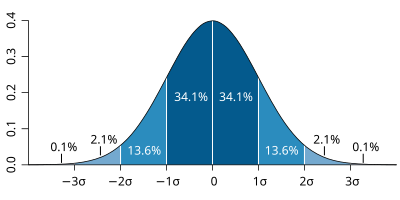
Based on a normal bell curve distribution, we know there are outlier gifted and talented boys and girls in every country in the world and in every socio-economic and disabled group within each country. Odense, Denmark, will host the 21st Biennial World Conference for Gifted and Talented Children from August 10 to 14, 2015. Details are available at worldgifted2015.com. Throughout the year The Global Center for Gifted and Talented Children (gcgtc.com) in Germany provides a full array of resources for parents, teachers, and young people. In honor of The International Day for Gifted Children, the Global Center is inviting gifted children to send it art, videos, poems, and blogs that can be posted at gcgtc.com.
To help children succeed in school and in life (and, I might add, to help them contribute to the peace and progress of the world), the Global Center offers solution-oriented coaching, teacher training, consulting by Skype or phone, workshops, diagnostic testing, conferences, and lectures by staff members. A downloadable flyer is available online and additional information can be requested by sending an email to info@gcgtc.com or by filling out a contact form at the Center's website. Since the Global Center's website offers information in at least 85 languages, there is little or no excuse for failing to make use of information tailored to the needs of gifted kids.
Online, the Center also recommends articles and informative blogs. Some of the blogs are written in Persian, Spanish, Dutch, and Norwegian, as well as English. I found Aimee Yermish's blog, written in English, to be extremely useful.
In addition to resources provided by the Global Center, with the help of their teachers, gifted and talented students can go to ePals.com, to find projects that let them collaborate with students in Italy, Egypt, Sweden, Liberia, Malaysia, and other countries. Projects are grouped by age, up to 17 and older. If gifted kids are interested in robots, they can find young people with similar interests at the website, Wevolver.com. There is more information about projects involving robots at the earlier blog post, "Robots for Good."
The mission of the Global Center for Gifted and Talented Children is one we all can aim to achieve: "We discover what a child is good at and then build on their own resources."
Wednesday, November 19, 2014
Don't Study by the Fire
 Legend tells us Abe Lincoln studied by fire light, with a candle or in front of his fireplace. That's no longer necessary, even in poor countries and rural areas with no electric lights.
Female-owned Rethaka, a South African innovator of eco-friendly goods, now offers 100% recycled, solar-powered backpacks that double as study lamps at night. Read more about African ideas that break up big jobs to give smaller companies a chance to provide employment, ways to involve the public in the fight against corruption, new forms of conveying the news, and more at trendwatching.com (10 African Trends).
Subscribe to:
Posts (Atom)