A recent trip to Australia sparked Bill Gates' interest in improving milk production in Africa. He writes about his discoveries, problems, and what might be done at team@gatesnotes.com.
It is staggering to find cows on US dairy farms produce nearly 30 liters of milk every day compared to the 1.69 liters produced by an average Ethiopian cow. While sending Wisconsin cows to Ethiopia would expose them to tropical heat and disease, using artificial insemination to crossbreed an Ethiopian cow with bull semen from a genetic line that produces lots of milk could increase milk output. In the heat of Africa, the required task of keeping frozen semen frozen is not easy, however.
To read more about worldwide milk consumption and production, see the earlier post, "Dairy Cows on the Moove." The magazine, Hoard's Dairyman (hoards.com), published by Hoard's dairy farm in Wisconsin, USA, has been an authority on the dairy industry since 1885. National and international subscribers can choose to receive print or digital copies.
Qatar is showing how, out of necessity and under the right conditions, Holstein dairy cows can be moved successfully from Wisconsin to another country to provide milk and breed. After being accused of financing Muslim extremists, Iran, and the Muslim Brotherhood; and being told to stop broadcasts from its al-Jazeera news network; Saudi Arabia, the United Arab Emerates, Bahrain, and Egypt imposed sanctions on June 5, 2017 that amounted to a blockade of Qatar's imports. Using riches from its natural gas exports, the Irish CEO of Qatar's Baladna farm complex began airlifting 300 cows to a warehouse in the desert north of Doha. Another 14,000 are expected by next year.
Throughout the world, food shortages and poor nutrition are causing countries to search for other new agricultural solutions. Some of these methods are mentioned in the earlier post, "Exotic Farming."
Showing posts with label milk. Show all posts
Showing posts with label milk. Show all posts
Monday, July 24, 2017

Monday, November 16, 2015
An Army Moves on Its Stomach
 Napoleon was right. Whether its the army of ISIS, the French Foreign Legion, or the US Marine Corps, food fuels military operations. I remember reading about an incident in the US Civil War, when General Lee's army arrived at a supply depot, found it completely empty, and knew the South's cause was doomed. Hunger (and thirst) saps energy and morale.
Countries, causes, and individuals that underestimate agriculture's value are in trouble. Mohsin Hamid describes the misdirected rural to urban rush in his book, How to Get Filthy Rich in Rising Asia. The billion dollars worth of items Alibaba sold on Singles Day are no more able to feed a single person than King Midas' gold. It is a great misfortune that Pakistan, with 180 million people, has only 20% of its GDP devoted to agriculture and that in Nigeria, with 170 million people, agriculture produces only 23% of its $510 billion GDP.
Considering food's importance for everyone, not just armies, agriculture merits the attention of every country's best and brightest. Indeed, modern agriculture is every bit as dependent on skilled techies as fields that now employ digital whiz kids. To help kids discover the challenge of moving food around the world, draw or find a picture of a farmer on the right side of a paper or board and a grocery store on the left side. Start writing down all that needs to happen in between.
What does it take in Uganda, Africa, to go from the gift of a $500 heifer from Heifer International (heifer.org) that produces three gallons of milk a day to the sale, in a local market, of some of the milk the family does not use? Consider all the steps between the woman growing cocoa for the Kuapa Kokoo cooperative in Ghana, Africa, and the retailers selling chocolate bars in Europe. Here are just some possibilities:
- Ask local farmers or Peace Corps volunteers to provide training for raising animals
- Grow feed crops
- Buy disease-resistant seed
- Cool milk
- Buy a truck
- Produce fertilizer from compost to increase crop yields
- Contract shipping space on a cargo ship
- Form a 4H chapter to interest the younger generation in farming
- Pass land use laws to protect small farms from encroachment by corporate plantations
- Lease an acre of land
- Provide police and security measures to protect farmers from gang violence and terrorists
- Build a warehouse to store cocoa beans rather than selling them all at once for a lower price than the revenue that could be earned by selling them over a period of a year
- Install irrigation and water pumps
Nowadays, the "Moo monitors" that dairy farmers attach to their cows' collars produce data about the health of their herds. Machines can pick almost every crop. GPS satellite technology enables farmers to monitor weather, judge the health of their crops, pin point the application of pesticide sprays and fertilizers, spot weeds, and measure yields as crops are being cut. Satellites even monitor the temperature and humidity of produce carried by sea in shipping containers in order to predict its condition for sale on arrival. Thanks to government funding and developers in companies like Planet Labs in San Francisco, which has developed small earth observation satellites that can fit in a shoebox, subsistence farmers will be able to utilize this up-to-date technology.
Already, in countries with impassible roads that subject supplies and produce shipments to long delays, the widespread use of mobile phones enables farmers and fishermen to arrange trades, sales, and payment transfers.
Since we all move on our stomachs, we pray, "Give us this day our daily bread." The world is depending on kids to get involved in producing and distributing the food we all need to live.
Also, check out a few of the earlier posts on food and farming:
Already, in countries with impassible roads that subject supplies and produce shipments to long delays, the widespread use of mobile phones enables farmers and fishermen to arrange trades, sales, and payment transfers.
Since we all move on our stomachs, we pray, "Give us this day our daily bread." The world is depending on kids to get involved in producing and distributing the food we all need to live.
Also, check out a few of the earlier posts on food and farming:
- Can Small Farms End Poverty?
- Nigeria's New Beginning
- World (Food) Expo, Hybrid Crops & New Farming Practices
- Back to the Land
- Dairy Cows on the Moove
- The Bees and the Birds
- Chocolate's Sweet Deals
- Coffee Prices Going Up, Allowances Going Down?
Friday, August 23, 2013
Dairy Cows on the Moove
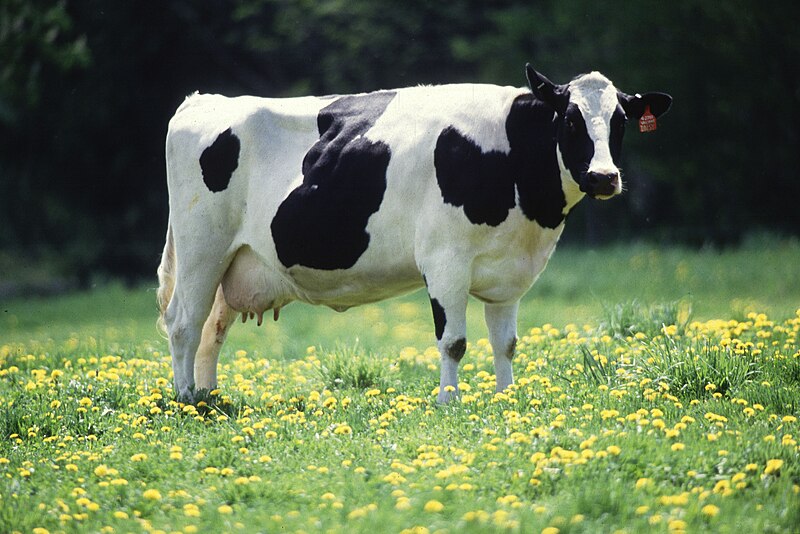 From the newly opened "Millions of Milkshakes" in Bahrain to everyone's need for bone-building calcium, there is worldwide consumption of milk, butter, cheese, yogurt, ice cream, skim milk powder, and whey products from dairy cows. Once prosperity led to better nutrition options in India, for example, current production of milk, formerly a scarce commodity, reached 132 million tons, compared to 22 million in 1970, according to TIME magazine (November 18, 2013). Members of dairy cooperatives, many with only one or two cows, have now made India the world's largest milk producer and a dairy exporter.
Young 4H members, dairy farmers, and international dairy cow shippers, such as Dens Ocean Livestock Express (livestock@densocean.be) and the ones used by T.K.Exports (livestockgeneticsbytke.com), have a prosperous future. The U.S. has become the world's largest cheese exporter. And with more women working the decline in breastfeeding has led to a boom in baby milk powder sales. West Coast dairy processors in the U.S., as well as a companies, such as Mengniu in China, are taking advantage of this increased demand in China and other Asian countries. There also is a growing world market for whey-based ingredients used in infant formula and human and animal nutritional supplements that is offering new opportunities for dairy products.
Just outside Harbin in Shuangcheng (northeast China), Nestle has invested in a $400 million Dairy Farming Institute. The aim is to train about 700 students annually to become the dairy farmers, managers, and agribusiness suppliers who will meet China's growing demand for milk in a sustainable manner. In the past, China's dairy industry, which had reported sales of $28 billion in 2014, has had tainted milk problems from poor sanitation and deaths from infant formula.
In the United States, dairy farmers have an outstanding research facility at the University of Wisconsin's Babcock Center for Dairy Research, named for Dr. S.M. Babcock. The Center is the largest dairy research institution in the United States. Along with studying how to increase milk production, students learn how to be business competitors, not only with dairy farmers in Wisconsin, California, New York, Arizona, and Texas, but also in the world market. Since the Center has an outreach program, it provides technical support and information about findings that help dairies, suppliers, government regulatory agencies, and domestic and international dairy organizations.
Profitability, in the dairy farming business, relies on forecasting demand and careful record keeping and analysis of the cost of the feed cows need to maintain their size and health and to produce milk before excess feed just becomes manure. New Zealand's dairy giant, Fonterra, for example, reported that although more milk was processed into milk powder which has a higher return, rising input costs caused a 53% six-month drop in net profits. The desire to control all aspects of raw material to final product, there is some cross-country vertical integration in the dairy industry. For example, the Chinese company, Pengxin, has acquired both dairy farms in New Zealand and corn farms in Bolivia. China's state-owned Bright Food Group also has controlling interests in dairy producers in New Zealand and in Israel's Tnuva.
Wisconsin's Dept. of Agriculture, Trade, and Consumer Protection distributes $200,000 in annual grants to farmers to finance studies of dairy feed, housing, and other factors that improve milk production. By calling 855-943-2479, dairy farmers and processors can find out about resources and technical assistance available from the State of Wisconsin. Currently, the State also is offering a $50,000 "Grow Wisconsin Dairy Processor Grant" to a licensed Wisconsin dairy processing plant that writes a proposal that would benefit the industry. The application form, due by February 21, 2014, is available at GrowWisconsinDairy.wi.gov.
In recognition of Dr. Babcock's contribution to the milk industry, he received awards from dairymen in New Zealand and the Wisconsin legislature. In the future, an award may be given to someone who solves the problem of reducing the climate changing greenhouse methane gas released by cow flatulence. Considering a cow, by chewing its cud, expels 4.42 pounds of carbon dioxide for every gallon of milk it produces, methane is a serious concern. Phosphorus runoff from the cow manure that pollutes lake and other water sources also becomes a major problem when the number of big storms increases. But there also are uses for cow poop, check out the 251 facts in Dawn Cusick's kid's book, Get the Scoop on Animal Poop.
The Financial Times (April 9, 2014) reported that the major impact of methane on global warming has motivated companies and research institutions, such as the following, to study ways to reduce methane emissions from cows:
- The Innovation Center for U.S. Dairy in Illinois
- C-Lock Company in South Dakota
- The National Institute of Agricultural Technology in Argentina
The U.S. Department of Agriculture is funding a $10 million, 5-year study to determine how the dairy industry can reduce greenhouse gas from methane 25% by 2020.Promising ideas about how to reduce cow-produced methane include: anti-methane grains and dietary supplements laced with basil or garlic, an improved digestive system for cows, scanners that monitor the gas content of cow burps, a strap-on-backpack connected to tubes that collect methane gas from cow stomachs, and a reduction in the world's cattle herd (In the U.S. there are 88 million cattle). To date, these ideas are too expensive to be practical. The Resources Defense Council did mention that methane from cows could power cars and refrigerators, if it could be harnessed.
Methane is not the only cow-related problem. Phosphorus runoff from manure is a major contributor to water pollution, since it causes the growth of harmful blue-green algae. Limited phosphorus reduction is now achieved by digesters that use an anaerobic process to separate liquids from solids and then capture and burn off methane gas to generate electricity. Another machine that relies on a nutrient concentration system is also being used to remove excess phosphorus. Thus far, however, most raw manure remains untreated.
It is interesting to note, according to Laurie Winn Carlson, in her book, Cattle: An Informal Social History, that Dr. Babcock never took out a patent on the machine he developed to measure the fat content of milk, because he believed it should be available to all. His invention prevented milk diluted by water to be sold for full price and enabled cows to be ranked not only by the quantity of milk they produced but also by the fat content of their milk. A cow that produces milk with a high fat content is doubly valuable because her eggs can be harvested and sold for artificial insemination. Cattle of the World by John Friend describes the process of harvesting fertilized eggs from dairy cows and freezing semen from bulls known to produce outstanding calves. In the frozen form, semen from desirable bulls can be exported to improve and/or provide cross-breeding with dairy cattle herds anywhere in the world.
The variety of dairy cow characteristics John Pukite mentions in his book, A Field Guide to Cows: How to Identify and Appreciate America's 52 Breeds, suggests reasons why farmers import specific dairy breeds out of the world's approximately 920 different cow breeds. The Holstein-Friesian dairy cow, found in at least 125 countries, produces the largest amount of milk, but she feeds on a concentrated diet of grain/corn, lives in an environmentally controlled barn, and needs regular veterinary care. In contrast, quite a few dairy breeds, such as the Canadienne, Galloway, Jersey, and Brown Swiss, graze in pastures out-of-doors. The Brown Swiss, like the Jersey, Guernsey, Pinzgauer, and Ayrshire, produces milk with a high butterfat content and also is second only to the Holstein in terms of milk yield. Multipurpose breeds, such as the Maine-Anjou, MeuseRhineYssel, and Normande, are bred for both milk and beef throughout the world. The hides of the Galloway and Pinzgauer also are known for their good quality leather. All dairy cows are usually easy to handle. Some, like the Salers and Simmental, have good mothering instincts. The South Devon, Red Poll, and a few other breeds have long lifespans.
Whereas, the ships that carried beef cattle across the Atlantic Ocean to England in the 1880s were overcrowded and filthy, health protocols now cover the ventilation, watering, feeding, and manure handling conditions of live animals when they are in transit by ship. Cargo planes also are specially fitted to ensure the safe, humane transit of livestock. At livestockexporters-usa.com,
the online newsletters of the Livestock Exporters Association (LEA) provide dairy cattle exporters with information about policies of the U.S.Department of Agriculture's Animal and Plant Health Inspection Service (APHIS) regarding, among other information, the health certifications of livestock exports and insurance underwriting guidelines for ocean transit of animals, as well as information about new markets, such as Jordan and Iraq.
Dairy cows are not just traded among agriculturally developed countries. Through the not-for-profit Heifer International organization, children, scout troops, schools, and parents can donate cows to impoverished families around the world. Just go to the heifer.org website to contribute the $500 it takes to donate a cow, or $50 for a share of a heifer, and see some of the happy recipients who have learned to care for their gifts. Since families who receive a cow from Heifer International agree to pass on the first calf offspring to another needy family, each donation is a part of an endless chain devoted to eliminating world hunger and poverty. In Kenya, Heifer International also holds a 40 percent share in a plant that cools and processes milk and seeks new markets for the 6000 households that gain a secure monthly income by bringing their milk to the plant.
Subscribe to:
Posts (Atom)