Instead of a miracle, a suspicious fire destroyed voting materials and moved the December 23 election of a new president of the Democratic Republic of the Congo to December 30. Provisional results of the delayed election showed the surprise victory by Felix Tshisekedi, son of a deceased opposition leader popular in Kinshasa. Nonetheless, controversy surrounds his victory over Martin Fayulu, who was seen as a greater threat to former president Joseph Kabila's history of corruption and disregard for the rule of law. An NGO that fielded 40,000 election observers said their results showed former oil executive, Fayulu, had won, just as a pre-election survey also predicted.
Russia quickly recognized Tshisekedi as the Congo's new president while Martin Fayulu rejected the final election results as a deal engineered between Tshisekedi and Kabila. Many feared protests and violent repression would frustrate the hoped for calm transition.
The former Belgian Congo, nearly three times the size of Nigeria, has almost one million fewer people. On the surface, the 105,000 electronic voting tablets ordered from South Korea for 84,000 polling places created the appearance of a modern election process for the country's 40 million eligible voters. Concern that the tablets could be hacked prevented them from being hooked up for fast transmission of election results. Also, there was concern that the population, especially spread out beyond the Kinshasa capital, had little experience with technology, and unpaved roads and remote areas, only accessible by boats, motorbikes, or helicopters, prevented easy access to voting places.
Voters also have to contend with 100 rebel groups that terrorize the country. From Beni south to Butembo on the eastern border with Uganda, for example, the machete wielding Allied Democratic Forces and Mai Mai militia, who prevent health workers from vaccinating people threatened by the spreading Ebola virus, are not likely to facilitate passage for voters. At the polls, voting also may be prevented by the lack of electricity and charged batteries needed to power voting tablets.
Nothing about the Congo's history suggests a new president offers King Leopold II's former private colony relief from nearly 150 years of suffering that began with harvesting rubber under slavery conditions. Only a year into independence, its first president, Patrice Lumumba, was murdered in 1961. Next, General Joseph Mobutu changed the country's name to Zaire and used the Congo's uranium to become a Cold War player who amassed a private fortune with funds from East and West.
With the flight of Tutsis escaping genocide by Hutus in neighboring Rwanda, fighting began spilling over into Zaire in 1994. Mobutu's opponent, General Laurent Kabila, seized the opportunity to recruit Tutsis and to lead rebels west toward Kinshasa. Mobutu fled into exile in 1997. Kabila seized control of the country, again named the Democratic Republic of the Congo, and ruled as a dictator until a bodyguard assassinated him in 2001.
Kabila's son, Joseph, took over the troubled country. In 2006, a new constitution limited a president's time in office to two, 5-year terms, and the UN oversaw a presidential election. In a runoff, Joseph Kabila, head of the People's Party for Reconstruction and Democracy (PPRD), defeated a former Congolese vice president and rebel leader, Jean-Pierre Bemba. Benba was arrested for war crimes committed by his troops during fighting after the election. Kabila failed to step down as president when his term ended in 2016.
When the December 23, 2018 date finally was set for a new presidential election, Kabila's PPRD selected as its candidate, Emmanuel Ramazani Shadary, a former interior minister and the party's permanent secretary. Shadary, who has no powerful military or other political base of his own, was viewed as Kabila's puppet. In June, 2018, Bemba's war crimes conviction was overturned. He returned to a hero's welcome in August only to be barred from running for president due to a second charge. Another potential presidential challenger, Moise Katumbi, the wealthy former governor of Katanga's southern cobalt and copper mining province, was sentenced for property fraud and also barred from running for election and from returning to the Congo from Belgium.
Joseph Kabila is adept at eliminating his opposition. When the Catholic Church, which counts at least 40% of the Congo's population as members, began holding parades in support of December's election, police killed 18 marchers. Gaining popularity for any reason is a danger. After the Congo's Dr. Denis Mukwege won a Nobel peace prize in 2018, he narrowly escaped assassination.
Observers, both inside and outside the Congo, suspected Kabila was counting on votes split among the weak slate of presidential candidates, the potential for polling machine irregularities, and protests by Bemba, Katumbi, and others to cause violence that would invalidate the election and leave him as president. The people of the Democratic Republic of the Congo deserve a better Christmas present: a president devoted to bringing them lasting peace and prosperity.
Showing posts with label Belgium. Show all posts
Showing posts with label Belgium. Show all posts
Monday, December 17, 2018

Wednesday, May 10, 2017
Long Supply Lines Foster Abuses
Regarding abuses related to the $88 billion palm oil industry, Rachel Barre, who is L'Oreal's sustainable sourcing manager, acknowledged her company is far removed from the plantation level. And one palm oil industry observer noted it is impossible to delink one company's supplies from the continued deforestation of the industry as a whole.
Since, along with plantations, small farmers produce 40% of the world's palm oil, abuses at the source of this raw material are widespread. Polluting smoke from the fires used to clear palm oil plantations in Indonesia and Malaysia spreads far beyond local areas and deforestation robs the world of endangered wildlife.
In lengthy supply lines, problems associated with land acquisition, working conditions, pay, pollution, and deforestation are found where plantations, logging, mines, and textile factories source the food and goods sold to consumers thousands of miles away. Indonesia represents a good example. President Joko Widodo presides over a country of 13,000 islands. He is winning public support for a construction boom in needed roads, railways, bridges, airports, and power plants that the previous government of Suharto failed to address. Yet, projects are hindered by laws and regulatory agencies associated with each project, skilled labor shortages, land acquisition in heavily populated areas, lack of private investment necessitating growing public debt, and lax worker safety requirements.
Pressured by distant retailers to cut costs and speed up delivery, the clothing manufacturers in China, India, and Indonesia that work with viscose/rayon fibers become major polluters. On one hand, the silk alternative is heralded as a sustainable option, because it is made from the fast-growing, soft wood of beech, pine, and eucalyptus trees. But the process of turning wood pulp into viscose requires sodium hydroxide, sulfuric acid, and carbon disulphide, a chemical linked to heart disease, birth defects, mental health problems, and cancer. Air and wastewater exposed to these chemicals harm factory workers, local residents, and fish.
What can be done?
1. Organizations, such as the Roundtable on Sustainable Palm Oil, Palm Oil Innovation Group, Forest Stewardship Council, Proforest, Fair Trade Federation, and Sustainable Apparel Coalition, assemble experts to monitor industry conditions, devise best practices, and develop certification programs. Some organizations create logos consumers can use to identify responsible producers.
2. When governments are approached to grant large scale land concessions, they are in a position to require plantation owners to obtain (without manipulation by offering jobs before the concession is granted) consent from local communities, to assure protection of traditional rights to land that is owned, occupied, or used to produce food needed by the local population, and to agree to penalties for violating stipulated working conditions and environmental protections.
Olam International's palm oil operation in Gabon offers some insight. The company holds a government lease on land for 15 years. Although those who wanted to farm outside the concession could continue to do so, 95% of the local population took jobs with Olam. The company invests $1.6 million a month in community healthcare and development. Yet it took pressure from environmental groups to cause Olam to announce even a one year moratorium on deforestation.
3. Before they suffer bad publicity, companies at the end of supply chains need to realize consumers are becoming better informed about the dangers associated with certain products and industry practices. The need to end pressure on suppliers who cut corners to meet demands and to designate someone to root out untrustworthy intermediaries suppliers may hire to avoid responsibilities is likely to grow. Touting a palm-oil free product became a contested, competitive selling claim in a Belgian court. The supermarket chain, Delhaize, advertised its Choco spread was better for the planet and health than Ferrero's Nutella, a spread that contains palm oil, Although Ferrero successfully argued against Delhaize's claim, the case showed how some marketers have begun to recognize consumers are growing wiser about everything involved with the food they eat and the products they use.
4. With technical, financial, and other support from governments, private sources, and non-profit organizations, more small scale entrepreneurs need opportunities to enter supply chains.
5. To ensure their survival, critically endangered and endangered wildlife, such as gorillas, chimpanzees, bonobos/pygmy chimpanzees, saolas, and orangutan, often need the protection of "no-go zones" and wildlife corridors in concession territories. Palm oil plantations in Cameroon and the Republic of the Congo, for example, already have destroyed chimpanzee and gorilla habitats. Company and government wardens and scientists need to prevent poaching and to monitor animal health in land concessions.
Of course, abuses can be avoided by shortening or controlling supply lines. The missionary nuns who grow and sell tomatoes to their local communities in Africa short circuit the supply chain (See the earlier post, "Celebrate Uplifting Efforts to Promote Self Reliance in Africa."). The nonprofit organization, serrv (serrv.org), finds artisans and farmers in areas of great poverty in countries such as Ghana and South Africa, helps them with marketing suggestions to make their goods more attractive in developed countries, and sells these products through catalogs and the retail stores they own.
Sunday, March 5, 2017
Space-Searching International Team Sees Results
Using NASA's Kepler Space Telescope, astronomers have found 150,000 stars with 4,706 planets casting a shadow, when they orbit past. The February 23, 2017, issue of Nature reported astronomer Michael Gillon at a Belgium university headed a team that used telescopes in Chile, Hawaii, South Africa, Morocco, Spain, and England to find the Trappist-1 solar system with a planet, Trappist-1e, that maintains a habitable temperature above freezing and below boiling as it orbits around its sun-like star.
Light from stars is scattered and absorbed differently, if orbiting planets have an atmosphere with a chemical composition. Atmospheric gases, such as methane, oxygen, or carbon dioxide, signal the possibility of water and life. The Hubble Space Telescope has been able to tell what atmospheric gases from two of the Trappist-1 planets don't have, but the spectroscopes the James Webb Space Telescope will carry when it launches, possibly in October, 2018, will be capable of more atmospheric analysis.
Light from stars is scattered and absorbed differently, if orbiting planets have an atmosphere with a chemical composition. Atmospheric gases, such as methane, oxygen, or carbon dioxide, signal the possibility of water and life. The Hubble Space Telescope has been able to tell what atmospheric gases from two of the Trappist-1 planets don't have, but the spectroscopes the James Webb Space Telescope will carry when it launches, possibly in October, 2018, will be capable of more atmospheric analysis.
Sunday, August 7, 2016
"Let There Be Peace on Earth
...and let it begin with me," advises a song's lyrics. I was reminded of this message, when I saw a suggestion Belgium newspapers had for restaurant goers after terrorist attacks. DeTijd and L'Echo urged diners to finish their meals by arranging cutlery on plates in a peace sign and then sharing their peace message in a hashtagged image of their plates on social media.
Trendwatching.com went on to list the following ways companies promoted reconciliation among different genders, races, countries, religions and those with different economic advantages.
Trendwatching.com went on to list the following ways companies promoted reconciliation among different genders, races, countries, religions and those with different economic advantages.
- In its "Share the Load" commercials, Procter & Gamble's Ariel India laundry brand dispelled the cultural assumption that there is such a thing as women's work and men's work.
- To emphasize the soul-destroying damage bullying does to kids perceived as different, Argentina's Bagley brand turned the smile on its Sonrisa cookies upside down.
- Attacking the distinction some stores make between beauty brands and ethnic brands for Afro-American women, Shea Moisture hair care brand's commercial noted its products are in the beauty aisle "where we all belong."
- Starbucks is helping overcome unemployment among teens and young adults in disadvantaged areas by providing in-store retail and customer service training in New York's Jamaica Queens neighborhood. The program is slated to roll out in 14 additional locations in the U.S.
- In connection with Mother's Day, HSBC, a bank in the UAE, not only provided a series of free workshops on resume writing and interviewing skills to help mothers return to work, the bank also helped kids make videos telling about the skills their mothers offered employers.
- JetBlue thought people could agree, if they had the right motivation. If passengers on a flight reached a unanimous agreement about where they wanted to go, they received free tickets to that destination on any US airline. Their choice and reward: a round trip to Costa Rica.
Wednesday, December 23, 2015
Holiday Season Raises Fears in Brussels and Indonesia
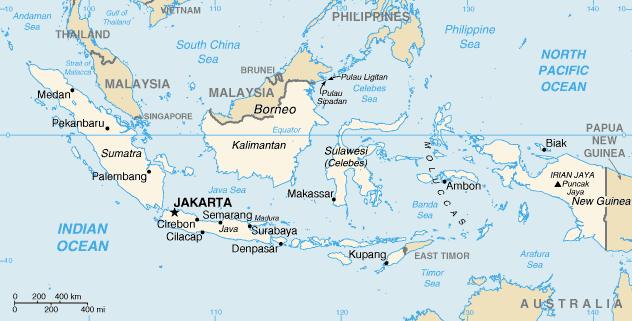 Brussels canceled its New Year's fireworks' display and the Indonesian archipelago continues on high alert after the arrest of nine alleged Islamic terrorists involved in a plot to assassinate police, Shi'ite Muslims, and churchgoers on the main islands of Java, Sumatra, and Borneo during the 2015 Christmas and New Year holiday season. Australian authorities are urging tourists to stay away from Indonewia at this time.
To protect Christians and others in this predominantly Sunni Muslim country, "Operation Candle" has deployed 150,000 security forces at churches, airports, railway stations, shopping malls, and other public places. There is an intensified manhunt by 1300 security officers for Abu Wardah Santoso, the ISIS militant leader of the East Indonesia Mujahidin and the operator of a terrorist training camp in Poso, Central Sulawesi.
The earlier post, "Australian Report Links Indonesian Pilots to Islamic Militants," outlines the dangers posed by Indonesian terrorists in the airline industry.
Subscribe to:
Posts (Atom)