In Angola, President Joao Lourenco attempts to join Muhammadu Buhari in Nigeria, Adama Barrow in The Gambia, and Emmerson Mnanggagwa in Zimbabwe, the new leaders trying to break with a tradition that allowed African rulers to put their own interests ahead of their countries'.
After unseating Jose Eduardo dos Santos, Angola's president for 38 years, Lourenco began a crackdown on corruption rampant among the country's elite. Starting with the former president's rich daughter and son, he removed Isabel as head of the country's national oil and gas company, Sonangol, which exported $640 billion since the end of Angola's civil war in 2002 and charged Jose Filomeno with fraud for attempting to transfer $500 million from the country's $5 billion wealth fund through a London account.
Although the price of crude oil has rebounded from its 2014 low, as Africa's second-largest oil producer after Nigeria, Angola was still left with public debt, mainly to China, hovering between 65% and 80% of GDP, and missing billions, when Lourenco took office. To revive the economy, the new president no longer requires foreign investors to have local partners and asked the International Monetary Fund for advice. Suggested next steps include: an independent audit to discover where revenue from oil and diamond exports went, especially to overseas accounts. Locals share information about the corruption crackdown in Brazil, another former Portuguese country, that has sent former high-level officials to jail.
Additional needed reforms include: elimination of excessive licenses and regulations that provide bribery opportunities for those issuing or waiving them; improving living and health care conditions to reduce the country's high child and maternal mortality rates; stripping courts of political influence; freedom of the press and media, especially to report on corruption; and Angola's first local elections in 2020.
Meanwhile, in Portugal's other former African possession, Mozambique, the continuing 3-year attacks by a group of radical Muslim jihadists resulted in new beheadings in May, 2018.
While African leaders like Rwanda's President Paul Kagame, who led the Tutsi rebels who overthrew the Hulu regime responsible for genocide, and President Pierre Nkurunziza in neighboring Burundi intimidate their opposition and dictate constitutional reforms that enable them to extend their presidential terms to 2034, every indication of a gradual shift to responsible government by the rule of law on the African continent is welcome.
,
Showing posts with label public health. Show all posts
Showing posts with label public health. Show all posts
Thursday, May 17, 2018

Friday, March 21, 2014
Who Needs International Expertise?
Public health and the hunt for Malaysia Airlines Flight 370, which disappeared March 8, 2014, (and the later search for Air Asia Flight 8501, which crashed into the Java Sea on December 28, 2014) demonstrate how global problems require cooperation of experts in a wide variety of disciplines.
Not only does disease involve those versed in the biological complexity of the causes, cures, and prevention of a multi-country Ebola, flu, or Zika virus epidemics, but it also requires precautions by those involved in all aspects of transportation. Urban design and environmental science also can have an impact on how diseases are transmitted throughout the world.
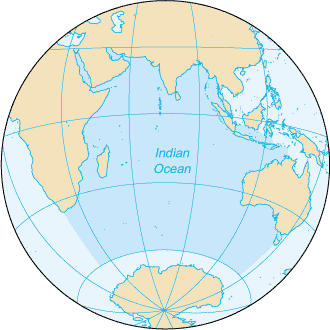
In the case of Flight 370's disappearance, lack of coordination between countries confused the search effort for at least three days when 12 countries were flying nearly 40 planes and navigating as many ships in an area east and west of Malaysia. When military and civilian personnel began sharing speculations and data about radar soundings, satellite photos, and debris sightings, the search area shifted to 1500 miles off the west coast of Australia and then an area to the northeast that was closer to Australia and in a less turbulent spot in the Indian Ocean.
Even with 26 countries involved in the search, as of September, 2014, there was still no trace of the downed plane. It was not until July, 2015 that the first wreckage from Malaysia Flight 370 turned up on the French territory of Reunion Island, off the east coast of Africa east of Madagascar. Another possible piece of the lost plane was found between Madagascar and Mozambique in March, 2016. (Debris from the tsunami that hit Japan in 2011 continued to reach Alaska four years later in 2015.) Since Madagascar is far west of the area near Australia, where the plane was thought to go down, weather and ocean current experts will help pin point where the plane might have run out of fuel. Even before the plane has been located, underwater experts have joined the mission to map the mountainous ocean floor. Despite this massive international search, after nearly three years the airplane had not been found and the search was discontinued on January 17, 2017.
The disappearance of Malaysia Airlines Flight 370 also has led to trials of new ways to track aircraft flying over ocean expanses. In a report submitted to the International Civil Aviation Organization (ICAO), a test of the global satellite communication system developed by UK firm, Inmarsat, showed it was possible for aircraft flying over oceanic airspace to report position, speed, altitude, and direction every 14 minutes at a minimal or neutral cost.
The number of people and variety of disciplines required to solve a crisis brought on by disease or a plane crash illustrates how tasks involving international cooperation are not limited to diplomats. To see how many kinds of research can involve an international effort, check out the later post, "Calling All Space Sleuths."
Not only does disease involve those versed in the biological complexity of the causes, cures, and prevention of a multi-country Ebola, flu, or Zika virus epidemics, but it also requires precautions by those involved in all aspects of transportation. Urban design and environmental science also can have an impact on how diseases are transmitted throughout the world.
In the case of Flight 370's disappearance, lack of coordination between countries confused the search effort for at least three days when 12 countries were flying nearly 40 planes and navigating as many ships in an area east and west of Malaysia. When military and civilian personnel began sharing speculations and data about radar soundings, satellite photos, and debris sightings, the search area shifted to 1500 miles off the west coast of Australia and then an area to the northeast that was closer to Australia and in a less turbulent spot in the Indian Ocean.
Even with 26 countries involved in the search, as of September, 2014, there was still no trace of the downed plane. It was not until July, 2015 that the first wreckage from Malaysia Flight 370 turned up on the French territory of Reunion Island, off the east coast of Africa east of Madagascar. Another possible piece of the lost plane was found between Madagascar and Mozambique in March, 2016. (Debris from the tsunami that hit Japan in 2011 continued to reach Alaska four years later in 2015.) Since Madagascar is far west of the area near Australia, where the plane was thought to go down, weather and ocean current experts will help pin point where the plane might have run out of fuel. Even before the plane has been located, underwater experts have joined the mission to map the mountainous ocean floor. Despite this massive international search, after nearly three years the airplane had not been found and the search was discontinued on January 17, 2017.
The disappearance of Malaysia Airlines Flight 370 also has led to trials of new ways to track aircraft flying over ocean expanses. In a report submitted to the International Civil Aviation Organization (ICAO), a test of the global satellite communication system developed by UK firm, Inmarsat, showed it was possible for aircraft flying over oceanic airspace to report position, speed, altitude, and direction every 14 minutes at a minimal or neutral cost.
The number of people and variety of disciplines required to solve a crisis brought on by disease or a plane crash illustrates how tasks involving international cooperation are not limited to diplomats. To see how many kinds of research can involve an international effort, check out the later post, "Calling All Space Sleuths."
Subscribe to:
Posts (Atom)