"(W)e want to make sure that if this is their worst day...it's not their last day." Elon Musk's private SpaceX company and tax-payer-funded NASA use this saying to motivate the preparations for sending astronauts Doug Hurley and Bob Behnken to the International Space Station and for bringing them home safely one to four months later.
In these troubled times, like astronauts, we all need a motivating motto and an escape plan to avoid things like viruses, food shortages and excessive government control over our religious and gender preferences.
To protect astronauts, there is now an abort system that enables sensors to detect rocket malfunctions, to separate the capsule carrying the astronauts from the rocket and to parachute the capsule down into the ocean. Consequently, preparations for launching the SpaceX Falcon 9 rocket require precise calculations of ocean water temperature and wave velocity and height over a vast area anywhere a team may have to rescue the downed astronauts near Cape Canaveral or on their route to Newfoundland, over the Atlantic Ocean and on to Ireland.
Although the SpaceX launch is scheduled for May 27, 2020 at 4:33 p.m. EDT, a delay due to rough seas should be expected. For astronauts, as well as each of us, taking time to correct problems may be the surest path to survival.
After a three day delay, SpaceX took off on Saturday, May 30, and docked safely with the International Space Station on May 31, 2020.
The astronauts returned safely with a successful splashdown in the Gulf of Mexico on Sunday, August 2, 2020.
Showing posts with label ocean. Show all posts
Showing posts with label ocean. Show all posts
Wednesday, May 27, 2020

Monday, April 6, 2020
Revisit the Search for Malaysia Flight 370
Not all airplane crashes in water have the happy ending of Captain Sullenberger's successful landing in the Hudson River. Downed off the west coast of Australia in water 20,000 or more feet deep,
Malaysia Flight 370 has never been found.
What we know and don't know about the ocean's hadal zone 20,000 to 36,000 feet under water may explain why Flight 370 is still missing. Heavy ships, like the Titanic, constructed to sail the high seas have been found in large identifiable chunks after they sank. An airplane, made to sail through the air, is not a vehicle for: 1) crashing into a wall of water at the accelerating rate of gravity (The one piece of Flight 370 found on Reunion Island off the eastern coast of Africa may have broken off at this level when the plane hit the water.) and 2) withstanding the two million pounds of pressure per square foot exerted in the Indian Ocean troughs at the greatest depth of the hadal zone.
On Earth, a person is under a certain amount of atmospheric pressure. Under 33 feet of water, the same person is under twice as much pressure as on Earth. Every 33 feet more under water exerts another amount of pressure equal to the amount of atmospheric pressure a person feels on land. At 300 feet down, someone would be subjected to 10 times the atmospheric pressure exerted on him or her on Earth.
Vehicles attempting to explore deeper and deeper under water trenches have shuddered and bucked; their windows cracked, they have needed headlanps to see in the dark; and they have landed in blinding plumes of sediment. In 2014, an unmanned dive by Nereux, the best deepwater robotic vehicle designed thus far, broke apart under the hadal zone's crushing pressure at about 33,000 feet below the Earth's surface.
Nothing would seem to prevent the water pressure on airplanes that crash into deep dark water from breaking them into pieces of debris at depths where they would be nearly impossible to locate.
Malaysia Flight 370 has never been found.
What we know and don't know about the ocean's hadal zone 20,000 to 36,000 feet under water may explain why Flight 370 is still missing. Heavy ships, like the Titanic, constructed to sail the high seas have been found in large identifiable chunks after they sank. An airplane, made to sail through the air, is not a vehicle for: 1) crashing into a wall of water at the accelerating rate of gravity (The one piece of Flight 370 found on Reunion Island off the eastern coast of Africa may have broken off at this level when the plane hit the water.) and 2) withstanding the two million pounds of pressure per square foot exerted in the Indian Ocean troughs at the greatest depth of the hadal zone.
On Earth, a person is under a certain amount of atmospheric pressure. Under 33 feet of water, the same person is under twice as much pressure as on Earth. Every 33 feet more under water exerts another amount of pressure equal to the amount of atmospheric pressure a person feels on land. At 300 feet down, someone would be subjected to 10 times the atmospheric pressure exerted on him or her on Earth.
Vehicles attempting to explore deeper and deeper under water trenches have shuddered and bucked; their windows cracked, they have needed headlanps to see in the dark; and they have landed in blinding plumes of sediment. In 2014, an unmanned dive by Nereux, the best deepwater robotic vehicle designed thus far, broke apart under the hadal zone's crushing pressure at about 33,000 feet below the Earth's surface.
Nothing would seem to prevent the water pressure on airplanes that crash into deep dark water from breaking them into pieces of debris at depths where they would be nearly impossible to locate.
Wednesday, January 11, 2017
Apply Now for Summer Opportunities
It's easy for students to miss out on summer opportunities, because deadlines are early in the year. My granddaughter has spent two summers in a science lab at the University of Wisconsin, because she attended an informational session, obtained teacher recommendations, and submitted the required application before February. Besides summer programs offered by colleges and universities, summer foreign travel/study tours, and summer acting/dance classes also have early deadlines.
Girls ages 16 and 17 on June 1, 2017 have an excellent example of summer opportunities available to them, if they apply before January 31, 2017. The University of Alaska Fairbanks College of Natural Science and Mathematics and the International Arctic Research Center offer three FREE summer expeditions designed to combine scientific field studies with glaciologists and oceanographers, art, critical thinking, and mountaineering or kayaking.
Girls ages 16 and 17 on June 1, 2017 have an excellent example of summer opportunities available to them, if they apply before January 31, 2017. The University of Alaska Fairbanks College of Natural Science and Mathematics and the International Arctic Research Center offer three FREE summer expeditions designed to combine scientific field studies with glaciologists and oceanographers, art, critical thinking, and mountaineering or kayaking.
- Girls on Ice Alaska explore an Alaskan glacier June 16-27, 2017. Program is open to girls 16 and 17 from Alaska, the Pacific Northwest, British Columbia, the Yukon, and California.
- Girls on Ice Cascades explore Mount Baker, an ice-covered volcano in Washington State. Program is open to girls 16 and 17 in all countries.
- Girls in Icy Fjords explore Bear Glacier, the marine environment in a fjord near Seward, Alaska, and learn to kayak August 11-22, 2017. Program is open to girls 16 and 17 in all countries.
Friday, October 28, 2016
Gone Fishin'
Whether fishing with a worm or a fly in a lake or a stream, finding the perfect fishing 'hole''' and coming home with a catch is a day well spent by any child anywhere in the world.
Efforts are being made to insure fish continue to thrive in the world's waters. To prevent fish and other marine life from becoming hopelessly trapped in the plastic six-pack rings that hold beer and soda cans, some rings are being made from biodegradable materials. Florida's Saltwater Brewery has used wheat and barley waste from its beer-making process to construct packaging that begins to disintegrate two hours after hitting the ocean or the beach.
Bycatch is another problem fish face. To catch sushi-grade tuna, fishing boats bait thousands of hooks on a single line that can be 25 miles long. Along with tuna, longlining unintentionally catches other fish, including sharks, stingrays, and turtles. Although some of the unwanted fish are safely released, others perish from the stress of being caught and the dead fish upset the marine ecosystem balance already threatened by climate change from warming water and pollution. Experiments using circular, rather than J-shaped fishing hooks, and fish instead of squid bait have shown there are ways to reduce bycatch.
The ocean's plastic garbage could outweigh fish by 2050, according to a study cited by the UN's Secretary-General, Antonio Guterres. Tons of plastic and other floating debris already are turning beaches, marina areas, lakes, rivers, and oceans into garbage dumps. Trash causes fish. surfers, and the wealthy to suffer. In the July, 2018 issue of VOGUE, Helena Dunn, the designer of Tuulikki eco-conscious surfwear, reports, "As surfers, we have a front-row seat on environmenta lissues." Especially during storms, plastic bags, bottles, wrappers, and other debris run off from land. Large growths of seagrass add to the problems caused by debris that can clog cooling-water intakes and cause engine damage on the most expensive yachts and ships.
Modest and major efforts are being made to keep plastics out of the world's waters. The Dell computer company has begun to use plastic collected on beaches in Haiti as its packaging material. Hewlett Packard urges computer printer users to go to hp.com/recycle to find where they can take their used ink cartridges for recycling. When Dutch student, Boyan Slat, was 17, he founded the Ocean Cleanup Foundation for the purpose of removing the estimated 8 million tons of discarded fishing nets, water bottles, and assorted plastic debris that end up swirling in the Great Pacific Garbage Patch between California and Hawaii. Since the north Pacific Gyre, or current, funnels the plastic into the center, the foundation designed a long floating plastic boom that can be anchored across the flow of the Pacific Gyre. At this collection point, the waste can be lifted onto ships and taken to recycling centers on land.
Australian surfers, Peter Ceglinski and Andrew Turton, are developing a Seabin to collect and remove trash around marinas. Their Seabin is a submerged cylinder open on top just below the water surface. An electric pump pulls water and floating trash into a bag filter that collects the trash and allows water and small marine life, like fish eggs, to pass through. Seabins can hang from docks, where electricity is available, and maintenance employees can empty the filter bags on a regular schedule. A solar powered model could be attached to channel marker buoys in shipping lanes. The French company, Poralu Marine, is manufacturing a prototype that is being tested at Le Grande Motte, a large Mediterranean harbor near Montpelier, France.
Of course the best pollution solution is to refrain from throwing things in the water in the first place.
Efforts are being made to insure fish continue to thrive in the world's waters. To prevent fish and other marine life from becoming hopelessly trapped in the plastic six-pack rings that hold beer and soda cans, some rings are being made from biodegradable materials. Florida's Saltwater Brewery has used wheat and barley waste from its beer-making process to construct packaging that begins to disintegrate two hours after hitting the ocean or the beach.
Bycatch is another problem fish face. To catch sushi-grade tuna, fishing boats bait thousands of hooks on a single line that can be 25 miles long. Along with tuna, longlining unintentionally catches other fish, including sharks, stingrays, and turtles. Although some of the unwanted fish are safely released, others perish from the stress of being caught and the dead fish upset the marine ecosystem balance already threatened by climate change from warming water and pollution. Experiments using circular, rather than J-shaped fishing hooks, and fish instead of squid bait have shown there are ways to reduce bycatch.
The ocean's plastic garbage could outweigh fish by 2050, according to a study cited by the UN's Secretary-General, Antonio Guterres. Tons of plastic and other floating debris already are turning beaches, marina areas, lakes, rivers, and oceans into garbage dumps. Trash causes fish. surfers, and the wealthy to suffer. In the July, 2018 issue of VOGUE, Helena Dunn, the designer of Tuulikki eco-conscious surfwear, reports, "As surfers, we have a front-row seat on environmenta lissues." Especially during storms, plastic bags, bottles, wrappers, and other debris run off from land. Large growths of seagrass add to the problems caused by debris that can clog cooling-water intakes and cause engine damage on the most expensive yachts and ships.
Modest and major efforts are being made to keep plastics out of the world's waters. The Dell computer company has begun to use plastic collected on beaches in Haiti as its packaging material. Hewlett Packard urges computer printer users to go to hp.com/recycle to find where they can take their used ink cartridges for recycling. When Dutch student, Boyan Slat, was 17, he founded the Ocean Cleanup Foundation for the purpose of removing the estimated 8 million tons of discarded fishing nets, water bottles, and assorted plastic debris that end up swirling in the Great Pacific Garbage Patch between California and Hawaii. Since the north Pacific Gyre, or current, funnels the plastic into the center, the foundation designed a long floating plastic boom that can be anchored across the flow of the Pacific Gyre. At this collection point, the waste can be lifted onto ships and taken to recycling centers on land.
Australian surfers, Peter Ceglinski and Andrew Turton, are developing a Seabin to collect and remove trash around marinas. Their Seabin is a submerged cylinder open on top just below the water surface. An electric pump pulls water and floating trash into a bag filter that collects the trash and allows water and small marine life, like fish eggs, to pass through. Seabins can hang from docks, where electricity is available, and maintenance employees can empty the filter bags on a regular schedule. A solar powered model could be attached to channel marker buoys in shipping lanes. The French company, Poralu Marine, is manufacturing a prototype that is being tested at Le Grande Motte, a large Mediterranean harbor near Montpelier, France.
Of course the best pollution solution is to refrain from throwing things in the water in the first place.
Friday, March 21, 2014
Who Needs International Expertise?
Public health and the hunt for Malaysia Airlines Flight 370, which disappeared March 8, 2014, (and the later search for Air Asia Flight 8501, which crashed into the Java Sea on December 28, 2014) demonstrate how global problems require cooperation of experts in a wide variety of disciplines.
Not only does disease involve those versed in the biological complexity of the causes, cures, and prevention of a multi-country Ebola, flu, or Zika virus epidemics, but it also requires precautions by those involved in all aspects of transportation. Urban design and environmental science also can have an impact on how diseases are transmitted throughout the world.
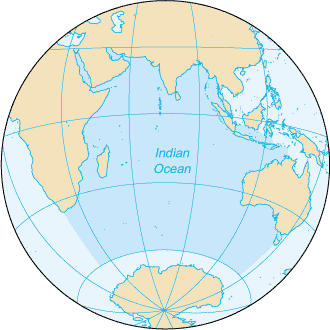
In the case of Flight 370's disappearance, lack of coordination between countries confused the search effort for at least three days when 12 countries were flying nearly 40 planes and navigating as many ships in an area east and west of Malaysia. When military and civilian personnel began sharing speculations and data about radar soundings, satellite photos, and debris sightings, the search area shifted to 1500 miles off the west coast of Australia and then an area to the northeast that was closer to Australia and in a less turbulent spot in the Indian Ocean.
Even with 26 countries involved in the search, as of September, 2014, there was still no trace of the downed plane. It was not until July, 2015 that the first wreckage from Malaysia Flight 370 turned up on the French territory of Reunion Island, off the east coast of Africa east of Madagascar. Another possible piece of the lost plane was found between Madagascar and Mozambique in March, 2016. (Debris from the tsunami that hit Japan in 2011 continued to reach Alaska four years later in 2015.) Since Madagascar is far west of the area near Australia, where the plane was thought to go down, weather and ocean current experts will help pin point where the plane might have run out of fuel. Even before the plane has been located, underwater experts have joined the mission to map the mountainous ocean floor. Despite this massive international search, after nearly three years the airplane had not been found and the search was discontinued on January 17, 2017.
The disappearance of Malaysia Airlines Flight 370 also has led to trials of new ways to track aircraft flying over ocean expanses. In a report submitted to the International Civil Aviation Organization (ICAO), a test of the global satellite communication system developed by UK firm, Inmarsat, showed it was possible for aircraft flying over oceanic airspace to report position, speed, altitude, and direction every 14 minutes at a minimal or neutral cost.
The number of people and variety of disciplines required to solve a crisis brought on by disease or a plane crash illustrates how tasks involving international cooperation are not limited to diplomats. To see how many kinds of research can involve an international effort, check out the later post, "Calling All Space Sleuths."
Not only does disease involve those versed in the biological complexity of the causes, cures, and prevention of a multi-country Ebola, flu, or Zika virus epidemics, but it also requires precautions by those involved in all aspects of transportation. Urban design and environmental science also can have an impact on how diseases are transmitted throughout the world.
In the case of Flight 370's disappearance, lack of coordination between countries confused the search effort for at least three days when 12 countries were flying nearly 40 planes and navigating as many ships in an area east and west of Malaysia. When military and civilian personnel began sharing speculations and data about radar soundings, satellite photos, and debris sightings, the search area shifted to 1500 miles off the west coast of Australia and then an area to the northeast that was closer to Australia and in a less turbulent spot in the Indian Ocean.
Even with 26 countries involved in the search, as of September, 2014, there was still no trace of the downed plane. It was not until July, 2015 that the first wreckage from Malaysia Flight 370 turned up on the French territory of Reunion Island, off the east coast of Africa east of Madagascar. Another possible piece of the lost plane was found between Madagascar and Mozambique in March, 2016. (Debris from the tsunami that hit Japan in 2011 continued to reach Alaska four years later in 2015.) Since Madagascar is far west of the area near Australia, where the plane was thought to go down, weather and ocean current experts will help pin point where the plane might have run out of fuel. Even before the plane has been located, underwater experts have joined the mission to map the mountainous ocean floor. Despite this massive international search, after nearly three years the airplane had not been found and the search was discontinued on January 17, 2017.
The disappearance of Malaysia Airlines Flight 370 also has led to trials of new ways to track aircraft flying over ocean expanses. In a report submitted to the International Civil Aviation Organization (ICAO), a test of the global satellite communication system developed by UK firm, Inmarsat, showed it was possible for aircraft flying over oceanic airspace to report position, speed, altitude, and direction every 14 minutes at a minimal or neutral cost.
The number of people and variety of disciplines required to solve a crisis brought on by disease or a plane crash illustrates how tasks involving international cooperation are not limited to diplomats. To see how many kinds of research can involve an international effort, check out the later post, "Calling All Space Sleuths."
Subscribe to:
Posts (Atom)