Insurance companies feared financial losses if the coronavirus caused the cancellation of this summer's 2020 Olympic Games in Toyota. As it turned out, the games were rescheduled for July, 2021. Violence, including World War II, that marred the noble purpose of the games in the past, could again be a factor next year, if North Korea continues to launch missiles toward Japan.
Environmental threats from pollution and climate change also have had an impact on the Olympics. Debris in the waters off Rio de Janeiro, Brazil, before the 2016 summer Olympics worried open-water swimmers and skippers in boating events. High winds delayed skiing events and kept spectators off the slopes at the 2018 winter games in Pyeongchang, South Korea.
Despite efforts to switch away from fossil fuels and plant trees to control the sand and dirt blown south from the Gobi Desert, athletes at the 2022 winter Olympics in China could face a breathing, as well as a competitive, challenge at events in Yanqing and Chongli, north of Beijing. During winter, heating homes and factories increases pollution in an area that suffers year round. Smog is likely to obscure views from the 4-story tower built in Yanqing to give visitors to the Olympics a glimpse of the Great Wall of China.
Since the fur from four goats is needed to respond to the fashion industry's demand for one cashmere sweater, grazing goats turned the Mongolian steppes north of China into a desert no longer capable of protecting Beijing from wind-blown sand. To stabilize top soil, the government removed up to 700,000 villagers in northern China from land designated for planting trees. However, at the same time climate change reduced rainfall in arid areas, many non-native trees planted in China required more water and worsened water shortages. An attempt to plant shrubs needing less water is underway. In any case, it is hard to know if China's new trees and shrubs will be ready to shield 2022's Olympic athletes from the Gobi Desert's blowing sand. According to Congbin Fu, the director of the Institute for Climate and Global Change Research at Nanjing University, growing forests is a long-term process that "can take several decades or even 100 years."
Showing posts with label sand. Show all posts
Showing posts with label sand. Show all posts
Sunday, March 8, 2020

Saturday, February 24, 2018
China Tries to Build a Tree Wall
Rather than keeping immigrants out, China's new tree wall is designed to keep out the smog-producing sand and dirt that blows south into Beijing from the Gobi Desert.
To combat pollution's health hazard and fossil-fuel causing climate change, China is employing a 3-pronged plan: 1) manufacturing electric cars and banning gas-fueled vehicles, 2) constructing towers to filter dirty air, and 3) planting a wall of pine and poplar trees.
Trees are the focus here, because electric cars powered by lithium batteries and air-filtering towers were the subjects of the earlier post, "How to Meet the Clean Air Challenge."
Like the Sahara in Africa that even blows sand into Europe, the Gobi Desert expands into China, covering as much as 1,000 more square miles annually. Besides causing pollution, sand eliminates farming and livestock grazing land and closes roads and rail lines. By adding to the demand on groundwater and the loss of trees for firewood, population growth in Inner Mongolia, directly south of the Gobi Desert, also strips Beijing of any protection from wind blown sand. In both Africa and China, before close analysis, planting trees seems like a good solution to stabilize topsoil, absorb greenhouse gases, and even increase rainfall.
According to an article in Mother Jones (August, 2017), Beijing's forestation efforts began in 1978 and accelerated as a government priority after 2000. Since then, up to 700,000 villagers have been forced off their family plats to make way for trees. By 2018, the government set ambitious planting targets: 32,400 new square miles worth of trees by the end of the year and an increase in the forested area of China's landmass from 21% to 23% by 2020 and to 26% by 2035. Villagers are paid to plant seedlings, and in 2018 armed police and 60,000 soldiers from the People's Liberation Army were reassigned from duty on the northern border in order to plant trees in Hebei Province around Beijing and the area where China will host the Winter Olympics in 2022.
In response to the government's commitment to battle sand, the State Forestry Administration gained an incentive to claim the frequency of sandstorms decreased 20% between 2009 and 2014, rainfall increased almost six fold in 29 years, and a high percentage (60% to 75%) of new trees survived three years. By planting trees, running solar power fields, and attracting ecotourists, contractors, such as Wang Wenbiao, who heads the $6 billion Elion Resources Group, are making fortunes implementing these government programs. Wang also owns the Seven Star Lakes Desert Hotel and golf course which has a fountain at the entrance and a green lawn and grove of poplars.
Trees in the fast growing poplar genus include aspen trees that require an extensive root system to acquire the large amount of water desert conditions do not provide. Pictures of what are said to be poplars do not look as though they are growing the 3' to 5' annually that is expected.
The smog reduction potential of China's electric cars, and maybe air filtering towers, seems to offer more promise than forestation.
To combat pollution's health hazard and fossil-fuel causing climate change, China is employing a 3-pronged plan: 1) manufacturing electric cars and banning gas-fueled vehicles, 2) constructing towers to filter dirty air, and 3) planting a wall of pine and poplar trees.
Trees are the focus here, because electric cars powered by lithium batteries and air-filtering towers were the subjects of the earlier post, "How to Meet the Clean Air Challenge."
Like the Sahara in Africa that even blows sand into Europe, the Gobi Desert expands into China, covering as much as 1,000 more square miles annually. Besides causing pollution, sand eliminates farming and livestock grazing land and closes roads and rail lines. By adding to the demand on groundwater and the loss of trees for firewood, population growth in Inner Mongolia, directly south of the Gobi Desert, also strips Beijing of any protection from wind blown sand. In both Africa and China, before close analysis, planting trees seems like a good solution to stabilize topsoil, absorb greenhouse gases, and even increase rainfall.
According to an article in Mother Jones (August, 2017), Beijing's forestation efforts began in 1978 and accelerated as a government priority after 2000. Since then, up to 700,000 villagers have been forced off their family plats to make way for trees. By 2018, the government set ambitious planting targets: 32,400 new square miles worth of trees by the end of the year and an increase in the forested area of China's landmass from 21% to 23% by 2020 and to 26% by 2035. Villagers are paid to plant seedlings, and in 2018 armed police and 60,000 soldiers from the People's Liberation Army were reassigned from duty on the northern border in order to plant trees in Hebei Province around Beijing and the area where China will host the Winter Olympics in 2022.
In response to the government's commitment to battle sand, the State Forestry Administration gained an incentive to claim the frequency of sandstorms decreased 20% between 2009 and 2014, rainfall increased almost six fold in 29 years, and a high percentage (60% to 75%) of new trees survived three years. By planting trees, running solar power fields, and attracting ecotourists, contractors, such as Wang Wenbiao, who heads the $6 billion Elion Resources Group, are making fortunes implementing these government programs. Wang also owns the Seven Star Lakes Desert Hotel and golf course which has a fountain at the entrance and a green lawn and grove of poplars.
Trees in the fast growing poplar genus include aspen trees that require an extensive root system to acquire the large amount of water desert conditions do not provide. Pictures of what are said to be poplars do not look as though they are growing the 3' to 5' annually that is expected.
The smog reduction potential of China's electric cars, and maybe air filtering towers, seems to offer more promise than forestation.
Thursday, June 5, 2014
The Lure of Shale Oil Independence
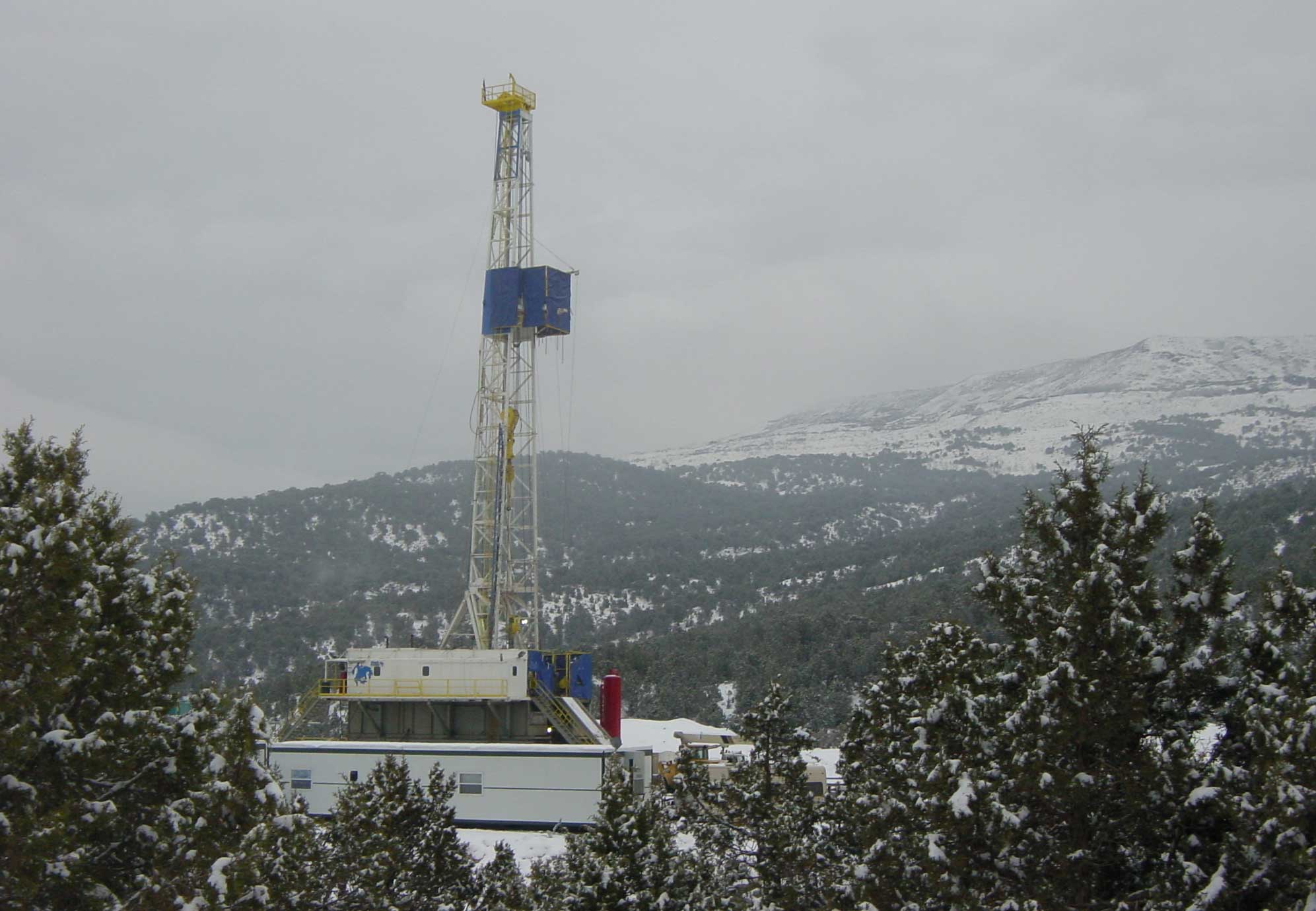 With oil trading at over $70 a barrel, demand up, and questions about supply from Iran and elsewhere, interest in fracking has rebounded in September, 2018. Soft oil and gas prices in 2015 and 2016 had dampened enthusiasm for investments in shale oil. BHP Billiton, the Australian-based metals and energy company, took a $4.9 billion write-off in January, 2016, on its shale oil investment in the United States. In the short and medium term, BHP saw shale too expensive to compete with traditional oil and gas production. BHP expected its shale investments to be profitable in the long run, however. As soon as crude edged toward $70 a barrel in early August, 2018, BHP sold its US shale holdings to BP for $10.5 billion.
What if there is a shale oil deposit under your home? Fracking, which blasts oil and natural gas out of shale rock, has caused countries to ignore serious consequences. (See the earlier post, "North Pole Flag.")
President Obama favored energy renewables over fracking. At the moment, wind and solar technologies need fossil fuel backups for windless, cloudy days and nighttime, but Bill Gates, who just announced his intention to invest a billion dollars in clean energy, said government investment in innovations research will lead to even more private investment in technologies that will overcome the need for fuels that contribute to greenhouse gases.
While ignoring private property rights is just one of the problems associated with fracking, or hydraulic fracturing, protesters in England drew attention to the need to consider this fracking drawback by erecting a satiric sign outside the country home of British Prime Minister, David Cameron, this month. The sign apologized for the inconvenience caused by setting up fracking operations under his home without permission.
With its economy dependent on income from oil and natural gas, Russia is said to be funding anti-fracking groups. While this may or may not be true, there are legitimate reasons for concern about the fracking process. To release trapped oil and natural gas, at high pressure, companies pump fluid composed of 99% water and sand and 1% chemicals into dense rock formations thousands of feet below ground. Companies, such as Royal Dutch Shell, which has a contract with China's Sinopec Corp. to exploit shale gas deposits in the Sechuan Basin and Ordos, try to reassure people that the wells they drill are far below drinking water supplies and that they isolate water supplies from fracking fluids by inserting concrete and steel barriers into their wells. Considering the shortage of clean water in eight of the 20 countries with the largest shale gas resources, it does not seem wise to base the safety of water supplies on company assurances.
Although Algeria, for example, is believed to have the world's third or fourth largest recoverable shale gas reserves, protesters are more concerned about potential damage to the delicate aquifer system that furnishes water for people, animals, and crops not only in Algeria, but also in Libya and Tunisia. Fear that Halliburton's $70 billion hydraulic fracking project would pollute ground water and disturb the environment set off a violent protest in Ain Salah, a rural Algerian town in the Sahara Desert. Early in 2015, demonstrations spread to at least three other towns and Algiers. Deep well drilling to increase the amount of water needed for fracking can have an impact on local water sources and a cumulative effect that causes water levels to drop in lakes farther away. Flowback of the water and chemicals used in fracking plus the radioactive materials picked up deep in the earth is stored in plastic-lined open pits at drilling sites. While some of this toxic stew is trucked away and treated to remove toxins, the rest is released into streams and rivers that pollute drinkable water.
Since companies are not required to disclose what chemicals they are using, there is no way to test the effect they have underground. I am reminded of the birds on an island in the North Pacific Ocean who are dying because of eating debris from humans over 1,250 miles away. Although bottle caps, cigarette lighters, and razor blades thrown into the ocean disappear, they can do plenty of harm.
The sand drilling companies blast into shale helps hold cracks open to let oil and natural gas flow to the wellhead. Mining this sand brings noise, truck and rail traffic, and fine silica dust pollution to the population in areas where often there are no nonmetallic mining laws to regulate the hours, trucking routes, and other aspects of sand mining operations. People living near (a half mile away or closer) a sand mine have developed asthma and needed to use an inhaler. They cannot open their windows and have to install air filtration systems in their homes. Since signing a contract with a sand mining company can make a landowner wealthy, individuals have an incentive to ignore the disappearing hills, lung damage, and other consequences that can come with sand mining. Product manufacturers and commodity producers, however, that are having shipping delay problems because they are competing for rail capacity with frac sand are beginning to complain.
Also, sand mines can use between 420,000 and two million gallons of water a day. To remove impurities from the sand, the chemical, polyacrylamide, which has traces of a known carcinogen, can enter surface and ground water at a mine site from wastewater ponds.
The Food and Water Watch organization, which began sponsoring a Global Frackdown three years ago, opposes UN efforts to include fracking in its Sustainable Energy for All Initiative. The many problems associated with fracking do not justify including the process in the same category as renewable wind and solar energy sources. The organization, Americans Against Fracking, which pulls together groups working to ban fracking helped New York ban the process after a two-year investigation concluded that fracking could not be done safely. A bill now pending in the U.S. Congress would ban fracking on public lands, where it already has begun in Pennsylvania's Allegheny National Forest, and Virginia has agreed to allow it in the George Washington National Forest.
Finally, there is concern about the possibility that fracking can cause earthquakes, such as the small ones geologists discovered in Ohio in April, 2014. Clearly, there is a need for tough permit requirements, when a fault already exists near drilling operations.
As more and more people around the world rely on industrial jobs and demand heat, air conditioning, and cars, care for the environment will come up against pressure to find new sources of oil and natural gas. What projects will students develop to help adults see the unseen effects of dangerous extraction methods?
Subscribe to:
Posts (Atom)