Saturday, June 27, 2015

Personal Response to the World's Problems

Some effort is better than none. Asked if we are alone in the universe, former NASA astronaut, Barbara Morgan, responded in Time magazine (July 6-12, 2015), "In every crack in the sidewalk, there's something growing....Life seems to want to take hold...." Last year about this time, one bucket of ice water dumped over a person's head helped hope take hold for people suffering from ALS by raising $94 million to find a cure (See the earlier blog post, "Good Works Multiply Fast.")

 Learn that Nestle is filling the plastic water bottles it sells with ground water pumped out of drought-stricken, fire-prone California's San Bernardino National Forest. An even bigger problem: Why would someone in a developed country which has strict health and safety regulations to keep water free of pesticides and pollution drink water transported in plastic bottles from another country?
Response: Fill reusable bottles with water from taps or pumps in areas where water is protected by clean water acts.

Learn that nearly 800 million people in the world don't have enough to eat every day.
Response: Bring a can of soup or fruit to a shelter for homeless people, a food pantry, or church collection center.

Learn that usable items are thrown away in dumps that pollute the land and pose health risks for children tempted to play in them.
Response: Hold a yard sale to sell outgrown clothes and toys. Maybe, even give the proceeds of the sale to a charity.

Learn that a "religious" terrorist group has used a bomb to hurt people it doesn't like.
Response: Read the Barron's book series, This is my faith, or another children's book on religions to find out the true beliefs of Muslims, Catholics, Hindus, Buddhists, etc. that have nothing to do with violence against those who practice other or no religions.

Learn the drawbacks of drilling for oil in the Arctic (See the earlier blog post, "North Pole Flag."), fracking (See the post, "The Lure of Shale Oil Independence."), and greenhouse gases (See the posts, "Pollution Update" and "A Healthy Environment.").
Response: Walk or ride a bike to reduce the need to be driven in a car that burns gasoline and look for ways to use less electricity from coal-burning power plants. What can you do without turning on a light, computer, or TV?

Learn that pesticides can harm the bees needed to pollinate crops and can reduce the milkweed food supply butterflies need to eat. (See the earlier blog post, The Bees and the Birds ".).
Response: In backyard and community gardens, pull out weeds by hand.

Learn that someone has been hurt or killed because of the color of their skin, where they were born, their religion, who they love, because they are girls, or because they want to vote.
Response: Pray for greater understanding, tolerance, and respect among all people in the world.




Thursday, June 18, 2015

Do-It-Yourself Museums

You may have seen or heard about the free lending libraries people have built in little glass houses on top of wooden bases and poles in their front yards. Stocked with use books for children and adults, anyone can take from, replace, or add to these collections. In some airports, museums also have mounted mini exhibits in glass cases. Combining these ideas has led to little free museums of art and museums of science and technology on private property.

     Using an international theme, museums could display art from foreign countries: paintings, sketches, sculpture, textiles, pottery (such as the Korean vase seen here), photography, and any other art form. For example, a hat or crane made out of Japanese paper-folding origami could be displayed in a glass case over a mailbox, labeled "Take One," that was filled with directions for making this object.

     Since simple scientific experiments work in any country, they would be perfect to display in little home made museums everywhere. Chemical reaction experiments could be shown in a mini museum. With three glasses, one would be filled with red grape juice, another would show how the same red grape juice would turn green when mixed with ammonia (an alkaline solution), and the third glass would show how the green/red grape juice and ammonia would return to red when acidic vinegar neutralized the alkaline solution. Experiments found at sciencefairadventure.com could lend themselves to demonstrations in little museum display cases.

     Those who have made little free museums say they have received enthusiastic help from professors at local colleges and universities. They also say freestanding unmanned museums have to be sturdy and able to withstand all kinds of weather conditions. Unfortunately, they report a certain amount of vandalism is to be expected. But the best part is daily exposure to art and science motivates artists and inventors.

 (The earlier blog posts, "I Made This Myself," "Robot Revolution," and "Robots for Good," suggest projects that might lend themselves to mini museum displays.)


Friday, June 12, 2015

Uncover the Economic Value of Wood

We are used to valuing trees because they absorb greenhouse gases (See the earlier post, "A Healthy Environment.") and provide the shade other crops need to grow (See "Coffee Prices Going Up, Allowances Going Down?"). But at a recent 4H meeting of young people who enter their animals and agricultural projects in competitions at county fairs every year, one of the members demonstrated the value of trees after their growing days are finished. Seeing the bowl he had made out of a variety of local woods started members thinking.

     What happens to trees that are uprooted by wind and storms, trees that are removed to make room for roads, utility poles, and developers' projects, evergreen trees after Christmas, and all the area trees that have been removed because they were infested by the emerald ash borer insect? Some dead trees are used for firewood, but others just rot.

     When my sister was in college, I remember she drove several students in one of her art classes to a lot that collected bits and pieces of wood. I have the statue she carved, sanded, and oiled to show, not only the form of a woman, but also the beautiful grain of the wood she used. Besides the grain of wood, the perfume of freshly sawn cherry tree logs first attracted the man who now owns a custom-made furniture business.

     Beyond firewood, there is a market for useful and beautiful objects made from the world's sustainable and rotting wood. Leafing through a catalog from SERRV (serrv.org), I saw how artisans in the Philippines had turned coral tree and acacia wood into birdhouses and bowls, Bangladesh craftsmen had used albizia wood to make stools, and carvers in India had stained and transformed mango and shesham wood into tables. I've also read how a Mozambican wood carver sold an expensive three-foot-tall ebony sculpture to a tourist in Kenya.

     Clearly, trees can play an important role in sopping up greenhouse gases that cause global warming, and wood products can boost a country's economy. A UN study concludes forest land the size of South Africa has disappeared since 1990. In square miles, an article in TIME magazine (September 28, 2015) shows deforested areas have been lost fastest annually since 2010 in the following countries: Brazil (3,799 square miles), Indonesia (2,641), Burma (2,108), Nigeria (1,583), and Tanzania (1,436). Before turning trees into logs for export, these countries and others need to consider how builders can use whole trees instead of steel to support structures and how an increase in their middle class populations represents the income potential of future furniture markets. Moreover, Global Witness and the Environmental Investigation Agency reports illegal logging of rosewood in Madagascar deprives the country of $460,000 a day. Illegal logging also has been used to fund conflicts in Liberia and the Democratic Republic of the Congo.

     Kids might begin to get an appreciation of uses for wood by making craft projects out of Popsicle sticks. They might go on to think about finding jobs operating tractor-powered sawmills, learning how to dry wood, or if they would like to sell products made from wood. Who knows, some day they may be in a position to invite architects and planners to consider showcasing local woods in major projects. For more ideas about the use of wood, check wisconsinurbanwood.org.


Thursday, June 4, 2015

Summer Project: Adopt a Country

Your country could be a big one, like China or Russia, that is always in the news or a small one, like Papua New Guinea, that you didn't know existed. Whatever country you choose, there are resources to help you explore your choice (See some suggested sources of country information in the earlier post, "See the World.") I took my own advice and decided to learn about Malaysia. Unfortunately, I only got as far as looking at a map and deciding Malaysia must have a complicated history, It shares the slim Malay Peninsula with three other countries: Burma (Myanmar), Thailand, and Singapore, and the nearby mountainous Borneo island with Brunei and Indonesia.

     Those who plan to put more effort in learning about a country can begin their project by buying a scrapbook or notebook and labeling pages with titles, such as "Maps," "Government leaders," "Sports," "Key industries," "Agricultural products," and so forth.

     On the first page, "Maps," include a map of your country and a world map with an arrow pointing to it and to your country. (For sources of maps and other information about maps, see the earlier blog post, "You Are Here.") When I had an Atlas out to look for Malaysia, I also decided to see where Iran's secret nuclear facilities probably were located. It was easy to spot the long swath of Zagros Mountains that run along Iran's western border. Eye-in-the-sky satellites could know where to look for activity indicating the construction of new facilities that violated its nuclear agreement with UN Security Council members and the EU.

     Your second page could be labeled, "Flag," Find a colored picture of your country's flag in a World Almanac at the library or elsewhere. Countries put a lot of thought into their flags, because they symbolize a country's important characteristics. Saudi Arabia's flag is almost all green, because the Muslim faith is important to its people and green is the color associated with Mohammed, founder of the Muslim religion. South Africa's flag is much more complicated than Saudi Arabia's. For example, it has red and black for the struggle its population had for freedom and gold for a source of its wealth. (More information about flags is in the earlier blog post, "A Salute to Flags.")

     On a page titled, "Population," list how many people live in your adopted country. How does the size of this population compare to the population of your home country? Is it two times larger or less than a tenth the size of your country? Also include pictures of your country's government leaders and its people. List names of people in your adopted country that may be very different from those of your classmates (Some sources of people and place pictures are listed in the earlier blog posts, "Picture the World" and "Getting to Know You.")

     A page for "Places" is a good one for photos of cities, especially the country's capital. Photos also will show mountains or flat land, snow or beaches, rivers and farms, how people live in cities, and what sports they play. If you know relatives or friends will be visiting your adopted country, remind them to send you postcards to include in your scrapbook.

     Not every country has the same animals that live where you do, so be sure to have a page labeled, "Animals." If you go to a zoo, see if you can find an animal whose native home is your adopted country. The zoo's brochure may have a photo of this animal that you can add to your scrapbook.

     Your interests may lead you to look into your country's music: folk songs and classical composers, current tunes and performers, various instruments.

     What products does your adopted country produce, minerals does it mine, and crops does it grow? Find photos.

     As a student, you will be interested in "Education."Do all children attend the same types of schools? What do they study at what ages? A new book, Playgrounds, shows what recess looks like in some countries (See the earlier blog post, "Recess Differs Around the World.")

     Subjects such as "Food," "Religion," and "Language" could all have separate pages. You may be lucky to find foreign money and stamps from your adopted country, an interesting book about your country, a souvenir from an Olympic or World Cup games held in your country, or a doll dressed in native garb. Recently, when the founder of my granddaughter's 4H club spoke at a meeting, she told how she had 80 dolls from the 80 countries she and her husband had visited.

     The best thing about filling a scrapbook or notebook with information about an adopted country is beginning to think about traveling there some day.

Tuesday, May 26, 2015

Coffee Prices Going Up; Allowances Going Down?

Children may be looking at a cut in their allowances, if the adults who provide them are big coffee drinkers.

     A quick lesson in economics teaches disposable income is the money people bring home from work after taxes are removed. For most people, a large portion of disposable income pays for such necessities as food, housing, transportation, and clothing. After paying for these necessities, what is left over is discretionary income that can be spent on things like a mango, doll, game system, or any other things children want.

     For those who need their morning cups of coffee, the anticipated increase in the world's price of coffee beans will reduce the amount of disposable income they have left over for discretionary spending. Is an allowance a necessity that has a claim on disposable income? If it is, it won't be affected by higher coffee prices. But a child's allowance may suffer, if the adult paying it considers an allowance in the same category as discretionary spending for a new toy. Increased coffee prices that reduce the amount of disposable income left over for discretionary income can cause a reduction in a child's allowance. If that happens, older children might decide to look for jobs that give them an income and the power to decide their own disposable and discretionary spending.

     Considering a wider economic context, kids might learn to ask why coffee, banana, soda, bus fare, and other prices go up and down. When a supply increases and demand stays the same, prices go down. But, when supplies decline and consumer demand increases, prices also increase. That explains a coffee price increase.

     In Brazil, Colombia, Costa Rica, Ethiopia, Kenya, and Tanzania, because of climate change, temperatures are rising in the high altitude tropical regions that grow high-quality Arabica coffee beans. There, coffee bean output is threatened by the pests and plant disease that flourish because of long periods of drought and short periods of heavy rainfall. The International Center for Tropical Agriculture (CIAT) in Colombia suggests survival for Arabica growers will require them to move 300 to 500 meters farther above sea level, an impossibility for Brazil's highly mechanized, commercial coffee plantations that supply 70% of the world's 1.6 billion cup daily coffee demand.

     Although growing coffee under a canopy of trees, such as shown in the photo of coffee growing in Mexico, would increase the predators that feast on insects that damage coffee beans, reduce the costs of chemical pesticides and fertilizer, and curtail polluting run-off, for all but a few specialty brands, the trend in the past 20 years has been away from shade-grown coffee. High-yield Robusta coffee, like that grown in Vietnam and Indonesia, can withstand higher temperatures, but its lower quality is used mainly for instant coffee. Wet processed coffee beans from the Indonesian island of Sumatra gives them a different taste that some coffee drinkers dislike but others enjoy, especially when, for example, McDonald's mixes them with beans from other sources.

     Whatever the coffee type, the same conflicts the palm oil and timber industries face regarding deforestation, questions of land ownership, competition among food crops, and water scarcity affect all types of coffee growers.

     While the future of coffee production is uncertain, increased demand is certain. Using Arabica grown in Ethiopia, Rwanda, and Tanzania, Starbucks, in partnership with Taste Holdings, is planning to open in Johannesburg, South Africa in 2016. Positioned as part of the fashionable, upscale urban scene in Shanghai and Beijing, coffee consumption in traditional tea-drinking China is growing faster than anywhere else in the world. Although China's four-cup-per-person-per-year is very low compared to the U.S. and Europe, Starbucks and Costa are responding to the potential for growth by planning to double and triple the number of their shops in China by 2020. Sumerian, a local company, also has entered China's coffee shop scene. Although China currently imports most of its coffee beans, domestic growers have increased their production from 60,000 to 120,000 tons in five years. Unfortunately, most Chinese coffee is grown in the sun in southern Puer, Yunnan, where more fertilizer and water are required and, at the moment, all but 30% of Yunnan's coffee is exported because it is a lower quality than what Chinese shops prefer to serve.

     With coffee consumption increasing, coffee bean growers have an incentive to solve production problems and meet high quality standards. Children who receive an allowance from coffee-drinking adults have an incentive to keep an eye on coffee prices.


Wednesday, May 20, 2015

Global Services for Gifted and Talented Kids

Gifted and talented kids grow all over the globe. Women and men from France, Israel, Japan, and many other countries have made Nobel Prize winning contributions to the world; basketball stars from China and Africa have played in the NBA; South Korea, Cuba, and Ethiopia are just a very few of the countries that have brought home medals from the Summer and Winter Olympics.

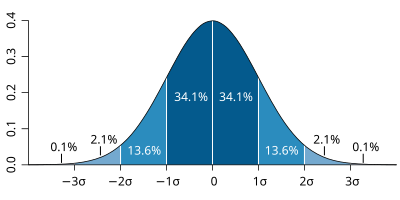
     Based on a normal bell curve distribution, we know there are outlier gifted and talented boys and girls in every country in the world and in every socio-economic and disabled group within each country. Odense, Denmark, will host the 21st Biennial World Conference for Gifted and Talented Children from August 10 to 14, 2015. Details are available at worldgifted2015.com. Throughout the year The Global Center for Gifted and Talented Children (gcgtc.com) in Germany provides a full array of resources for parents, teachers, and young people. In honor of The International Day for Gifted Children, the Global Center is inviting gifted children to send it art, videos, poems, and blogs that can be posted at gcgtc.com.

     To help children succeed in school and in life (and, I might add, to help them contribute to the peace and progress of the world), the Global Center offers solution-oriented coaching, teacher training, consulting by Skype or phone, workshops, diagnostic testing, conferences, and lectures by staff members. A downloadable flyer is available online and additional information can be requested by sending an email to info@gcgtc.com or by filling out a contact form at the Center's website. Since the Global Center's website offers information in at least 85 languages, there is little or no excuse for failing to make use of information tailored to the needs of gifted kids.

     Online, the Center also recommends articles and informative blogs. Some of the blogs are written in Persian, Spanish, Dutch, and Norwegian, as well as English. I found Aimee Yermish's blog, written in English, to be extremely useful.

     In addition to resources provided by the Global Center, with the help of their teachers, gifted and talented students can go to ePals.com, to find projects that let them collaborate with students in Italy, Egypt, Sweden, Liberia, Malaysia, and other countries. Projects are grouped by age, up to 17 and older. If gifted kids are interested in robots, they can find young people with similar interests at the website, Wevolver.com. There is more information about projects involving robots at the earlier blog post, "Robots for Good."

     The mission of the Global Center for Gifted and Talented Children is one we all can aim to achieve: "We discover what a child is good at and then build on their own resources."


Sunday, May 17, 2015

Why Do They Love Us?

We believe that human rights are universal. As embedded in the United Nations' Declaration of Human Rights, "all human beings are endowed with reason and conscience and should act towards one another in a spirit of brotherhood." The Declaration declares everyone has the right to life, liberty, security, privacy, freedom from torture and arbitrary arrest or detention, equal protection before the law, and many freedoms, including the freedom to travel, receive an education, marry, own property, express an opinion, and associate with others.

     Since all human beings have a conscience, they have the right to choose to be an atheist or agnostic or whatever religion their conscience selects. Like Muslims, more than a billion Christians in the West and elsewhere choose to believe there is only one God. Only conversion, not coercion, may cause those who hold no belief, or a different one, to change their minds. No fatwa dispensation can consecrate the criminal slaughter of those who are not Muslim. The West believes that God needs to be allowed to let great sinners, like Paul, Augustine, and Ignatius of Loyola, choose to become great saints.

     Whether someone lives in the West, East, North, or South, life, not suicide, is a basic human right. Despite being blind, Chen Guangcheng defended the right of women, not the Chinese government, to determine the number of children a family should have. His opposition to forced abortions led to his house arrest and beatings of his wife. Like the millions of others who are fleeing from violence and murder in Syria, Colombia, the Democratic Republic of the Congo, or Libya, Chen escaped. Due to the good offices of the United States, he lives here now. He tells his story in The Barefoot Lawyer: A Blind Man's Fight for Justice and Freedom in China. 

     Persecution is not the only reason refugees flee to the West. Poverty and lack of opportunity cause many to take great risks at sea and through deserts to find jobs here. In an interview by Robert Christian, published on the Millennial blog (millennialjournal.com), Chen reports that in the real China 70% of the population live in awful rural conditions not the modern skyscraper cities of Beijing, Shanghai, and Guangzhou. In the United States, slaves, women, homosexuals, every ethnic and religious group, and people with disabilities have been able to appeal to the Declaration of Independence and Constitution in order to get their rights recognized and enforced. American blacks. women, and other groups have overcome job discrimination. They vote, attend public schools, and obtain small business loans. The social media that ISIS blithely uses to make bombs and recruit other terrorists was created by students educated in the West, not the Taliban who shot Malala in the head because she wanted to go to school. In the West, freedom of speech and opinions do not lead to murder. They lead to the formation of unions, media coverage, and legal remedies.

     Western researchers have come to the aid of the world's health. They have searched for and found cures for small pox, polio, pneumonia, and numerous other diseases that have plagued the world throughout history. Rather than shun, and even kill, homosexuals, Western researchers kept experimenting until they found a cocktail of drugs that could keep an HIV/AIDS diagnosis from being a death sentence. Because a French doctor founded Medecins sans Frontieres in 1971 and because charities and the Red Cross were willing to go to Sierra Leone, Liberia, and Guinea, the Ebola epidemic has been stopped. And these Western organization continue to go everywhere, such as to Nepal, when natural disasters strike. Even when individuals like Kayla Mueller hear about people suffering in foreign countries, they leave their comfortable lives and go to help (See the earlier post, "The Continuing Battle of Good and Evil.).                                                                                                                                                                                                                                                                 Democracy is not perfect. People love the West, because we are free to laugh at ourselves and admit our faults. Britain's Winston Churchill summed it up. "Democracy is the worst form of government, except for all those other forms that have been tried from time to time."