In this holy season, while Jewish people are celebrating Passover and Christians are about to recall the Resurrection of Christ on Easter, it might be a good opportunity for children to think about the need to respect the holy days of all religions. Freedom to exercise an individual's religion was considered a right important enough to be written explicitly in and guaranteed by the First Amendment of the U.S. Constitution. Students may know Muslim classmates who are free to attend religious services on Friday, Jewish children who go to their temples on Saturday, or Christian children who attend church on Sunday. They can ask friends about holy days they may not celebrate, such as the beginning of the Muslim holy season, Ramadan, on June 28, 2014, or the Jewish Day of Atonement, Yom Kippur, on October 4, 2014.
Learning about foreign countries is not complete without learning that followers of different religions are concentrated in certain parts of the world. Africa has both Christians and Muslims; Asia has Muslims, Buddhists, and Hindus; most Christians are in Europe, Latin America, and North America; the Jewish population is concentrated in Israel and the United States. It is all too easy for those in the majority who practice one religion in a country to oppress the minority. In Syria, the Christian minority suffers at the hands of the Sunni Muslim majority, and in Egypt Islamist mobs have destroyed Christian churches, orphanages, and businesses, according to TIME magazine (April 21, 2014). While a quarter of the Middle East's population was Christian in 1914; fewer than 5% are now Christian, since Christians left to escape harassment and physical violence. Given the usual inclination of a majority to dominate a minority, it is commendable to see that Pakistan and Sri Lanka recognize their countries' minorities on their flags (See the earlier blog post, "A Salute to Flags.").
More details about major religions can be found in the earlier blog post, "This We Believe."
Thursday, April 10, 2014
Monday, March 24, 2014
Medical Profession Suffers from International Conflict
Dr. Chukuka Enwemeka, Dean of the University of Wisconsin's College of Health Sciences in Milwaukee, Wisconsin, has discovered phototherapy with blue light can destroy the super bug that prevents antibiotics from killing staph infections from methicillin-resistant staphylococcus aureus (MRSA). Blue light has been shown to kill more than 90 percent of two strains of MRSA, and repeat treatments have killed 100 percent.According to Dr. Enwemeka, "phototherapy has been around for decades." Why has it taken until relatively recently for this therapy to be used more frequently? Western scientists were suspicious, Dr. Enwemeka said, because "Much of the research on phototherapy started in Eastern Europe and the Soviet Union during the Cold War."
Friday, March 21, 2014
Who Needs International Expertise?
Public health and the hunt for Malaysia Airlines Flight 370, which disappeared March 8, 2014, (and the later search for Air Asia Flight 8501, which crashed into the Java Sea on December 28, 2014) demonstrate how global problems require cooperation of experts in a wide variety of disciplines.
Not only does disease involve those versed in the biological complexity of the causes, cures, and prevention of a multi-country Ebola, flu, or Zika virus epidemics, but it also requires precautions by those involved in all aspects of transportation. Urban design and environmental science also can have an impact on how diseases are transmitted throughout the world.

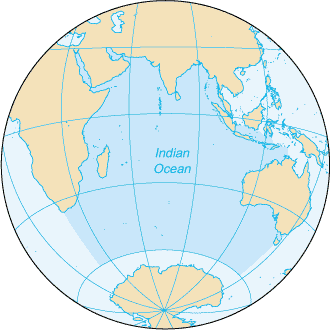
In the case of Flight 370's disappearance, lack of coordination between countries confused the search effort for at least three days when 12 countries were flying nearly 40 planes and navigating as many ships in an area east and west of Malaysia. When military and civilian personnel began sharing speculations and data about radar soundings, satellite photos, and debris sightings, the search area shifted to 1500 miles off the west coast of Australia and then an area to the northeast that was closer to Australia and in a less turbulent spot in the Indian Ocean.
Even with 26 countries involved in the search, as of September, 2014, there was still no trace of the downed plane. It was not until July, 2015 that the first wreckage from Malaysia Flight 370 turned up on the French territory of Reunion Island, off the east coast of Africa east of Madagascar. Another possible piece of the lost plane was found between Madagascar and Mozambique in March, 2016. (Debris from the tsunami that hit Japan in 2011 continued to reach Alaska four years later in 2015.) Since Madagascar is far west of the area near Australia, where the plane was thought to go down, weather and ocean current experts will help pin point where the plane might have run out of fuel. Even before the plane has been located, underwater experts have joined the mission to map the mountainous ocean floor. Despite this massive international search, after nearly three years the airplane had not been found and the search was discontinued on January 17, 2017.
The disappearance of Malaysia Airlines Flight 370 also has led to trials of new ways to track aircraft flying over ocean expanses. In a report submitted to the International Civil Aviation Organization (ICAO), a test of the global satellite communication system developed by UK firm, Inmarsat, showed it was possible for aircraft flying over oceanic airspace to report position, speed, altitude, and direction every 14 minutes at a minimal or neutral cost.
The number of people and variety of disciplines required to solve a crisis brought on by disease or a plane crash illustrates how tasks involving international cooperation are not limited to diplomats. To see how many kinds of research can involve an international effort, check out the later post, "Calling All Space Sleuths."
Labels:
Air Asia Flight 8501,
airplane,
currents,
disease,
Ebola,
Flight 370,
flu,
Inmarsat,
Malaysia,
ocean,
public health,
Reunion,
space,
weather
Friday, March 7, 2014
Summer "Vacation" Projects
Where should students look for career-related summer programs and internships? Local colleges and universities, churches, 4H (even in urban areas), zoos and humane societies, children's, art, and other museums, libraries (in addition to programs, read biographies, self-help and special interest books), schools devoted to the arts (music, theatre, dance, art, fashion design), newspapers and magazines, fitness centers and gyms, YMCA and YWCA, Boys and Girls Clubs, professional and amateur sports teams, social service societies (Rotary, Kiwanis, Knights of Columbus), local, state, and federal governments, scout troops, political parties and candidates, camps devoted to a particular career, such as computers or space (See the earlier blog post, "Space Explorers.").
Whether it is a Pillsbury Bake-off recipe or a winning photograph, contests are another summer activity that can lead to recognition and a future career. Contests are mentioned in a number of earlier blog posts: "Take Your Best Shot," "Young Voices," "Work Around the World," "TED Talks for Teens," "Robot Revolution," "Dairy Cows on the Moove," "A Healthy Environment."
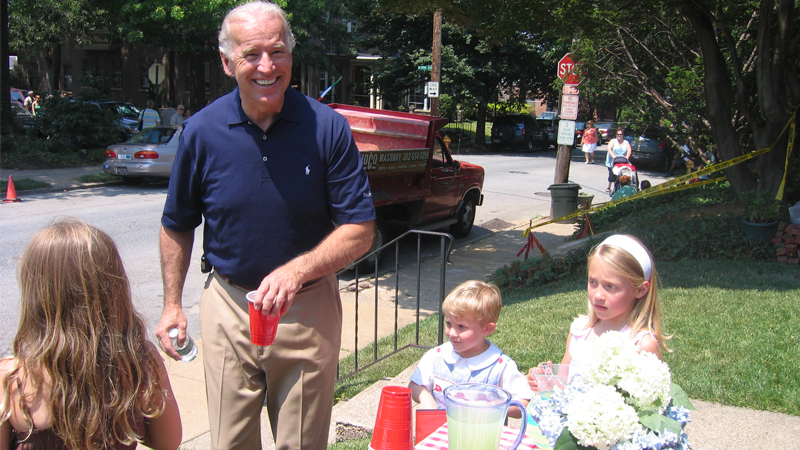
And don't ignore do-it-yourself projects: planning and planting a year-round sustainable garden (See the earlier blog post, "A Healthy Environment."); organizing a yard sale or running a lemonade stand with attention to pricing, display and advertising; using video or a vine to tell a story; planning the best cost-effective virtual foreign trip by watching exchange rates in a number of countries (See the earlier blog post, "When to Buy/Sell in the World Market."); subscribing to the World Edition of littlepassports.com in order to receive a monthly letter about a country visited by fictional "Sam and Sofia"; charting the weather (See "Climate Control."); or counting bees (See "The Bees and the Birds.").
Whether they learn Hindi, how to coach soccer, or the value of a ruble, summer presents an opportunity for students to position themselves for employment in the global marketplace. After all, according to trendwatching.com, the global culture sees "consumers from nine to 90, from Chicago to Bangkok" using the same smartphones, eating sushi, and wearing the same sneakers.
Monday, February 17, 2014
A Winter's Tale
Kids can follow Agatha, with her cat and bodyguard, as they solve international mysteries in The Curse of the Pharaoh, The Pearl of Bengal, and The King of Scotland's Sword by Steve Stevenson.
In the prize-winning picture book, Nino Wrestles the World by Yuyi Morales, kids can have fun learning about the colorful luchadores in Mexico and other Spanish-speaking countries who wear masks to hide their identities when wrestling. Or they can go along with a boy and his duck on a funny Japanese adventure in Dodsworth in Tokyo by Tim Egan.
Although it's a child-tailored reference book, History Year by Year: The History of the World, from the Stone Age to the Digital Age, kids will like the "Child of the Time" features which describe the lives of children during various historical periods. The descriptions could lead to role playing using the book's quotations from primary and secondary sources or their own imaginations.
Unlike last year's Oscar-nominated live action shorts (Described in the earlier post, "See the World at the Movies"), this year's fail to give a broad picture of the lives of children in foreign countries."Helium," which won the Oscar, focused on a dying child and "Aquel No Era Yo" (That Wasn't Me) shows the tragic life of an African child soldier. If the Oscar-nominated short animated films are being shown at a local movie theater, however, children (and adults) would enjoy the banter of the ostrich and giraffe "puppets" that introduce them. "Mr. Hublot," which won the Oscar, could inspire a child to draw a series of robots with a mechanical/robotic pet that gets bigger and bigger. Mr. Hublot eventually had to move to a warehouse. In one animated short, "Room on a Broom," which is also a book, a witch, cat, dog, frog, and bird prove no one should be excluded anywhere in the world.
The credits of all foreign films show how names differ from one country to another. These new names may come in handy when a child is naming his or her doll, plush toy, or action figure. (See the earlier post, "What's in a Name?")
Wednesday, February 12, 2014
Tin Can Art
While artists direct social sculpture projects (Read about Theaster Gates in the earlier post, "Global Drawing Power."), people, including children, collect the recycled materials that go into the art and often help develop designs. Victor Castro has orchestrated public art projects in Mexico and Peru. For his social sculpture in Madison, Wisconsin, he invited members of the community to bring cans, bottles, cartons, and all manner of clean discarded food containers to their local libraries. At one school, children worked together to create their own collages of recycled materials. Some of their works may become part of the 2000-piece library mural Castro expects to complete this summer.
In the later blog post, "Idea Transfer," see how children can imitate the French artist who made sculptures out of toilet paper rolls.
Tuesday, February 4, 2014
Take Your Best Shot
This week we'll see all aspects of the Sochi Olympics in magazines and newspapers, on TV, and on the Internet. We'll also see reporters broadcasting from Sochi. Look at the backgrounds behind them. Just as network correspondents tell viewers where news is being made by standing in front of a school, parade, or courthouse, young people can begin to pay attention to the backgrounds they choose for their photos.
To get ideas for photography, young people can check out lightbox.time.com, photography.nationalgeographic.com, and the scenic wonders Ansel Adams captured in Yosemite National Park. Also, be on the lookout for a new book, The Photographer's Eye, from National Geographic. It includes the best photos from the 300,000 submitted by photographers around the world, as well as tips telling how these photos were taken. Street photographers just ask people they see on the street if they can take their photos. It's a good way to show how regular people look when they're just going about their lives.
Seeing a drone used to film surfers from overhead reminded me how photographers often view life from different angles. With YouTube, there also are different ways to project your views of life.
At ngkidsmyshot.com, kids can find out how, with a parent's permission, to submit their own photos that might be featured online or published in National Geographic Kids. Students can learn about National Geographic's Traveler Photo Contest at NationalGeographic.com/TravelerPhotoContest/ or go to nationalgeographic.com and search "travel photo contest.".There are four categories for photos: portraits, outdoor scenes, sense of place, and spontaneous moments. Information about the Scholastic Art and Writing Awards for photography is on an earlier blog post, "Young Voices." Free Spirit Publishing is sponsoring a "Words Wound Video Contest" for teens that ends April 15, 2014. A teen will win $250 by posting a short video on YouTube that shows how teens can use technology and the Internet to make schools kinder places. Details are available at freespirit.com. For information about future competitions designed to attract African feature movie and documentary cinema talent, go to afrinollyshortfilmcompetition.com.
Sarah Stallings at National Geographic suggests a number of things to remember, when taking photos:
1. Hold a camera steady in both hands and brace upper arms against body.
2. Think of a tic-tac-toe grid over your picture. The horizon can be on a vertical line and key elements on the intersections.
3. Take a number of photos of the same object or scene by moving closer and closer.
4. Catch before and after scenes that no one else has by arriving early and staying late for an event.
5. Light gives emphasis to the important parts of an image. Inside, light from a window or a doorway focuses attention on a subject. A Luma company device enables a cellphone to obtain a light reading that makes it easy for photographers to set a camera's appropriate light setting.
The field of photography has many branches. Besides sports, photographers travel the world to report the news; photograph fashion, nature, and landmarks; take photos for postcards and travel brochures; and win Oscars for feature films, documentaries, animated full length and short movies, and live action shorts. Museums, such as the Corcoran Gallery in Washington, D.C., now exhibit photographs. A number of fashion photographers, who not only know plenty about style and design but also have social media fans, have become brands, i.e. entrepreneurs whose prints appear on products. David Bailey for one offers T-shirts printed with the likenesses of Mick Jagger, John Lennon, and Grace Jones.
Photography requires patience and technology. My grandfather was friends with an eye doctor who was a freelance photographer who waited for hours to capture the best light for a photo he took of the Capitol in Washington, D.C. Steve Winter worked for 14 months and used a video camera equipped with infrared detection and external lights to capture the iconic "Hollywood" sign behind a puma in Griffith Park, California.
In color or black and white, a photographer can have an exciting international career.
Subscribe to:
Posts (Atom)